
This interview was conducted via phone in the fall of 2015, but the questions and responses remain relevant, and will be so for the foreseeable future.
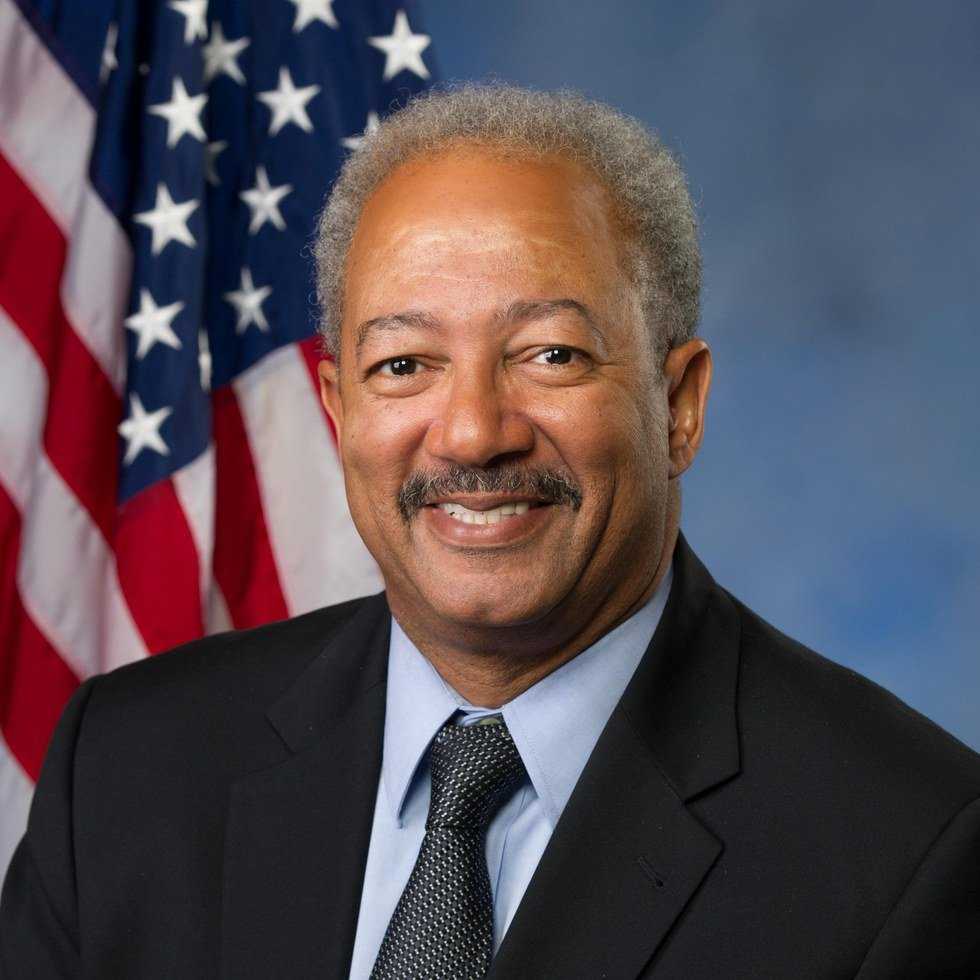
The Representative: Chaka Fattah is the U.S Representative for Pennsylvania's 2nd Congressional District. He has served since 1995, and has also served in the Senate for the Democratic Party. He has promoted GEAR UP (Gaining Early Awareness and Readiness for Undergraduate Programs) to encourage and make more accessible college enrollment. He has also contributed to funding major scientific agencies such as NASA and NSF, and created the Fattah Neuroscience Initiative, which increases research in cognitive science. He has also made job development a pillar of his career; he has promoted cooperative development programs to reduce unemployment and endorse small businesses.
The interviewer: Olivia Corner is a senior at the University of Pennsylvania, double-majoring in Political Science (with a concentration in International Relations) and English (with a concentration in Creative Writing). I am a board member of the Wharton Middle East/North Africa Organization, and I hope to one day work in foreign policy in this region.
Odyssey: What actions have you taken in Congress or causes have you championed to improve the lives of college students and recent graduates in your district?
Rep. Chaka Fattah: I was the top sponsor and the creator of a program called Gear Up; gaining early awareness for undergraduate admissions. So it’s a program that we put down some five and a half billion dollars invested to get young people ready for college…it works for people in Middle School up through their first year in college. I also was the top sponsor of the American Opportunity Tax Credit, which provides a $2,500 tax break, per year, to higher education assistance. So that’s provided about $18 billion to millions of families who pay college tuition bills. In Pennsylvania that’s benefited about 680,000 families, half of them in the Philadelphia area. So the American Opportunity Tax Credit was my bill, and so over a four-year college education, that's $10,000 in dollar-per-dollar tax credit or reductions in tax bills, if you’re paying high expenses including tuition.
And I could go on but I’ve spend about half of my work in higher education, I’ve served on the Board of Trustees for about four colleges and I also championed the higher education assistance agency, which is called in our state PHEAA (note: Pennsylvania Higher Education Assistance Agency), which has provided about a million students grants and loans to help them pay for college. I for a decade or so was on the board and did a lot or work in it; it has been probably the best financial aid agency in the country as far as I’m concerned. And the last thing I want to mention is I created a program in Philadelphia called Core Philly, which has provided $30 million of scholarships to $24,000 Philadelphians, to go onto college and…I could go on and on but I think the point is I’ve done a lot of work here.
Odyssey: Increases in college tuition have been outpacing inflation for a few decades, and now the amount of student loan debt has surpassed the credit card debt held by all Americans. What specifically can Congress do to rein in these costs, if anything?
Rep. Fattah: I am supporting the proposal that would create a two-year free community college access to young people so that we can cut the cost in half, right, if they do the first two years at community colleges…as a way to cut costs. I’ve also supported institutions like yours, Penn, and other Ivy League schools to eventually create a grant-only undergraduate program so that’s no loans in the undergraduate package, I think that’s a way to go...
Loans are, strictly in the first two years, very problematic. But I will say this, having said all of that, that higher education is worth in our country, a college degree is worth about a million-three, over one's lifetime, in increased earnings. So even if a young person ends up borrowing $10,000, or $50,000, or $70,000 for your college degree, as a financial matter, it really still makes sense that the education is still worth a lot more.
The other thing is I helped to create a program where you can have your student loan debt evaporate if you go into public service. So if you go on to be a teacher, or a police officer, or you do something in government, or with selected non-profits, like United Way and others, well each year you work at a public sector, one-fifth of your student loan would just go away. So over five years of you giving back, you can get out of debt.
Odyssey: Beyond college costs, which three political issues affecting 18 to 30-year-olds aren’t being talked about enough?
Rep. Fattah: I think that the biggest issue facing the country is income inequality and connected to that poverty, what we do about these issues, or generational poverty. I think that the country has, you know you can have 200,000 young people in Philadelphia going to college and they have very bright futures, you know they’re at Penn, they’re at Drexel, they’re at great institutions. You have another 200,000 young people in Philadelphia who are Philadelphians and they’re at public schools; we need to have them have the same kind of future opportunities as the young people who attend Penn. And until we solve that problem, the country can’t be all that we want it to be. So income inequality, poverty, and the other one is opportunity; they’re all connected together.
Odyssey: Congress has a notoriously low approval rating among Americans, regardless of the party in control. Why do you think the branch that’s supposed to represent the people thought of so poorly by them?
Rep. Fattah: Well I think that it’s somewhat misleading because 90 percent or more members of Congress who actually run for re-election, get re-elected. So what you have is a kind of dichotomy; people like their member of Congress, and they don’t like the Congress, so they are two different things. But you only get the chance to elect the person who represents you, it’s a representative democracy, so we might not like how someone in some other part of the country, how their representative votes or acts. We don’t get a chance to elect them, right, we get a chance only to elect our own. So some of it is just that dichotomy of circumstances, right, where people are happy with their own and complaining about somebody else’s choice. But I think that all and all the Congress does reflect the country, that is accurate.
The country is in a kind of schizophrenic situation, where in ’08 we elect Obama and we want universal health care, and in 2010 we want the Republicans to run the Congress, who want a president who wants to repeal Obama Care, right. And, do we reelect Obama in 2012 and then we give the Republicans again their largest majority ever, once in a lifetime, since World War II. So when people complain that there is a stalemate, we can’t get anything done, well that stalemate was created by the voters. If we have voters who are inconsistent over a variety of elections then you’re going to have these kind of results, so you know, the English have a parliamentary system, whoever you elect for the Prime Minister, you know that party gets control of the parliament, so they get a chance to implement their program, and then if you don’t like their program you get to throw them out.
Here, we have a situation where--and it happened with Bill Clinton. Bill Clinton was elected, two years later he lost the House and Senate for the last six years of his presidency, so it created a real challenge for Clinton to get much of his program through. And I think that that is really why the public says that they hold the Congress at low-esteem...
Odyssey: What is one specific policy issue on which you’ve bucked your party’s consensus?
Rep. Fattah: I have been opposed to engaging in a trade agreement, which is the president’s position on the new trade agreement, the TPP, so that is one. I am concerned about the income-inequality related to doing a broad deal with countries that have wages so much lower than our wages…that I think it will put working families in America at a disadvantage. I’m not opposed to all trade deals... For example, annually I voted a number of times to have a trade with China but I oppose the permanent trade deal with China. I thought that it removed our leverage, right, of trying to encourage them to improve their circumstances. So by voting on it annually we had an opportunity to continue to kind of encourage them to improve their circumstances in terms of human rights, religious rights, but I was opposed to making it permanent because if Congress can’t vote on it, it’s a done deal forever.
So with the TPP, I am not necessarily opposed to constructing trade agreements that might benefit our country and in the Asian-Pacific, but I don’t want a situation that puts us at a permanent disadvantage. But then there are plenty of others overtime.
One thing that I vote for the most is my position on the tax reform. I’m the only member of Congress that introduced the proposal to eliminate the income tax completely, and go to a consumption tax, which almost no one in my party supports, but I support it, I think it’s the way to go. I am opposed to the income tax, I want to do away with it, and go with a consumption tax.
Odyssey: In your current position, which vote do you most regret making and why?
Rep. Fattah: No, I don’t think so. I think my best vote was against going to war in Iraq, and so that’s as for foreign policy, and my best vote for domestic policy was for the Affordable Care Act. I am very happy with both of them. I don’t have any votes that I think I regret. I’d have to think of that but none come to mind.
Odyssey: Since 1965 who was the best president not named Ronald Reagan and why? [The question was asked this way to remove the most likely choices for the Democratic congressman. Republicans Odyssey interviewed were asked the same question, excepting Ronald Reagan.]
Rep. Fattah: I think Lyndon Johnson was the best, if you are excluding the very best, which is Barak Obama. I say Lyndon Johnson. His implementation, his beginning the passage and signing of the Civil Rights Act, and the Voting Rights Act.
Odyssey: Which interest group or lobby has the most undue influence on Capitol Hill, and why?
Rep. Fattah: I would say big business. But I don’t know that I consider it to be “undue,” that is to say that one of the things that our Constitution has reserved for Americans is the right to petition the Congress or the government. This is an inherent right that you have to freely associate and to petition your government for all that you want, so its not “undue influence,” but they have the greatest influence.
There’s plenty of them that I don’t agree with, I don’t agree with their positions, but, I’m sworn to uphold the Constitution, so my belief is that the Constitution provides that right to people to lobby the Congress. To be critical of it, it is my job to uphold the Constitution. But you won’t find in my 35 years of being in public life, me criticize someone for something they said, even though people say foolish things all the time. So somebody might say something and you feel like as an official, to issue statements condemning what some talk show host said or what somebody else said, I’ve never done that. I believe that the Constitution says you have a right to free speech, so that as a government official I should not be, to say that they have undue influence. Whatever’s on their minds, even though it may be foolish. So in the same way, I don’t oppose people lobbying.
Odyssey: The gap between the rich and poor continues to get bigger. What statistical indicators do you use to analyze this and what is your solution?
Rep. Fattah: I’ve been supportive of the Global Citizens Movement, which is focused on ending poverty worldwide. And that is through citizens taking action. I am very supportive of efforts that non-governmental organizations are involved in to improve health care, like the Gates Foundation, and the Clinton Foundation, but a whole host of groups have been involved in efforts around health and education. I think that if you were looking for a statistical index to improve the lot and life of poor people around the world is the education of girls. The education of girls is the greatest economic empowerment tool across the world. And to the degree that you get young girls in school, you get them an education, you will improve their opportunity under the laws and cultures in their country. That all property and all businesses. Young women grow families and so to the degree you help them you literally lift people out of poverty.
Odyssey: What does the word “equality” mean to you and how do we achieve it as a country?
Rep. Fattah: The other team tries to say that it means that we want an equality of results, and that’s not what it means, it means that we want an equality of opportunity. We want everyone to get a fair opportunity, an equal opportunity to the degree that the government is involved. If the government is running the school, then the teacher who is teaching math should have majored or minored in math but the textbook wasn’t printed in her lifetime, she should get a better chance at learning Math. And that to me is what we are focused on; how to create an equality opportunity, so that people, no matter where they start out, and if they have the effort, right, and they can make of their life what is their aspirations.
Odyssey: If you could have a drink with any non-politician dead or alive, who would it be and what would you drink?
Rep. Fattah: Albert Einstein, and of course it would be water. Water, air, almost anything that God has created works pretty well.