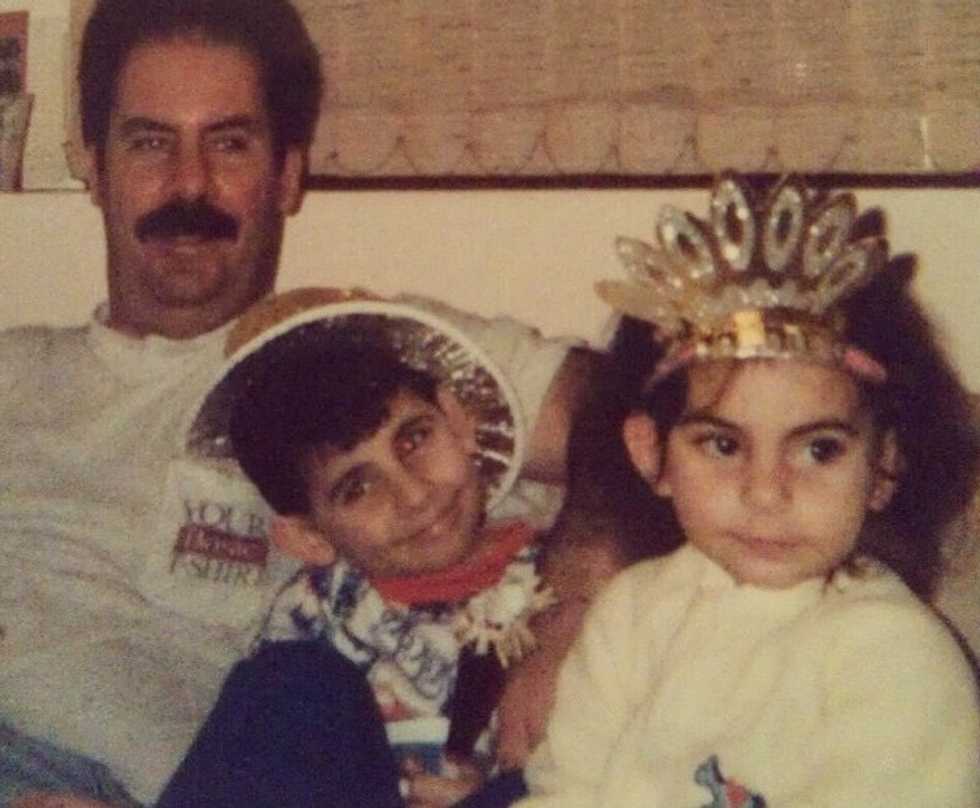
Death is hardest on the living. You experience a loss, grieve it, accept it and attempt to move on from it, yet you never truly recover. With loss comes the relentless back and forth of letting go yet struggling to hold on. You find yourself being consoled by grief because it is proof that you have not yet forgotten. If you can recall the pain, you can remember the person. And frankly that is all anyone wants to do, even if means experiencing a perpetual pang of heartbreak every day of their lives.
When I close my eyes I still feel the comfort of my robe wrapped around me that evening. Suddenly, it wasn’t so comforting after all. I remember the embrace of people whose names I didn’t even know. Words of sympathy that should have offered me solace instead so effortlessly mocked me, because not even the deepest remorse could erase the clarity of the day that changed my life forever.
As the anniversary of my father’s death approaches, I find myself reflecting on loss as well as the inevitable grief that coincides with it. Perhaps grief does not define us but instead reveals our true self – if only we allow it the opportunity to do so.
In the immediate years following his death, I found myself unknowingly discrediting the pain I felt. It served as an alternative to explaining my sorrow to someone unable to relate to my experience. I naively believed that pain was directly proportionate to time – as the years passed I should expect my pain to significantly decrease. While this may be true for cuts and broken hearts, I quickly learned that death does not abide by the same rules. Truthfully, grief has no respect for time.
Loss is a constant. It is ever present and incessantly felt. Perhaps the reason that our pain is so strong is because it is meant to be experienced. Loss is resilient and demands to be recognized. In retrospect, I realize that using a defense mechanism to forfeit my grief was not only ridiculous but counteractive. How could one ever overcome something that they didn’t allow themselves to fully experience? If you wish to overcome a loss, you must allow yourself to affirm the significance of your pain.
Amidst my heartbreak, I have learned to subsist my pain with peace. While the loss may not diminish, instead your strength begins to rise. You find blind hope in the ordinary and recognize your blessings as opposed to your struggles. Seven years after I lost my dad to cancer, I still experience the same pain that I did the very first day. However, rather than harboring heartbreak I choose to embrace the happiness of what was, and what is to come.
For thirteen years, I was fortunate enough to have had the most loving and dedicated father. At age twenty I still have the same loving father, except he is now my guardian angel. I carry his heart within my own, and his presence is always surrounding me. On both my best days and my worst, I know that he is with me. My memories of him are something that I will hold with me forever, and I find comfort in knowing that they will always belong to me. He has taught me countless lessons throughout his lifetime and has continued to teach me every day since his passing.
Through his strength, I have discovered my own. I have uncovered the beautifully tragic reality that time is nothing yet everything all at once. I live with no regrets because I have realized there is not enough time to concern yourself with things that do not make you 100% happy. Family is everything. Taking chances are always worth it. And trying and failing will always mean more than not trying at all.
In the presence of grief, it is easy to become hardened by the struggles you experience. Resist the temptation. Do not let life turn you cold. Do not lose your smile in the face of adversity.
I have now realized that the key to overcoming loss is to manifest your grief into gratitude. If you want to recover from loss, you must demonstrate wholehearted appreciation for all other aspects of your life. Rather than focusing on what grief has eliminated, open your eyes to what it has bestowed upon you - whether it be a new perspective on how to live or an authentic thankfulness for those still left beside you.
Grieving is an inevitable aspect of life, however, when presented with this hardship, you must strive for good grieving. While it may seem as if grief will somehow always hold a power over us, the truth is that our grief will eventually give us power over ourselves – and we must let it.
To my dad, thank you for teaching me to never give up on life, despite the fact that life gave up on you.
I love you, always.