Last week, I discussed more general facts and statistics relating to religion in modern America, trends in religious observance and practice, and the Christmas habits of young Americans today. Now, with Christmas mere days away, I’ve decided to feature the voices of some students at Mount Holyoke who do not identify as Christian.
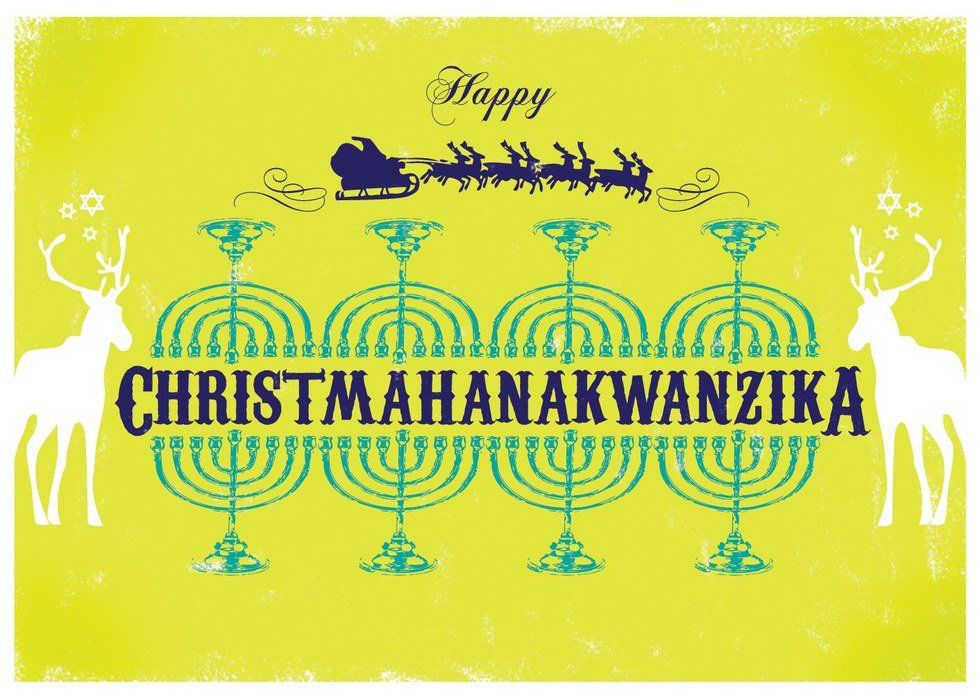
Some non-Christian Americans feel the same. Winter Pisco (Mount Holyoke ’20) has been Jewish for her entire life, and was eager to discuss her favorable view of Christmas. She thinks that regardless of which holiday the seasonal greeting specifically addresses, the goodhearted sentiment it conveys shines through. “…As long as someone is taking the time to be kind to be and expressing Happy _______, I'll be happy and thankful and say the same back, she says. “Whether it's happy holidays, Christmas, Hanukah, Kwanzaa, whatever.” In Pisco’s opinion, wishing someone a happy-any-holiday is “a seasonal thing that promotes happiness and love, so [she doesn’t] mind it”.
Saumya Sudhir (Mount Holyoke ’17) comes from India, a formally secular country. Back home, however, many non-Christians “celebrate the occasion [Christmas] with Christmas parties and general Christmas-y [sic] festivities.” In India, which is formally a secular nation but contains a large amount of religious diversity, Christmas is still a national holiday, and Indian Christians are known to celebrate the religious aspects of Christmas, while many non-Christians are happy to perform secular Christmas traditions. The parallels to the United States here are clear– but Saumya says there’s an attitude in the United States she hasn’t experienced elsewhere.
“Interestingly, in the other countries in which I have lived, in Asia and Europe, I have never been questioned about my excitement surrounding Christmas,” she says. “…Only in the U.S. do people ask me if I celebrate Christmas.” She sees no issue with being a non-Christian who celebrates a secular version of Christmas, and is open to both “Happy Holidays” and “Merry Christmas” as seasonal greetings. However, she does acknowledge that “the U.S. as a country really only has national holidays for Christian festivals…[that] is a whole other (and truly sad) issue.”
She thinks that this is reflective of a degree of American ignorance about other countries. Christmas, it seems, is something that Westerners think only applies to our countries and is not acknowledged elsewhere. “some people here clearly believe that only USA, South America, and Europe can have Christians,” Sumaya explains– and this fact bothers her greatly. “[That] couldn't be further from the truth! We have an array of religious diversity all over Asia too!”
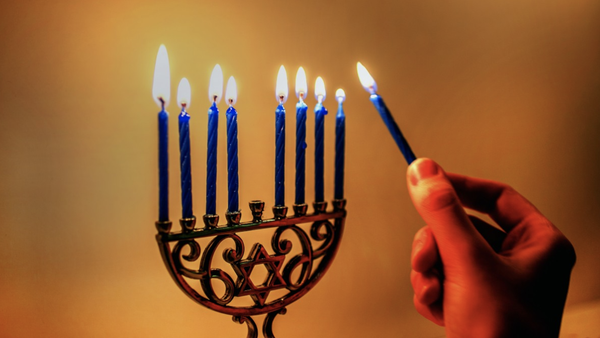
Other Americans are also unsatisfied with our culture’s hyper-focus on Christmas. Sarah Dauer (Mount Holyoke ’20) was something of an anomaly, even at her Reform Jewish school: not one, but both of her parents are Jewish. Although they celebrated both Hanukkah and Christmas, it was clear to Dauer from early on that Christmas is the “‘staple American holiday’” which is oftentimes characterized by what she called “intense consumerism”. She has also seen that bleed over into Hanukkah– despite not being a particularly important Jewish holiday, Hanukkah is “lumped into the holiday season for the sake of what [Dauer] see[s] as more profit than inclusion”. This is almost comically exemplified by Jewish versions of the ostentatious Christmas decorations we see in yards across America: Dauer’s yard is home to both a blow-up dreidel and menorah-shaped LED lights.
Dauer doesn’t mind being wished a “Merry Christmas”, and acknowledges the well-meaning sentiment behind the greeting. That said, she has “definitely felt ‘othered’ as a kid…from general American society”. Cultural norms cater to Christians, and this includes music, movies, and yes–expressions of seasonal cheer. Dauer, having experienced life as a religious minority in the USA, will continue to accept and appreciate all holiday greetings– but prefers to say “Happy Holidays” herself.
There are as many perspectives on American Christmas culture as there are people here. But now more than ever, it is important to listen to the voices of those who are not religiously/culturally Christian. Thanks to Winter Pisco, Saumya Sudhir, and Sarah Dauer for providing me with some nuanced, great points of view for this article.
I hope everyone has a great break, Merry Christmas if they celebrate, and Happy Holidays if not!