

If we were to go back in time and start civilization again, and I had the opportunity to shape people's knowledge of this new world, I would most definitely try to change the outcome of our current society. I would attempt to rebuild a euphonic civilization, and to do this, I would take back three very specific books with me. Before I elaborate on those three books, my conceptualization of civilization must be understood.
Civilization has three different aspects to it: mind, body, and soul. Mind reflects on the intellectual aspects of civilization: progress, understanding, and technology. This includes the concept of tolerance, understanding people aren’t all the same and being ‘okay’ with it. Body is representational of the physicality of civilization; this means the environment, health, and safety. Finally, soul is meant to mirror the liveliness of hope and imagination in people. This is especially important because without the ability to think outside the box (and reality), the beauty in life is lost. For society to function well, this beauty is crucial. Assuming I would be able to communicate with these people, and enlighten them on the contents of the three books that I would take back, the new civilization would be created as one of peace, health and tolerance. The books I intend to take back with me are: “Alice in Wonderland” by Lewis Carroll (Charles Lutwidge Dodgson), “The Giving Tree” by Shel Silverstein, and “The Very Hungry Caterpillar” by Eric Carle.
"Alice in Wonderland"
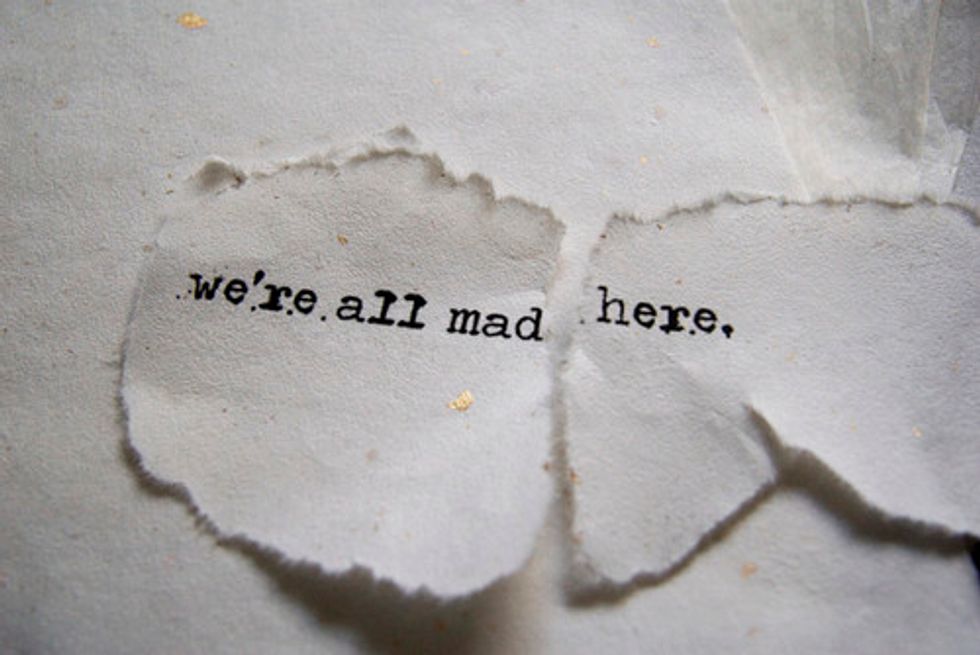
Lewis Carroll’s “Alice in Wonderland” applies two aspects of civilization: mind and soul. The novel stresses various properties, one of which is the beauty of curiosity and ‘madness.' The significance of this is that without a sense of curiosity, adventure and progress is gone. As a society, we must value the concept of moving forward whether it be in the arts or the sciences. This is similar to the way Alice follows the white rabbit and how she continuously asks questions at several points in the book. Carroll uses madness to symbolize the idea of being unique. Throughout the novel, the concept that everyone is difference is repeated so much that when the Mad Hatter asks Alice, “Am I mad?” because he has an epiphany about the fact that he is different, she simply replies “Yes. But all the best people are.” This is a great example for the civilians to understand the notion of tolerance and that not all people are the same: to embrace difference. Similarly, the idea of tolerance is presented by virtue of the Queen of Hearts but in an entirely different manner. As the Queen forces everyone to be the same as her – either with some physical abnormality or with regards to their opinions – they all eventually turn on her as a result of this suppression, leading to her eventual downfall, illuminating the need for a society to embrace people for their true selves.
Curiosity and madness link together because the combination of the two tends to lead toward innovation. “Alice in Wonderland” also introduces the concept that life is a meaningless puzzle. Life shouldn’t be taken too seriously, just as death should not be feared. This fear of both life and death drive people to extremities, and as an attempt to avoid this in the new civilization, these two concepts should not be feared, but simply embraced with a jovial attitude. Additionally it takes away this theory thhere is a purpose for their existence, driving them to search for the 'meaning of life.' Once the civilians accept the alternate theory that life is meaningless, they won’t need to search for meaning in their life, as the meaning will find them. Having said that, this novel also emphasizes the need for dreams. The belief that dreams have significant meanings and that they are valuable is instilled within this novel, as it is based off of Alice’s dreams and fantasies. Dreams inspire hope.
"The Giving Tree"
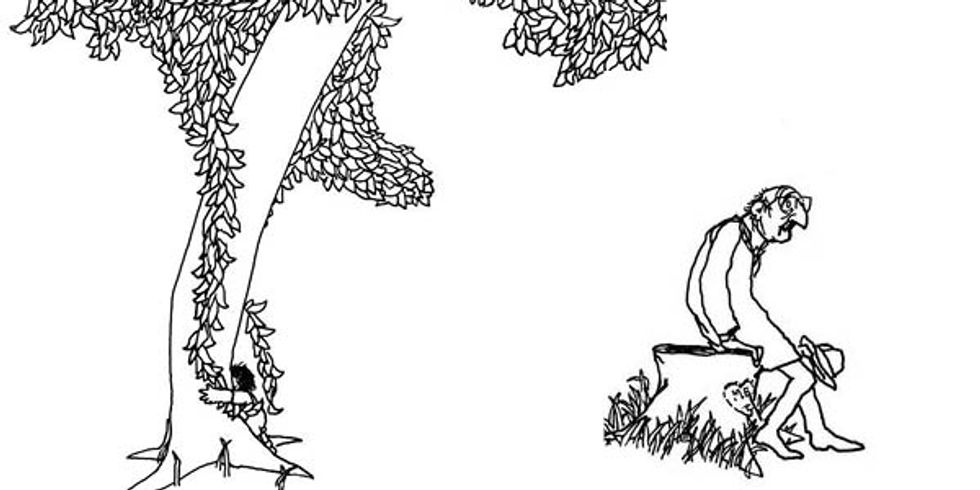
“The Giving Tree” by Shel Silverstein is a delicate tale about a young boy and a tree. This story illuminates all that the environment does for us, so we can survive. It reflects nature’s selflessness and paucity of voice, consistently wanting to help people. It also shows the boy's deep love for the tree and nature, and how without the environment he would perish. The story is important because it will teach people to respect and appreciate nature and the environment, as people have forgotten to do so now. The story also presents the idea of balance; what you do to the environment, the environment does to do. If you pollute, the apple you consume will be polluted. This story also introduces the concept of unconditional love − this idea that there are beings that will go to the ends of the universe just to see you happy, accompanied by the fact that these beings will not ask for anything in return, regardless of needing something. This provokes...anything at all, then take it upon yourself to ask whether that being needs help or anything at all. Then taking a step to do something good for that being. This creates emotional satisfaction and health, for both the individual receiving the help and giving it, thus demonstrating the holistic physical element to society.
"The Hungry Caterpillar"
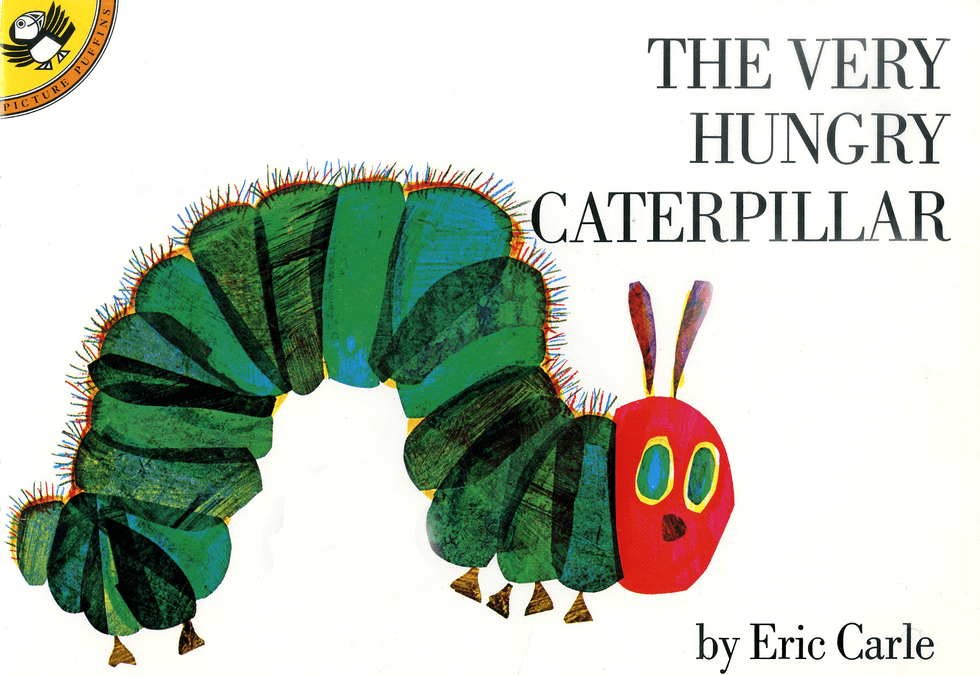
The third and last book I would take back with me would be Eric Carle’s “The Hungry Caterpillar.” This is primarily to reinforce the physicality element of civilization, as being healthy and physically fit is crucial. This story also illuminates the evolutionary process, touching on the mind aspect of civilization. The evolutionary process that Carle touches on is not strictly Darwin’s theory of evolution, but the notion that everything on the planet is subject to change eventually. This change, more likely than not, is a positive thing, regardless of the fact that the process of changing was undesirable. This might possibly eliminate the emergence of any future conflicts, as most conflicts originate from either the fear of change or from the inability to accept change.
Civilization is a very complex idea, and one that is defined uniquely by different individuals. There is no easy way a perfect grasp of a ‘perfect’ civilization, however, it is utopian. However, if I had the opportunity to shape people's ideals with the three books of my choice, a utopian civilization—at least to me—would have been achieved. Now, what we have left to ponder is can we still achieve this utopia without going back in time?
















