

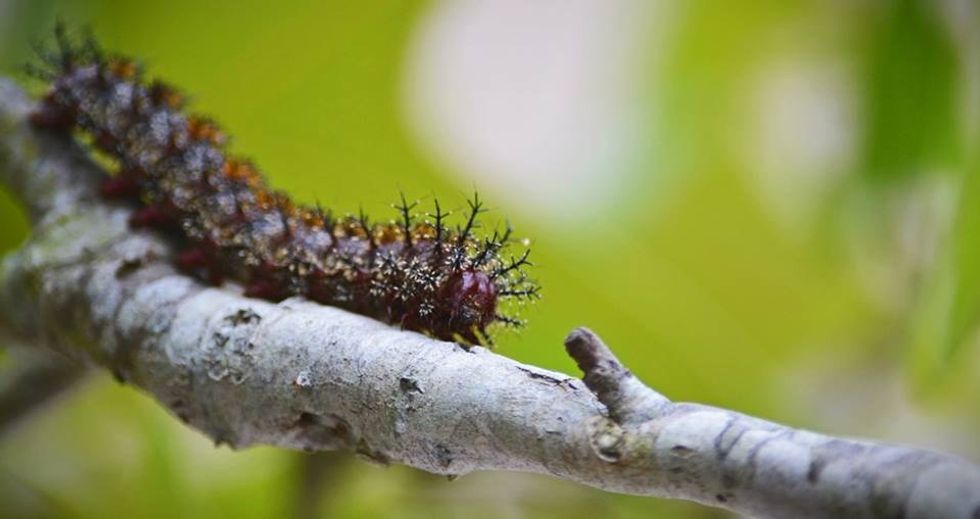
We are well into spring and the world is looking a little bit greener again. For New Orleans, this means the return of the oak tree in all its majesty, shading our parks, streetcar lines, and sidewalks. It also means the return of the buck moth caterpillar, a prickly menace who lives in the oak trees and will sting your skin. Any seasoned resident will know to look out for them, and probably could recite a less-than-stellar experience with getting stung in the past. But for anyone who may be new to the city, or who simply is not aware yet, this public service announcement is here to help you protect yourself and your loved ones from a potentially painful afternoon.
Buck moths caterpillars are not native to New Orleans, and in fact are found all along the eastern seaboard of the United States, as well as western states like Kansas and Texas. They are so prominent in New Orleans because of the climate, and their preference to reside in oak trees. Once completely fed, they usually work their way down the trees where they reside in grass, sidewalks, tables, and benches. They also have a tendency to fall from the branches, which causes them to panic and activate their venom. A buck moth caterpillar falling on onto you is probably the worst way to encounter one for the first time, so be sure to watch out above.
 "Just say no!"
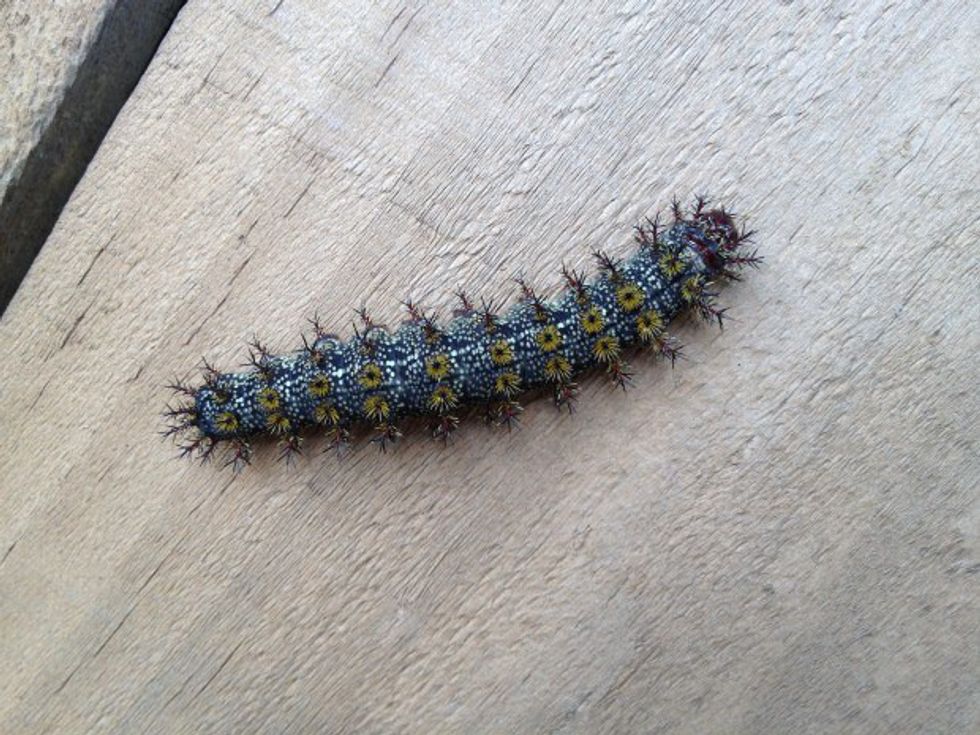
It should be noted though, that these caterpillars are non-aggressive, and will not attack you. Still, you should not touch the caterpillar with your exposed skin. It may look fluffy and harmless, especially to small children, but the ‘fluff’ is actually a collection of toxic stingers that the caterpillar will release in times of danger.
Here are a handful of tips on how to avoid getting stung:
1. Wear shoes

This is especially true if you are walking across a campus quad, park, or even your own backyard. Especially if there are oak trees nearby, the buck moth caterpillar may be chilling in the grass where you’re having a picnic or playing frisbee. It won’t move much, but running around barefoot is a sure way to increase the probability of getting stung.
2. Be careful around oak trees

This goes without saying. There’s not much to do if a buck moth caterpillar lands on you, other than covering up your skin with more clothing. In the hot weather, this may not be practical. All you can do is keep an eye out for caterpillars that may be on the ground, the wall, or in the bench you’re about to sit at under the oak tree.
3. If you can, spray your trees
Most pesticide sprays will do the trick if you need to dispose of one of these caterpillars. If you happen to own an infested tree, you can hire a service to neutralize them. However, if you live in an area with many close oak trees, spraying one tree will just make them move to the next. You may want to coordinate with your immediate neighbors.
4. Don’t touch them with your skin
If you must move one of these caterpillars, it is safe to do so with a pencil, or any other small object. As stated before, they are non aggressive, and will behave like any other non-venomous caterpillar. That being said, it is possible to gently move them with your hand, but one wrong move and the caterpillar might sting you.
If you get stung, I feel bad for you son. Here’s what you can do:
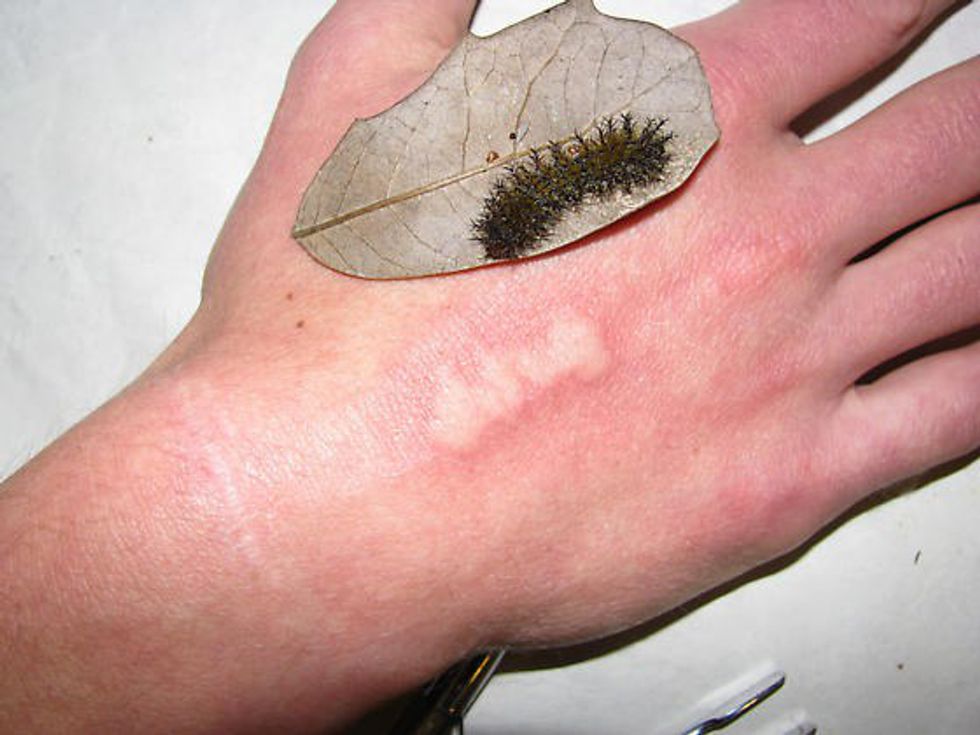
5. Get the stingers out
The stingers will remain in your skin after being stung and will continue to transmit toxins. To remove them, you can use scotch or duct tape to peel them out. Alternatively, you can try covering the area with clear finger polish, rubber cement, or even facial peel solution. Allow the area to dry and then remove by peeling.
6. Treat the sting with topical medication
First of all, be sure to wash the infected area with soap and water after removing the stingers. Beyond that, Benadryl or any other antihistamine will be effective in treating the sting. You should also use rubbing alcohol and an ice pack to help deal with the pain and swelling.
If these steps do not help, or the reaction to the sting is very strong, you should head to the doctor as soon as possible.
New Orleans has many great things to offer. Unfortunately, not all of its visitors are human. As long as you keep yourself safe, you too can enjoy this city for all of its treasures, bugs and all.