
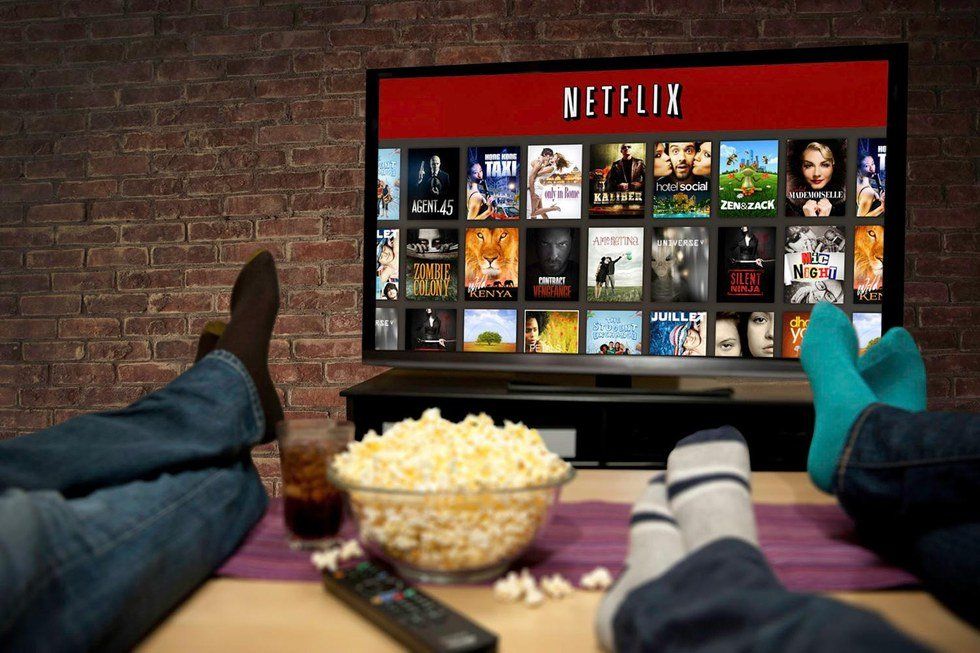
When I say Netflix, what I really mean is Netflix culture, and when I say Netflix culture, what I really mean is binge-watching. We’ve all done it. In fact, we’ve all done it so much that it has become the norm in American society—to start watching a series and not stop until you finish the final episode available. In a society where millennials dictate fleeting trends, Netflix is here to stay, and it breeds a plethora of new terms and culture, a true phenomenon of digital media. The “Netflix and chill,” the “binge-watch,” the acceptability of devoting all your time to watching an entire television series in a month and not leaving the comfort of your blanket burrito during that time. Should Netflix culture be so blindly accepted without rational scrutiny because everyone is doing it?
Allow me to be frank. I am addicted to Netflix. Once I start a series, I often find myself unable to stop, even for homework or sleep. It has been an addiction for me on and off (mostly on) for the past few years. In my senior year of high school, I could watch half a season of "Friends" in one day. My free time, and sometimes my homework time, would be taken up by Netflix. A standard amount of time spent watching for me and other people I know could range from three to six hours per day (equivalent to up to 91 days of a human life in one year). But when I finish a show, I am often left wondering: did I simply waste all that time or did I gain something from this experience?
Well, the biology of it all tells us that, yes, I have gained something from watching all 200 episode of “That 70’s Show," a rush of dopamine that comes from finishing something and a sense of closure. It’s a typical chemical reaction in your brain that makes you want to finish your favorite series. The drive to continue your shows comes from the intense cliffhangers at the end of each episode that jack up your cortisol (a stress hormone) levels and make you feel that you need to continue watching.
So what I want to know is this: Why, out of all the products that have come from America’s consumer culture, have Netflix watching habits escaped public scrutiny? While the overindulgence of consumer goods has been widely frowned upon, Netflix has avoided being the target of PSA’s and has yet to be declared an epidemic by Michelle Obama. Overeating, alcoholism, even playing violent video games too much, are all issues that have been brought to the table by the public, for the health and well-being of the public. We have yet to ask when watching all of "Making a Murderer" in two days (over 10 hours worth of screen time) is a simple binge-a-thon and not the latest in a series of binges that have been happening continuously for as long as you and 40 billion others have paid the low price of $7.99 per month so that your life can be taken over by fictitious characters.

















