It's safe to say that television is not what it used to be. With hundreds of available channels, video-on-demand, and online streaming, it is no longer as simple sitting down to watch a television series when it airs.
I am one of the few individuals in my generation that simply cannot get into the Netflix craze. Sure, I have watched shows and movies on the streaming site, but it is not my main intake source for television. If I am enjoying a show, it makes more sense for me to watch it when it is airing or simply record it to watch at a more convenient time. After all, spoilers are much more accessible, so it is easier for surprises to be blown rather than dodging them for months.
Netflix has created an extremely demanding society as far as entertainment is concerned. Because many younger people do not watch shows week to week or record them, their first question is "When will it be on Netflix?" Another common sentiment I have heard is, "I can't keep up with a show week to week. I can't keep up. I'll just binge watch it on Netflix." I find this sad. Do people my age really feel so apathetic toward shows that they can wait an entire year for a season just so they can binge watch it within a couple of days? I fail to see where the enjoyment and anticipation are in this.
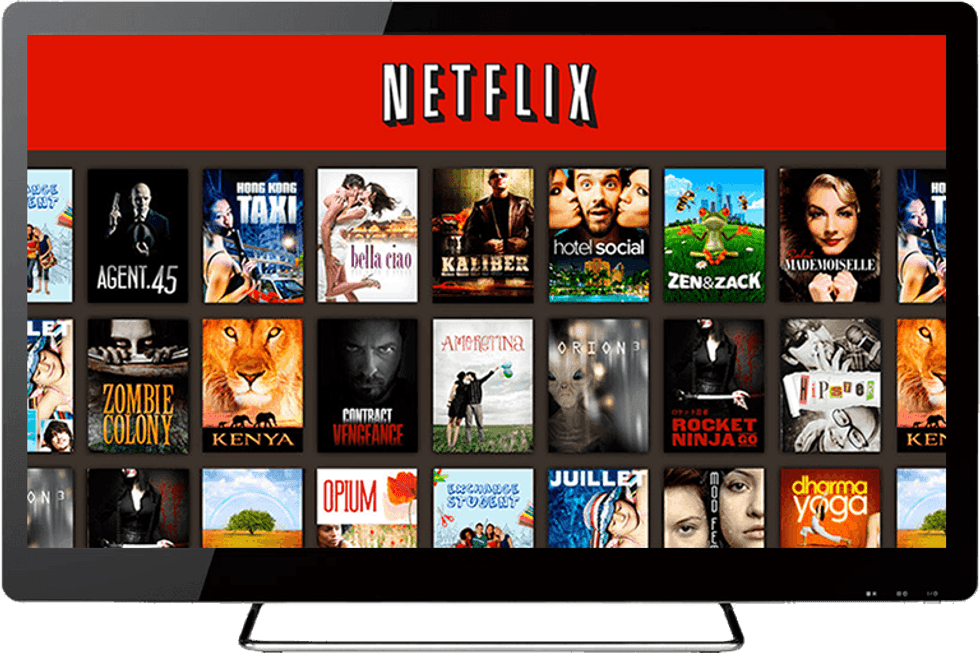
My own biases are not the only reason that Netflix is causing television to suffer. What so many individuals forget is that the renewal of shows is still based on the week-to-week audience draws. Because of streaming sites like Netflix, many shows are losing those audiences, therefore causing a sharp decrease in viewership. Despite being a technology-based society, the Nielsen ratings are still one of the main factors in a network considering whether or not to renew a show. If people are not watching TV live or on a DVR within twenty-four hours, the ratings will reflect that. Netflix cannot be taken into consideration until a television series is released to Netflix, which is often prior to the start of the next season. The fact that people are consciously choosing to wait for a show to be released on Netflix directly relates to the fact that live ratings are no longer as high as they were prior to the popularity of streaming and could be a contributing factor to a series being cancelled.
In the 1970s, prior to any type of recording being available, people had to watch a show live in order to see it or wait for reruns in the summer. There were also a limited amount of channels available to view. At that time, some shows saw ratings as high as 50 million per week. Now, the highest numbers are somewhere are 23 million. Because of the skewing across hundreds of stations, access to VCRs/DVD/Blu-Ray players, and streaming, that is as much as a show can manage live.
So, the next time you think about putting off watching a show until the season is over and it is on Netflix, consider the ramifications. The show could be cancelled. It could be spoiled for you before then. Neither of those options is appealing. TV shows should not be eliminated for those who watch week to week, and that seems to be the price being paid because people prefer being able to devour a show all at once and do not worry about it until the next full season is available.
Technology might be making things better, but Netflix might be what ruins the television watching experience. It used to be about watching a show together in a living room, a family event. Now, it feels like some solitary function that envelopes people for days because they want the whole season, and they want it now.