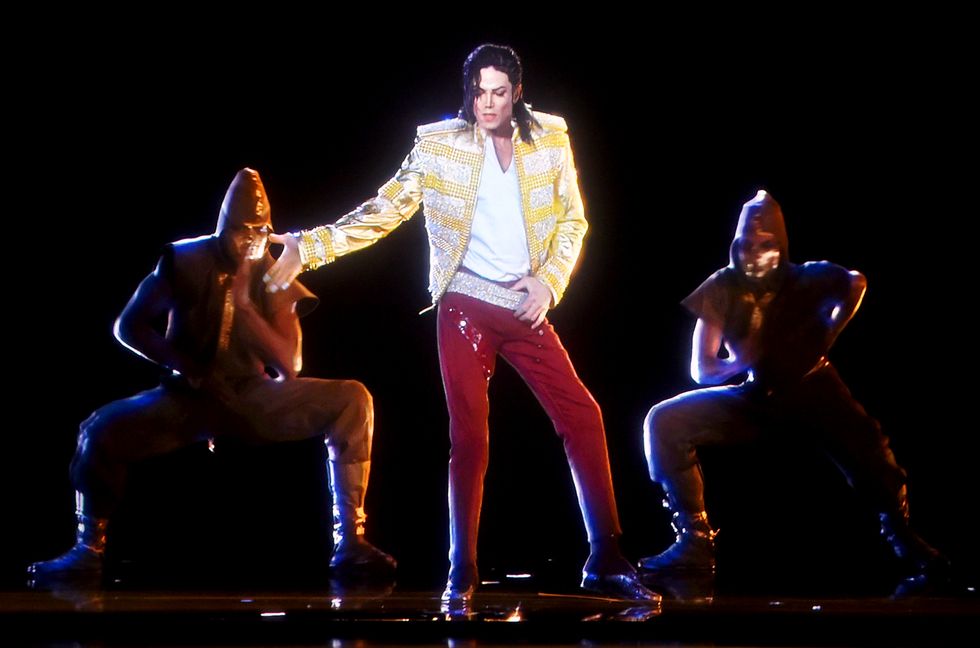
There has been a growing trend in the music industry of using holograms to recreate performances by deceased artists. The first and most well-known of these holograms was Tupac Shakur at the Coachella Festival in 2012. The presence of the hologram received mixed reviews but was mostly shocking. However, since then there have been hologram performances of Michael Jackson, Ol’ Dirty Bastard, and Ronnie James Dio. While many see this as a way for future generations to experience performances by artists they would’ve never had a chance to see otherwise there are several legal and ethical problems that might be problematic in the future.
A person or company cannot use an artist’s image without permission. Typically that consent can be granted by the artists themselves, but in the case of them being deceased that decision is left up to the family or whoever runs their estate after their passing. In the case of Tupac, his mother gave permission for his image to be used and the co-executor of the Jackson estate did the same for the famous pop-star. Now, that seems to be a system that ensures the likeness' of artists aren't being used in any ill-manner or for marketing purposes. But, what happens when a deceased artist has no one to give permission? Does an artist's image become part of the public domain or because no one can give consent is it untouchable?
Hopefully, companies wouldn’t be able to use such images and if there could be stipulations on what could be done with them (I don’t think anyone wants to see MJ doing ads for Pepsi again).Unfortunately, I have found little on the subject in preliminary research. I assume that the reason there is no information is because it hasn’t really happened yet. In the grand scheme of things all of the entertainment industries have really only hit it big in the last sixty to eighty years or so and many of the older musicians weren’t heavily image focused like those of today. Most artists now have a stage presence and personality to go alongside of their music and when they die that presence is lost, though perhaps not now. We will no doubt see more of these holographic performances in the future, probably even regardless if the artists are dead or not.
There is a lot of money to be made in “resurrecting” artists, but there might be even more in creating fictional musicians. Vocaloids or synthetic voice singers are a relatively new creation for the music industry. This technology essentially takes pre-recorded voices and runs them through a synthesizer and makes that voice sing to a melody. What does this have to do with holograms you might ask? Well, in Japan vocaloid music is often paired with a holographic character in stage performances. The most famous of these is Hatsune Miku, who is very much not meant to look real. The characters Japan makes with this technology are very much a reflection of their pop culture and though we might find it strange it could happen in the U.S. as well. Now, I’m not saying we will have some anime girl with pigtails on stage, but rather something more reflective of our own culture. Think of a star who is more akin to Taylor Swift, or other popular artists who have a presence within mainstream culture.
At some point holographic technology will advanced to a point where it will be hard to tell if what we are viewing is real or not. When that happens things start to stretch into the horror that is the uncanny valley. Maybe a music executive will decide to make a holographic performer with an elaborate backstory, perhaps they will even try to convince us that it is real. If that’s possible can they also convince us that it has died? Sales tend to increase after an artist’s death after all. Are any of these things even remotely possible? Only time will tell, but I will happily not go to any hologram shows anytime soon.