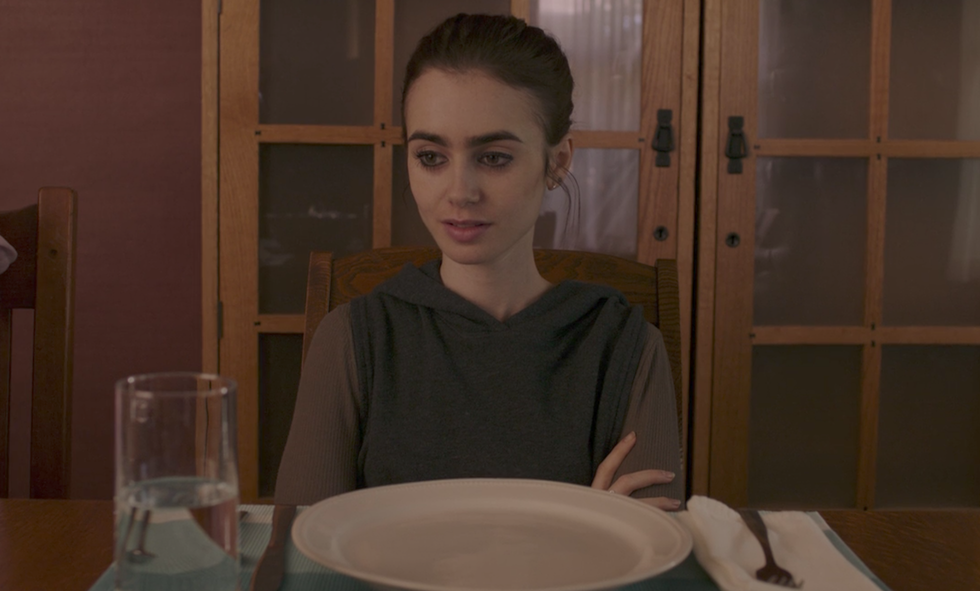
Recently, a Netflix original came out titled "To The Bone." This movie follows a woman named Ellen (played by Lily Collins) as she deals with her battle with anorexia nervosa. She has been through many different in-patient programs and her family is desperate to find a solution. They settle on sending her to a Dr. Beckham (played by Keanu Reeves) who a bit more radical. With this doctor, she has to go to a house with 6 other patients with big personalities that are also struggling with eating disorders.
This movie is raw, real and moving. They didn’t shy away from the harsh realities of eating disorders. They showed the bad times and the good.
Something that really stood out to me about this movie that really bothered me is that they focused a lot on Ellen’s family and how they were reacting to her illness. Her stepmother seemed to follow a very stereotypical reaction to this situation. She just kept begging Ellen to eat, trying to make it a joke and reminding Ellen how much of a burden she was. On top of that, her sister also reminded her that it was hard for her not to have her sister around.
While watching this movie, all I could think about was how horrible it was that her family was making it all about them. The worst part is that I know that is probably what happens to people that really do suffer from an eating disorder. Their parents blame themselves and wallow in their guilt about not being a good enough parents to pay attention to their kid that really needs their help.
On the other end of the spectrum, there are the people out there that don’t understand eating disorders and just tell them “It’s easy, you just have to eat.” This is a lot like telling someone that is depressed to “choose to be happy.” Mental illness doesn’t work like that.
The doctor in this movie, Dr. Beckham, had a really interesting approach to the illness and that he gave the patient all the power. They has to choose whether or not they wanted to live. He didn’t force them to eat, he didn’t put them under surveillance. He trusted that if they truly wanted to live they would put in the work. If they didn’t, they would hit rock bottom and have to face the music and decide when that happened.
What I appreciated most about how they presented this movie is that Ellen didn’t show up to the house and magically get better. She was still struggling with her negative thoughts and routines even when at the house, all the patients were. This movie showed that people with this disorder can make progress but that doesn’t mean that their journey is any closer to being over. It makes much more work than that.
This movie is an incredible representation of mental illness. It didn’t shy away from the hard stuff and didn’t depict Ellen as this perfect patient. For most of the movie, she refuses to get better but she knows that she’s not okay. She understands that she needs to get better but it just so much harder to do than it is to say. It is by no means perfect, but it is a great way to get the conversation started about mental health and the road to recovery. I highly recommend it!