


35 miles to the south of MCLA, 1100 people are nestled pleasantly, a hamlet, within the town of Great Barrington, in a small village called Housatonic.
During the industrial revolution, the village flourished with economic success, and built itself off of paper mills, located within the village.
These days, those paper mills, long abandoned, have been converted into art galleries and the like, as to be expected with the majority of these old mills towns in Western Massachusetts. Just look at the Eclipse, and all its success.
Another building is the 1850s-era train station, now converted into Substation Recording Studio, and its maestro, an award winning singer-songwriter named Robby Baier, who has written Oscar-nominated songs and amassed numerous acclaims of his own tremendous merits.
But this is not about him.
Let’s go back 45 years.
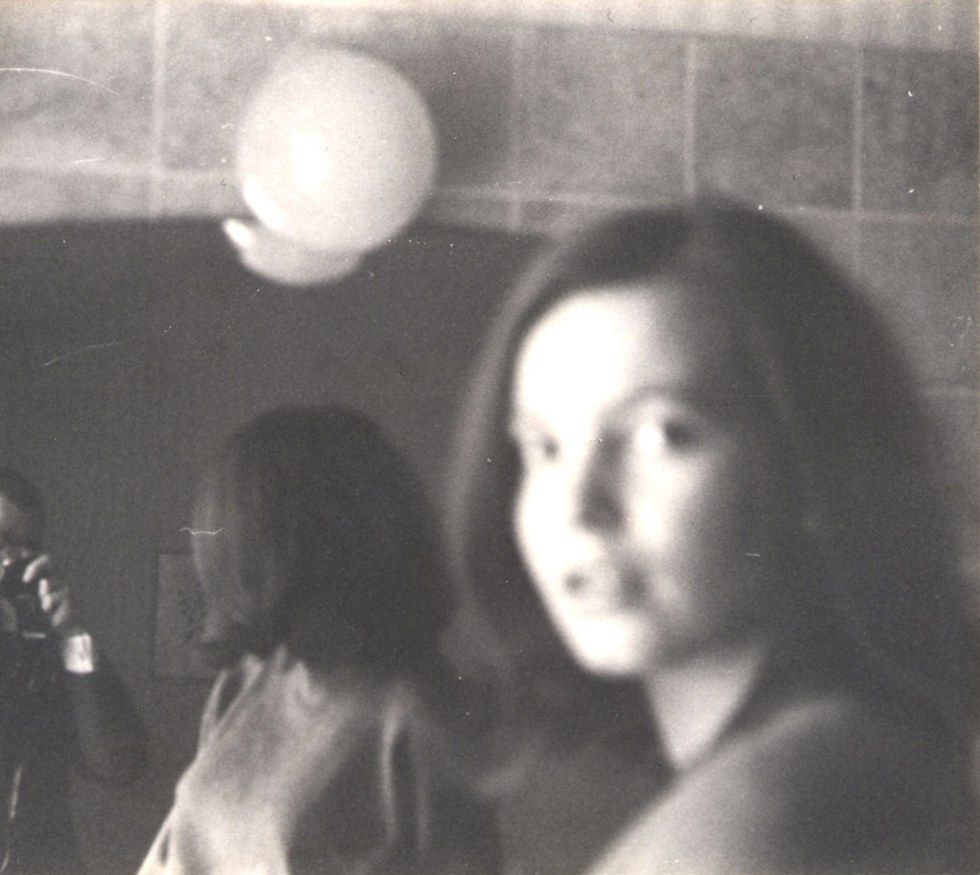
A young German woman named Sibylle Baier recorded some music at her home, with a cheap reel-to-reel tape machine, gave a few copies to some friends and then retired the tapes to her attic, where they would remain, unheard by less than a dozen friends and family for nearly half a century.
Well, let’s not make her sound so entirely Emily Dickinson.
Before her subsequent relatively "normal" adult life, Baier had a brief stint as an actress; she was featured in one beautiful – albeit innocuous- scene in "Alice in the Cities," an early film of Wim Wenders, a Palme d'Or recipient and director of some pretty great films like "Paris Texas, Buena Vista Social Club," and a personal favorite from my childhood, "The End of Violence."
While her performance was alluring, she decided she did not really want to pursue a career as an actress, or indeed, pursue a career as a musician. Instead, she moved to Western Massachusetts to raise her children, and has remained there for her entire life.
This is where the story may have ended had it not been for her son, whom we spoke of before. Robby Baier discovered his mothers’ long forgotten reel-to-reel tape recordings and decided it might make a nice gift for friends and family. So he modernized them, compiled them on CD.
But he also had the inclination — knowing perhaps, the value of what he had in his possession, so he managed to pass a CD on to J. Mascis.
J. Mascis, if you don’t know, is a pretty important person in musical history. He was in Dinosaur Jr, a pioneering indie-rock band from Western Mass in the mid-1980s. You may know them.
After listening, Mascis passed on the Sibylle Baier CD to Laura Carter, the founder of Athens, Georgia’s Orange Twin Records, also a founding member of the Elephant 6 Recording Company.
Oh, she also recorded zanzithophone on that one album you have heard.
Anyway, Laura Carter realized what they had. And on February 7, 2006, Orange Twin released Sibylle Baier’s one and only album, "Colour Green."
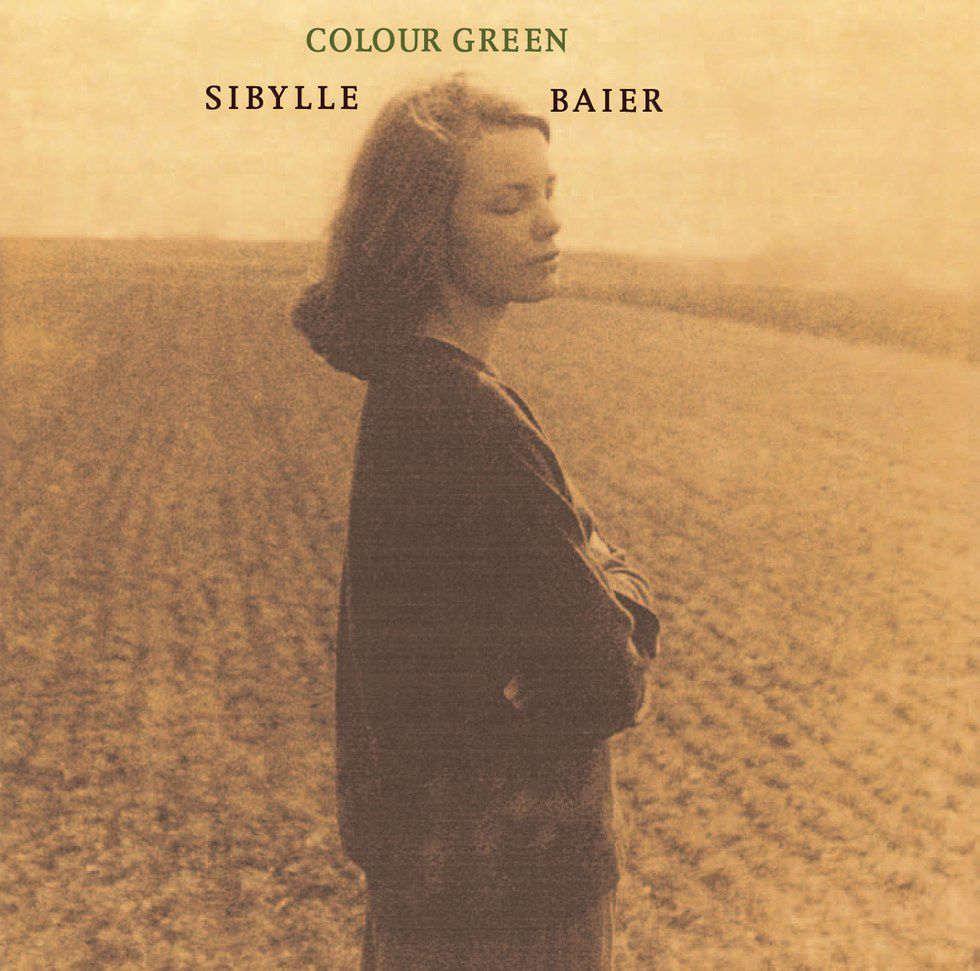
The album is shy of absolutely incredible. It fits in perfectly in the quintessential folkie library of those “who have time to be quiet," alongside other notable lost geniuses like Nick Drake, Jackson C. Frank and Linda Perhacs.
What is perhaps unique about Sibylle Baier, is how her record seamlessly and inexplicably captures New England living — from a woman who had not yet lived there, having spent the first two decades of her life in Germany. Baier would live in the Berkshires sure, but she has captured the essence of a brisk morning atop Mt. Greylock with her lyrical purity and delicate guitar picking in some fairly impressive Nick Drake-esque tunings.
She sings with a voice not so unsimilar to Nico of The Velvet Underground and Warhol fame, but with a certain sensible tenderness, a softness that Nico was never capable of, more akin to perhaps the late, great Trish Keenan of Broadcast fame.
It’s unfortunate that the selling point for many with Sibylle Baier is the “hidden gem” appeal of her record. It is very hip and quaint and exciting for a record junkie to “discover” an artist like Baier. It is why most of us pick up records we have not heard prior to that, because we hope we’ve struck gold.
The underrated genius of Sibylle Baier is nothing short of tragedy — sure, but it is important to unequivocally and with great severity approach her record like you would any other. It can be enjoyed thoroughly regardless of its colorful background.
"Colour Green" is a short folk record, 36 minutes long. Like the best Joni Mitchell records, the best Bert Jansch records, the real deepened appreciation comes from repeat listens, at very precise moments, over elongated periods of time. It is certainly a record for 3 or 4 a.m. dark and overcast evenings, additionally autumns with equal amounts of yellow leaves to orange and red ones.
Listen to “I Lost Something in the Hills” right here.
You can order a copy of "Colour Green" right here, and check out her website.