
My first experiences of "Sailor Moon" was when I was younger and usually just catching the tail end of it on Toonami because I was really sitting in front of the TV to watch "Dragon Ball." Sometimes I'd be able to catch the beginning sequence of "Sailor Moon" and I remember a handful of episodes, particularly the one where all the children start disappearing in some sort of "Pied Piper" scheme; but I guess Super Saiyans just stuck more in my mind than Usagi did at the time.
With the anime adaptation for the manga being made in 1992, "Sailor Moon" could've easily been one of those shows we doll up and idolize because of time, only to find that our nostalgia made it seem perfect. Going back and watching the series on Hulu again has given me a new appreciation for the show because it's one that stands the test of time, progressiveness and all.
The show does have its share of low-budget animated scenes. But I'm not sure if it's passable because I now understand how much work, time, and money goes into animating, or because most of the episodes are usually on point aesthetically with Naoko Takouechi's manga. "Sailor Moon" was produced by Toei Animation who has done anime versions of other hit series like "Saint Seiya," "Dragon Ball," and, "Digimon." They also animated the first magical girl series "Mahoutsukai Sally" (1966), so though dated and stylistically different, Toei had experience with the strong characterizations of the magical girl genre and the pacing required for such a show as Naoko Takeuchi's "Sailor Moon."
When I mention "aesthetic" I'm leaning towards the overall feel of the show rather than how well it matches up against the manga artist's style. "Sailor Moon: Crystal," the reboot that aired this past year, is actually supposed to be closer to Takeuchi's style, but wasn't received well for other reasons. The classic "Sailor Moon" anime with it's rounded character designs and watercolor/pastel backgrounds ease the viewer into a sense of warmth and familiarity. It didn't strike me fully how much the color choices did until the ending changes midway into the first season to a shot where Usagi's literally just dancing in a circle.
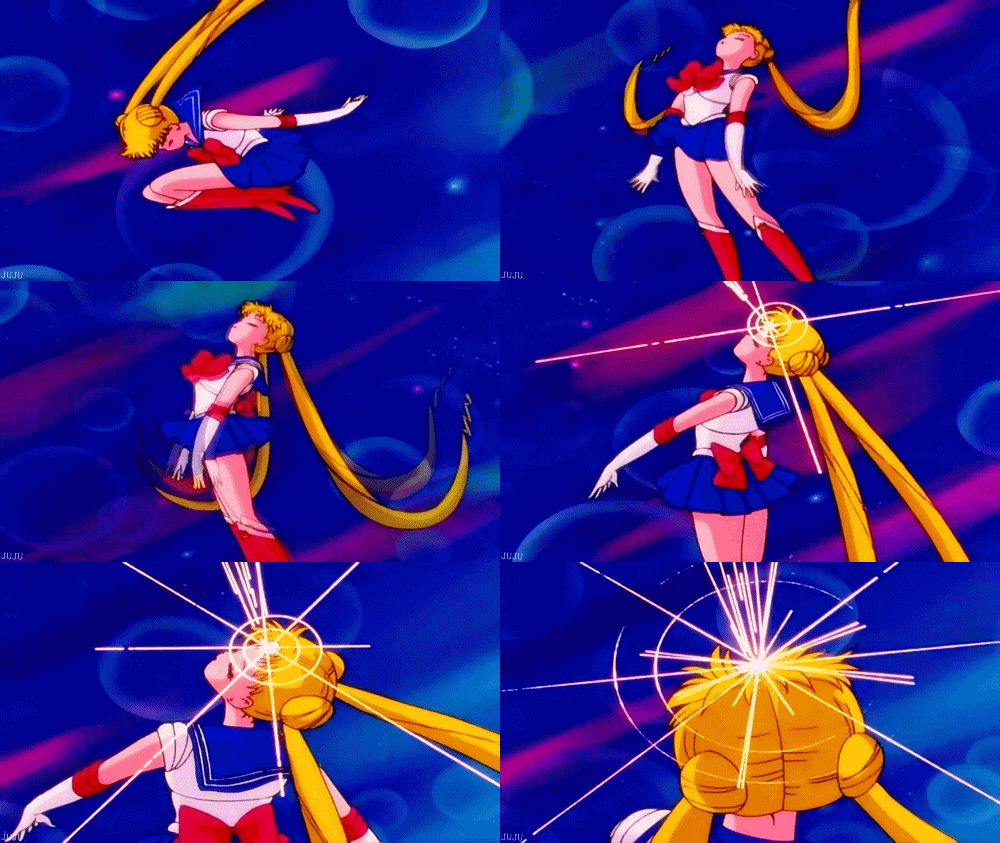
The transformation sequences are also still as beautiful as they were 18 years ago.
The art and animation style lovingly embrace the feminine while the characters soundly remind us that these aren't just "girls"; they have their respective desires and dreams and quirks. There are stray lines of dialogue that make you remember this was produced by a largely male studio, i.e. one episode where it's declared "the friendship between girls is fragile/girls don't stand up for each other" but in the same episode the statement is countered when the characters come back to reconcile with one another because they value each other as friends.
The other aspect that had my heart warm was that the boys in this show that have an interest in the female cast (aside from Mamoru Chiba) are sensitive and their relationship with them feels gentle. Ami /"Sailor Mercury" had a brief love interest in Ryo Urawa who admired her intelligence and became inspired by it to do better for himself. Rei/ "Sailor Mars" warms to Yuuichirou Kumada over time, who is her grandfather's disciple and is often head-over-heels ready to risk his life for hers, despite her capability to fend for herself as a Sailor Senshi.
I still have the rest of the first season and the five others to complete, but "Sailor Moon" is definitely a show you shouldn't be afraid to re-watch out of nostalgia or otherwise.

















