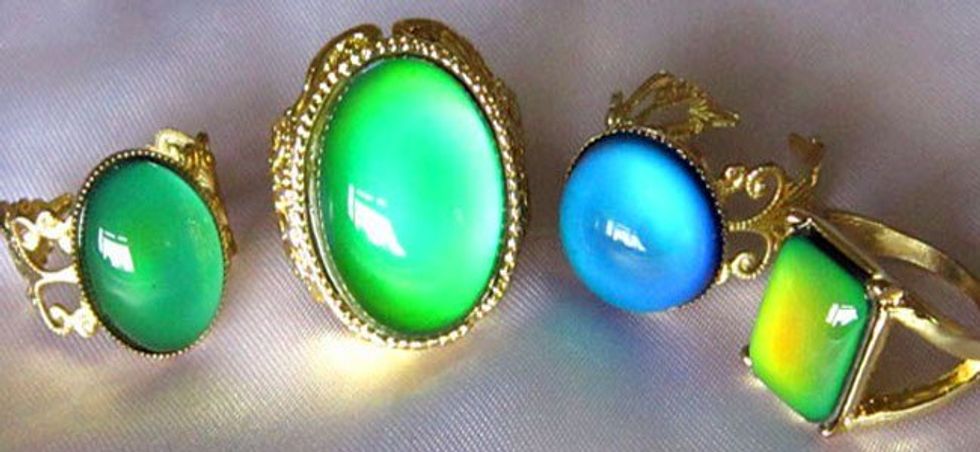
When people ask me what super power I wish I had, I always respond with the same answer, “I’d want to read minds.” People usually back away slowly or make a face, and then they try and talk to me about the burdens my power would bring. They usually contend with “What if you learned that someone hated you?”
At first I was scared off by this point, but then I realized that knowing what people “actually think” would be a freeing experience. If someone loathed me, I wouldn’t have to put energy into being their friend. Problem solved. Or if they hated me for a reason that was easily resolved, I could patch the rift between us.
There would be no guessing if a text was meant to be flirtatious or just friendly.
We’d have issues with the academic integrity policy, and I would feel terrible about compromising the privacy of my friends, but I believe that the truth would just be so much easier.
However, since I can’t read minds, I propose everyone wear mood rings. They are fine, fresh, fierce, and a kick-ass throwback to childhood.
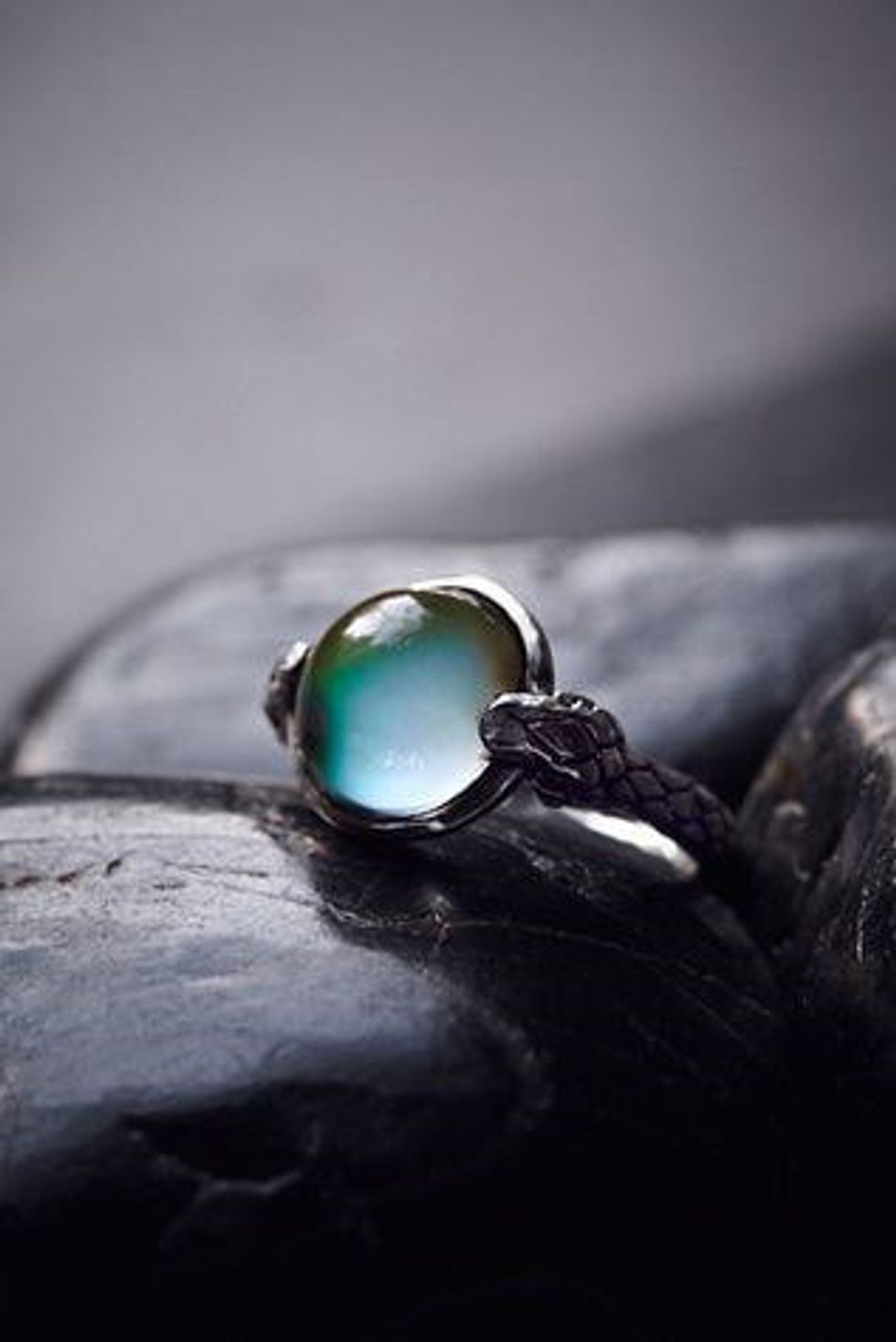
In order to better understand this Spring 2016 must-have, I decide to do a little background research on how mood rings could help one determine friend from foe. It turns out, science has everything to do with it.
“Your mood is correlated with your body temperature.” An article for bestmoodrings.com described for me just how these excellent little statement pieces from the 70s work.
First off, I learned that there are thermotropic liquid crystals inside of the jewelry that shift their molecular structure in response to changes in body temperature. When the crystal molecules alter their orientation, they refract light in a different way. Different geometries reflect different wavelengths of light, and thus, we perceive different colors on the surface of the ring.

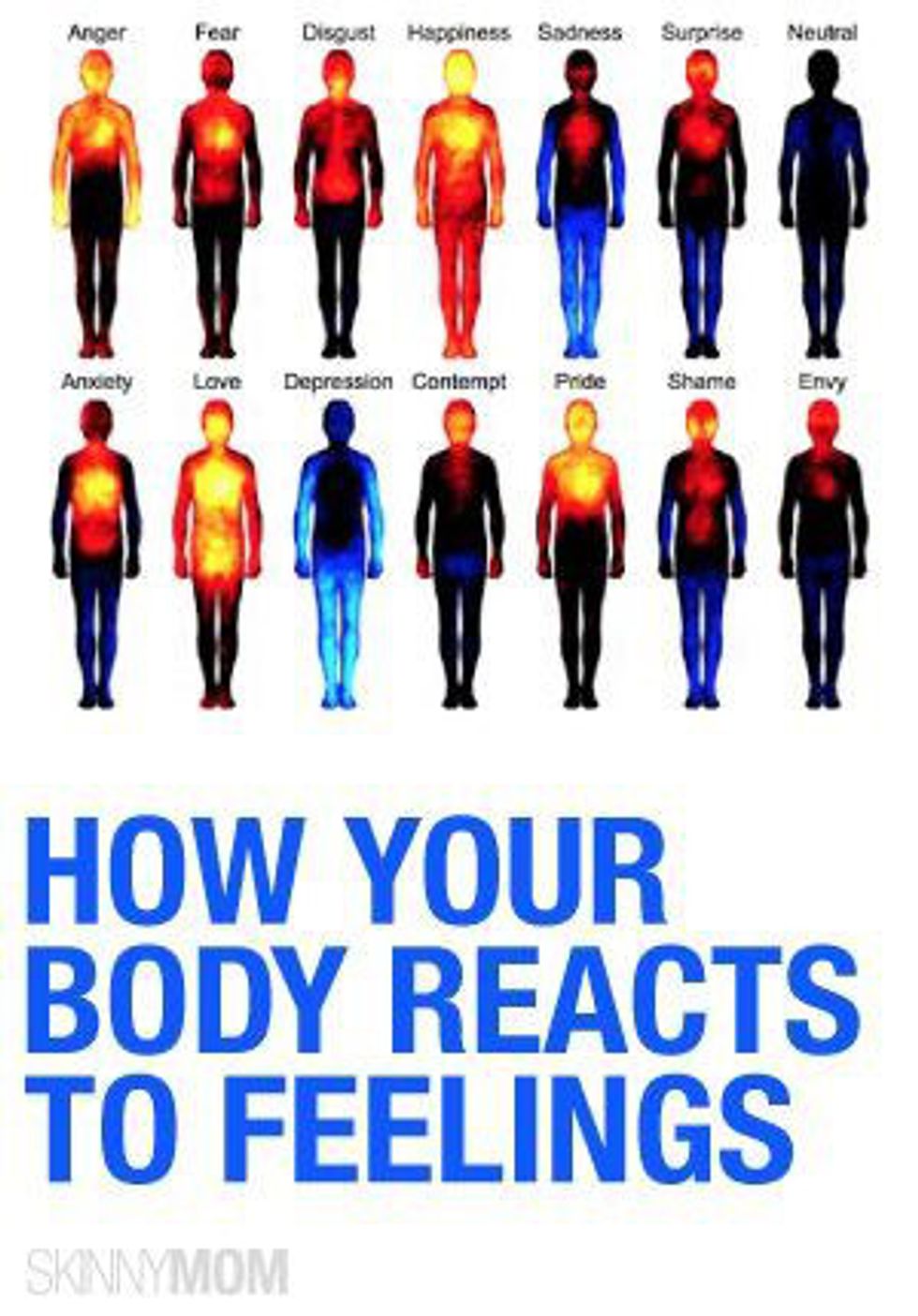
The normal body temperature for humans is around 98.6° F or 37° C. When our emotions change, our body responds accordingly. For example, when we are stressed out, our blood moves towards our internal organs and away from our skin, causing the mood ring to detect a lower temperature. This article by Gizmodo.com goes into the psychological correlation of body temp and the studies of Swedish scientists concerning mood changes.
Because of the variability of mood rings, there are many different interpretations of the colors. Here is a combinatory table of the most common results:
| Bestmoodrings.com | rit-mcsl.org | |
| The top of the list is the warmest temperature, at violet, moving to the coolest temperature, at black.
| The standard interpretations of the colors of mood rings are: •Dark Blue: Happy, Romantic, or Passionate |
|
For those who prefer a visual interpretation, here is an excellent YouTube video that describes the science of mood rings. All in all, this spring, wear a mood ring.