
Any of my closest friends will affirm that I’m a man of conviction -- confident in my beliefs and what I say.
In the sphere of religion, as my friends know all too well, I am a proud atheist. What my friends don’t know as well is that I struggled with this identity for years unending.
Like the majority of kids raised in Catholic families in my town, I was entered into religious education as early as kindergarten. Year after year, grade upon grade, I learned the central tenets of Roman Catholicism. Eventually in the sixth grade, my catechist focused our class upon the story of creation according to the book of Genesis -- and so began my disenchantment with religion.
I found the idea of creationism hard to accept. My uncertainty continued all the way into high school, wherein I decided for my own sanity and happiness that I was an atheist.
So, great -- I certainly do not have an issue with my identity. What is the problem then?
There remains a stigma against atheism in contemporary society - a pervasive idea that somehow atheists are amoral, anarchical “problems” in the world. Atheists are discriminated against just as religious practitioners are. Recently, Mormon parents kicked their daughter out of the house because she came out as an atheist. Seven U.S. states explicitly ban atheists from holding public office, despite this flagrantly violating the First Amendment.
I do not seek to indoctrinate others into holding my beliefs, or lack thereof, nor does the average atheist. Every person is entitled to believe in what they’d like, and I have no problem with that. However, as with any group, atheists have their extremists, as in the case of the Chapel Hill murders—but the argument that a religious group should not be looked down upon for the actions of extremists among them applies as well to atheists as it does to Muslims or Christians, for example.
Why should you care what another person believes in? Why do a person’s religious beliefs determine their character, morality, and even capability to hold office?
You shouldn’t care. A man or woman’s religious beliefs do not define him or her as a person. To this extent, I urge you to think for yourself. It’s perfectly fine to identify with a religion that you were raised under, as long as you think for yourself in the process.
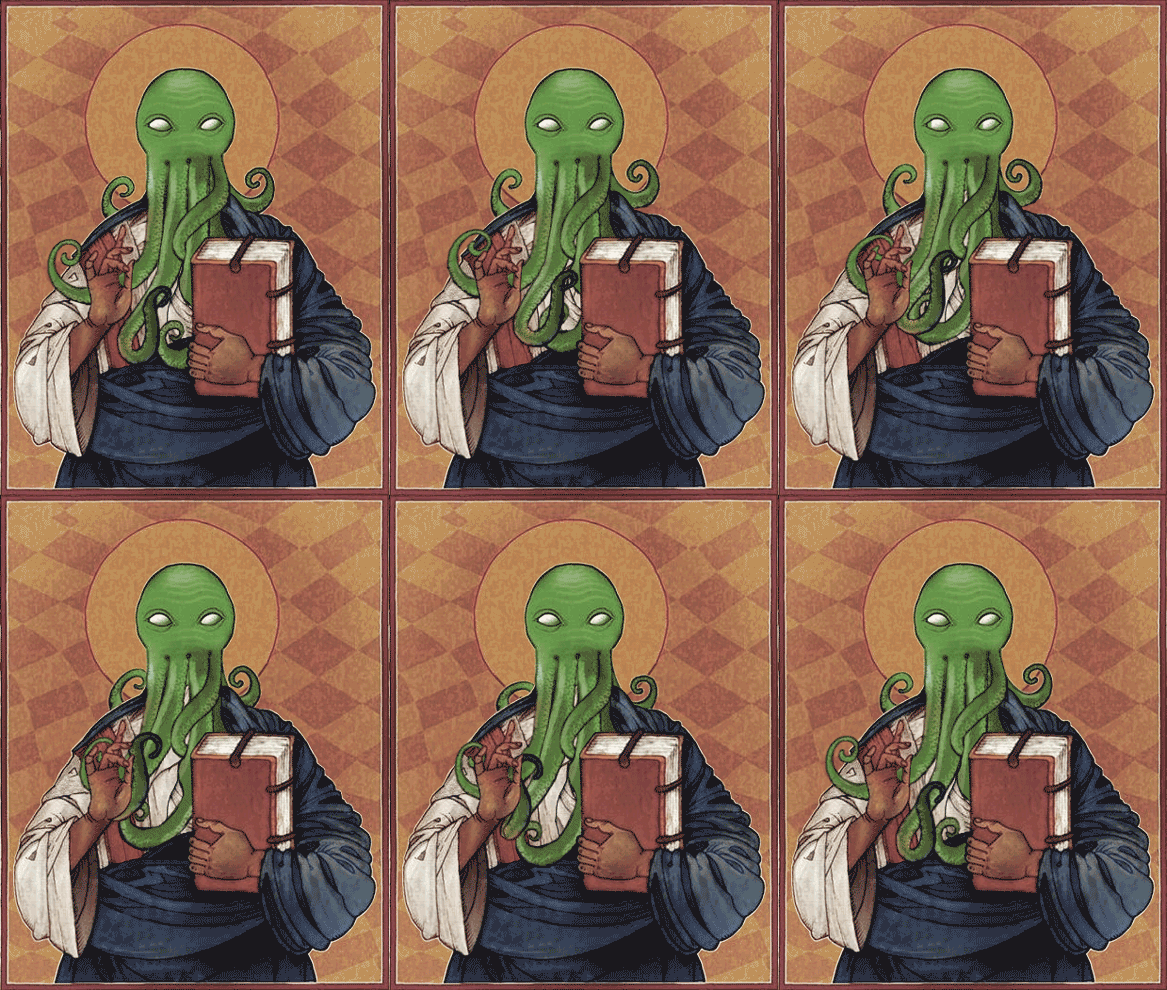
Whether you believe in the Judeo-Christian God, the Muslim god Allah, or even the cosmic horror himself, Cthulhu, you are no more or less of a human being than anybody else. If you are like me and simply don’t believe in the existence of any deity, then that’s great as well.
Embrace your beliefs and revel in your identity. Likewise, respect the views of other people. In the event that you are discriminated against for your beliefs as I have, seek solace in the fact that those peoples’ insecurities do not reflect upon how wonderful a person you truly are.
It is only through vocal opposition and establishment of identity that discrimination against atheists or religious groups will end. “Injustice anywhere is a threat to justice everywhere,” Martin Luther King Jr. once said - and this sentiment is as relevant today as ever.

I beg of you to be happy. A big part of this involves being comfortable with who you are and what you believe in. To the “closeted atheists” among you, have a little faith in your disbelief.