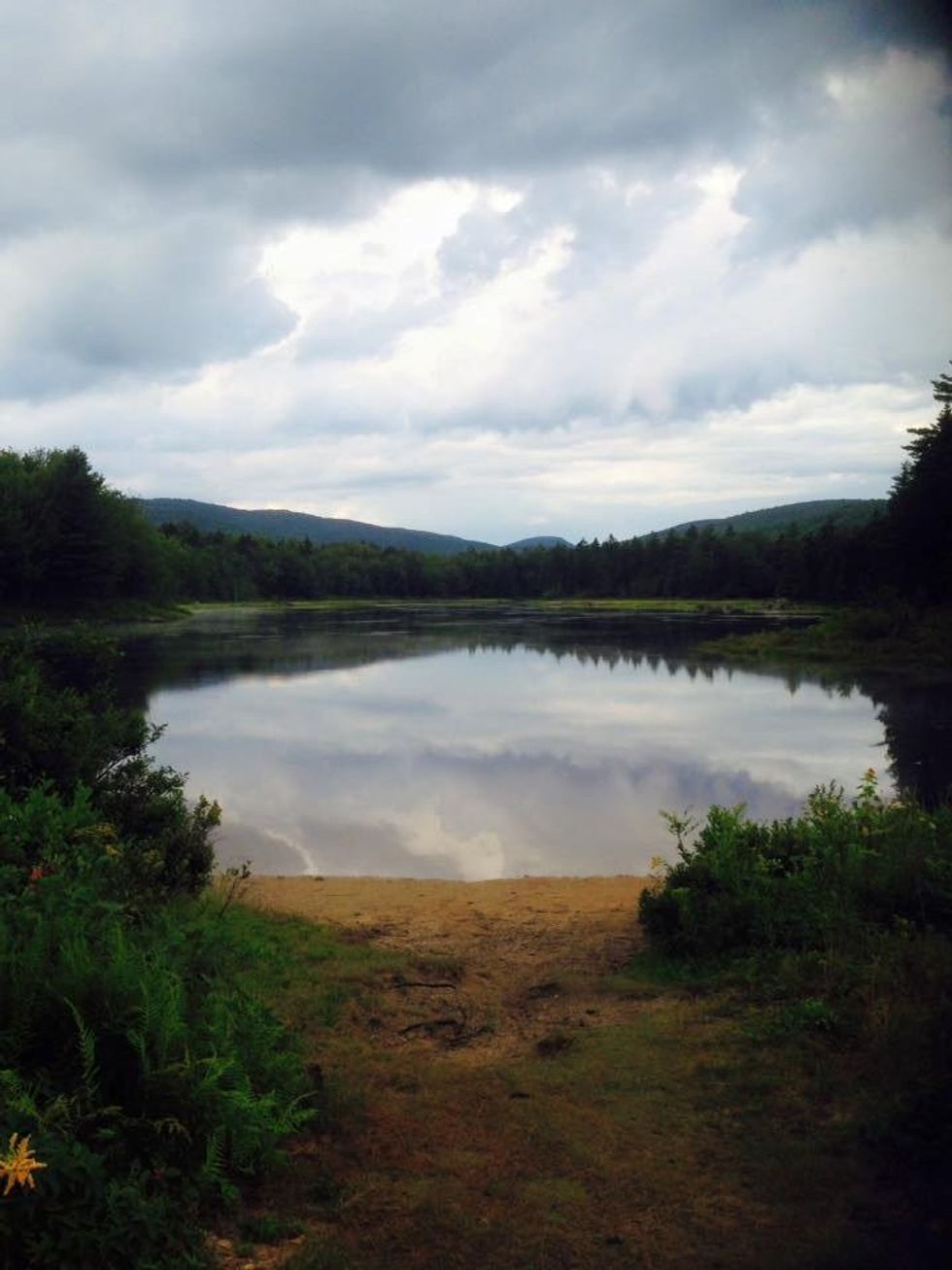
This past Sunday, I found myself crammed in the back seat of my family’s car, my knees sandwiched between a duffel bag and a sleeping bag, my brother’s elbow resting in my ribcage to make room for his dragon Pillow Pet. There are very few places I would actually be interested in traveling to after working a nine-hour brunch shift, but I was thrilled to be en route to Pillsbury State Park in New Hampshire. I was looking forward to the plastic-mildew smell of tents and sleeping bags, clouds of wood smoke, and spaces crowded only by trees and rocks.
I chose to go to school in the city and can’t imagine being anywhere lacking the same energy and excitement. I’ve developed an all-or-nothing attitude when it comes to environment: either one hundred percent concrete or dirt roads and pine needles, rather than sticky asphalt and grass that could be plastic. I’d prefer to walk by a hundred strangers or no one at all, rather than exchange vague smiles and half nods with nameless neighbors and kids who I only remember because they threw up in the cafeteria in first grade. It’s possible that my upbringing made me immune to suburban charms. Wanderlust attracted me to anywhere different. Or maybe the wilderness and the city actually have a lot in common.
They certainly share a few pitfalls. Both environments host an intimidating animal population. I can’t be sure whether I’d rather fight a subway rat or a black bear, but I guess it would depend on which was bigger. The inconvenience of rain increases exponentially, whether it’s raining in your tent and soaking your last hope of starting a fire, or because the skies spontaneously open when you’re still fifteen blocks from home. Most of what they have in common, though, are the qualities that draw me to them.
I guess I like that it’s never completely silent or dark out in the woods or in the city. Taxi horns and running rivers eliminate the need to switch on fans for white noise. Bar lights and stars provide enough light to see your hand in front of your face. The common resistance to stillness makes me feel more grounded, providing me with a heightened awareness of my surroundings.
Or it’s the way the space all feels accessible. At home in the suburbs, there are streets I haven’t walked down because I don’t know anyone who lives there. Property is strictly defined and defended by picket fences and driveways. The woods’ only restricted areas are the patches of poison ivy. In the city, even if every inch of every block is owned by somebody, it feels like you can go anywhere with or without purpose. The possibilities for exploring are endless.
I don’t care if I lose cell phone service when I’ve got fires to build and rivers to climb through. In the city I sometimes forget to call home because there’s just so much happening around me. It’s in these places only that I manage to shake off the nagging desire to be somewhere else. In the center of the world or in the middle of nowhere, it’s easy to momentarily forget that anything exists outside of where you are.