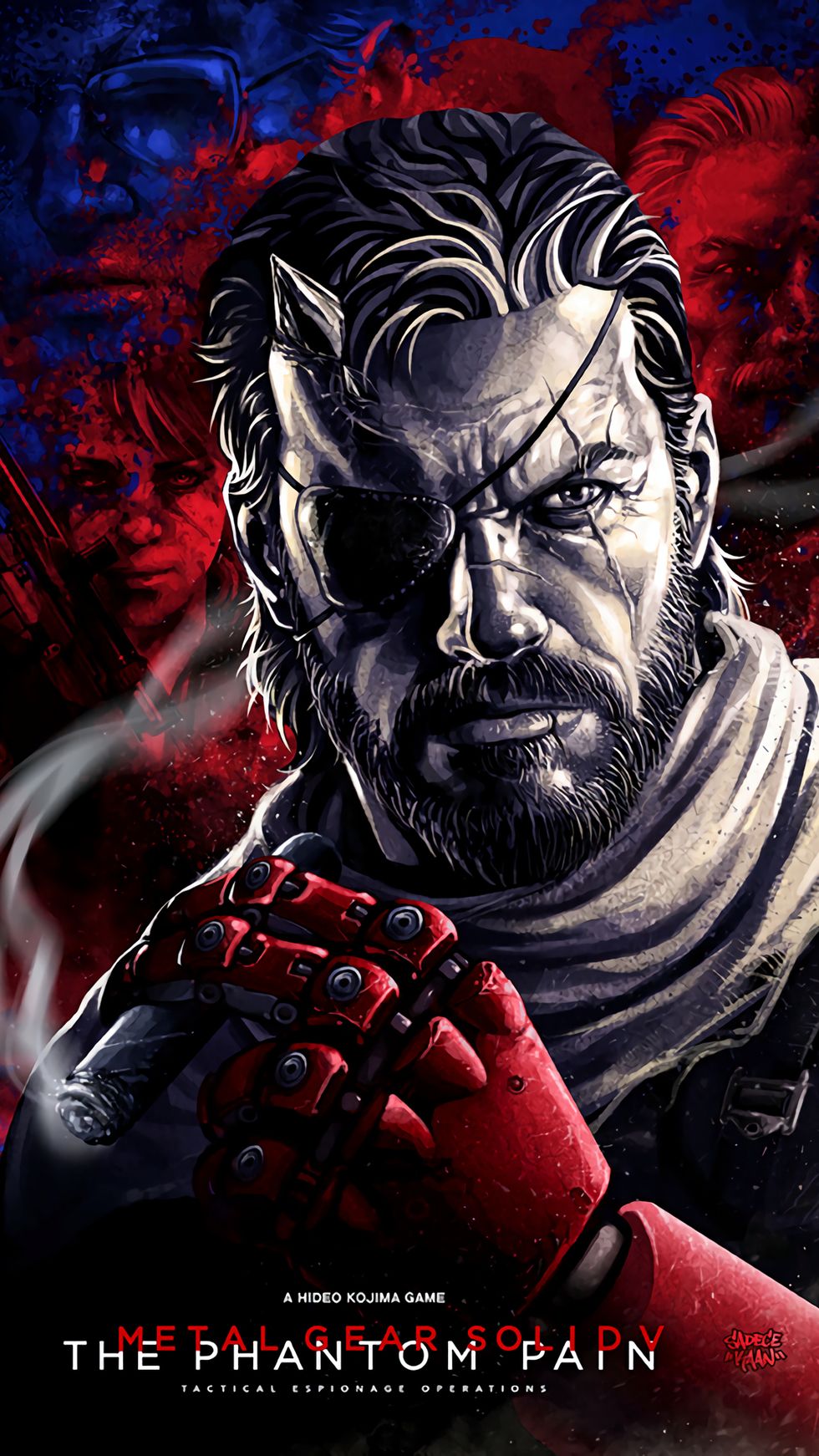
Videogames are rarely ever considered to be art. There are some instances where a game transcends the medium and can represent two stories. One the game shows off at face value and one that one can find under the surface. Recently I got around to playing such a game, the 2015 game of the year contender Metal Gear Solid V.
At first, I saw it as a simple third person shooter with a generic story and themes. Needless to say, I wasn't expecting much out of my experience. I'd never particularly cared for the series before picking this title up mainly because of the complicated story and rich 30 year history I didn't have the time or money to experience for myself.
Here I'd like to recap a discovery and an eventual conclusion that I drew once the credits rolled on MGSV. Not only is this game a masterpiece of gameplay but it's also a showcase of how well life bleeds into art so seamlessly. At surface level one can call MGSV a simple military shooter with a somewhat deep story and rich game design. Upon closer inspection you can see a glimpse into what happens when an artist is given the ability to achieve his dream and what happens when that artist flies too close to the sun.
The game takes place a key point in the Metal Gear timeline. Before Solid Snake took center stage but after Big Boss (his father) took part in covert CIA operation Snake Eater. It was promised to be the missing link that would tie up any remaining questions fans might have had. It was going to be the final piece in Metal Gear’s complicated and puzzling history. Developer and game creator Hideo Kojima, who I'll cover in depth soon, has said several times that he believes in the power of non-linear storytelling. Needless to say, the series jumps through time more than Doc Brown, so it's easy to get confused.
MGSV served as a great introduction to the world, the story, and the characters. It's the only game (next to Snake Eater) that doesn't rely on past investment and references to tell its story well. As I played more of the game, it piqued my interest into what the rest of the series was as a whole. So, I'd be playing the game while listening to videos explaining the series’ long and complex history. I was motivated, loving every minute of the game.
As I progressed the story got more intense and the gameplay ever more addicting. Hours would pass like seconds. The game had me hooked. Very few games can do that to me; so for MGSV to hold me and never make me want to let go is a huge accomplishment. It all felt like it was coming to a head when Big Boss and his crew came to take down the villain, Skull Face, in a climactic battle. As I stood victorious over my fallen enemy (and his giant robot) I felt triumphant. Then the credits rolled. As I was about to shut off the game another screen appeared: “CONTINUED IN PART TWO,” it said.
A preview of amazing new cutscenes and moments flashed before my eyes and before I knew what hit me I was back for another round. I had sunk 40 hours into this game. To find out that this was only the halfway mark sent my mind spiraling with possibilities. I was then severely disappointed to discover that this half was a repeat of all of the missions I'd already done on higher difficulties. While that was fun, there was nothing about part two that struck me as much as part one. As I was finally starting to enjoy myself again, the game reset and I was forced to replay the opening mission.
After that, the grand finale was revealed. Then the credits rolled. For real this time.
I was left so confused. Why not just end it at the 40 hour mark? Why make me keep going? Why do I feel like the game wasn't even completed?
See, this is where my research into Kojima began. As did my appreciation and admiration for the artistry behind MGSV, even if it wasn't fully intentional. Kojima had always wanted this game to be his magnum opus. The legacy he would leave behind after he left the game industry. It was to be the crown jewel on top of an already successful and lucrative franchise, in commercial worth and sentimental worth.
Parent company Konami announced at the start of production that MGSV would be the largest game Kojima would ever work on. With that, came a hefty budget. After months of work and tons of delays, Kojima was fired and all of his future projects shut down. MGSV was slated to be the final game he would make alongside Konami. Very few know what caused the split but I have a theory.
In America, Konami only deals in videogames. In Japan, however, their business is almost universal. Games really take a backseat to their other operations. When they discovered that Kojima was hoping for a larger budget they pressed him to release the game faster. Given that he didn't want to release an inferior product, he demanded more time. More time meant more money, so Konami saw their investment as too little reward for the risk they were taking and they let him go. Unfortunately, this led to the infamous part two of MGSV, as mentioned above.
What's ironic, and where the game takes on a metanarrative, is in the fact that the game’s subtitle is: The Phantom Pain. Phantom pain refers to a common phenomenon where patients who lose limbs or fingers/toes experience physical discomfort as their extremity feels like it's there but really isn't. Let's compare this to MGSV. Here we see a part of the game that's meant to be here but really isn't. The player feels some sort of discomfort as they know that this feeling will never be there as well. I knew that because the game was over there was no hope of a satisfying conclusion.
In the same vain, the story deals with that same theme of phantom pain. One of the main characters, Kaz Miller, loses an arm and leg. His entire story arc revolves around his lust for revenge against those who hurt him. He wants nothing more than to kill the man who put him in this position. Everyone else in the game, with the exception of Ocelot, loses something too. Scientist Huey Emmerich loses his wife (even if it is his fault) and his freedom at the hands of Big Boss. The protagonist, Punished Snake, loses his entire identity and is instead psychologically bred to take on the role of Big Boss. Everyone involved in this game, from the characters to the audience to the creators ultimately loses something.
In the end, we're all left with the same Phantom Pain the game inflicts. Kojima lost the ability to make the game he always wanted. That regret will probably stay with him for the rest of his life. To know what could have been if Konami hadn't come and meddled in his project. The player feels that same feeling with a dash of betrayal mixed in. You're left wondering: is this the big conclusion I was promised? What happened to the rest of the game?
I could honestly go on all day about the themes and correlations in MGSV. It's definitely another topic I’d like to cover. Consider this an Odyssey mini-series about Metal Gear Solid V: The Phantom Pain. Next time I'd like to cover the story, if I have the time. What's ironic is that as I'm writing this I'm feeling a phantom pain myself of what I wanted this article to be. Due to deadlines, certain things and elements need to be cut. Until next time.