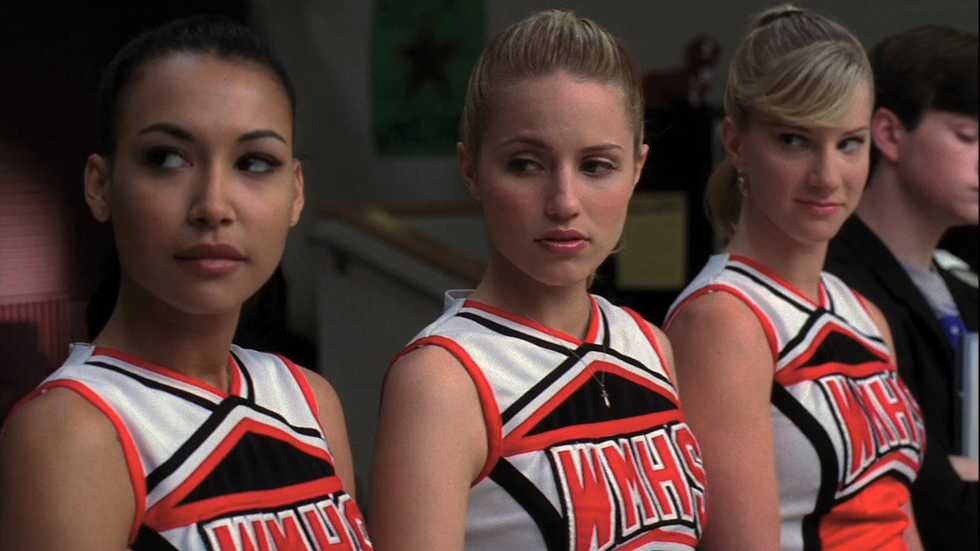
Chances are, if you’ve watched any modern coming-of-age movie, you’ve seen cheerleaders portrayed as the snobby, mean girls –– or if the cheerleader isn’t bullying her peers, she’s depicted as a brainless bimbo.
Most of the on-screen athletes wear their cheerleading uniforms all the time, regardless of whether they are cheering or not, and the characters commonly hold no real purpose to the plot, other than to sabotage the protagonist or somehow lower the main character’s self-esteem.
The only character growth cheerleaders usually go through is the realization that being mean is wrong, causing an immediate retreat from the dark side. Basically, being a cheerleader comes with a stigma that is sustained in popular culture.
Cheerleading is one of the most popular sports for young women with over 3.3 million cheerleaders in the United States alone, but the primary representation for these girls is the stereotype that cheerleaders are drama obsessed socialites or absolute morons.
The superficial image of cheerleaders on nearly every teen-based film or television show may seem inconsequential, but these portrayals are so dominant and present in media that children and teens who view the material may be easily influenced into accepting the tropes as truth.
Some of the fundamental qualities required to be a successful cheerleader counter the stereotypes constantly perpetuated in media. For instance, teamwork is vital on a cheer squad. There is a certain level of trust and effort demanded in the execution of stunting at any level. Without the ability to work as a team, safety can be compromised.
Also, cheerleading requires a brain. Between the complexed stunting and tumbling, and the memorization of chants and routines, cheerleaders don’t have room to be the air-heads that they’re too often depicted as. Finally, cheerleaders are expected to be, well, cheerful. Whether performing on the sideline of football games or competing for their own trophies, cheerleaders must be upbeat and spirited in order to captivate their crowd; the mean-girl stereotype doesn't exactly fit this narrative.
It’s unfortunate that the majority of cheer-related representation doesn’t reflect reality, and paints the athletes in an unfavorable light, because the millions of girls who cheer are unable to identify with positive role models or even multi-dimensional people. I don't think it's too much to ask film and television to depict these characters in a more positive light.
These characters should be more dynamic and we shouldn't generalize an entire group of athletes.