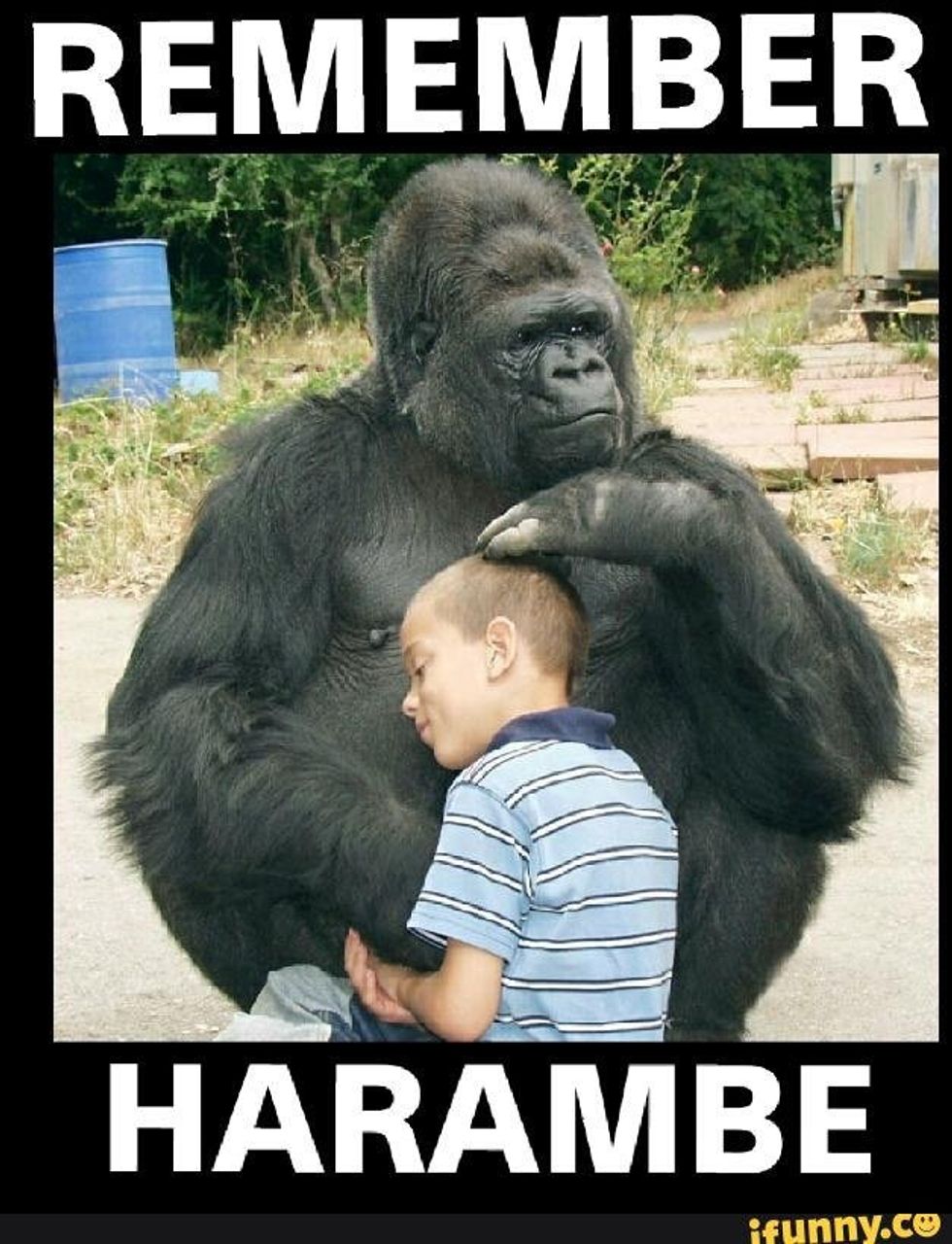
The University of Massachusetts at Amherst has recently put a ban on jokes regarding Harambe the gorilla. Harambe was the gorilla who was shot at the Cincinnati Zoo earlier this year when a child fell into his enclosure and the child’s life was at risk. Since then a potpourri of jokes and memes have been made about Harambe, particularly on Twitter. I do not find the actual death of the gorilla humorous. I do, however, find it humorous that Harambe has become an Internet icon, and is listed alongside Prince and Gene Wilder as celebrities who died in 2016.

So why, pray tell, did U-Mass Amherst ban Harambe jokes? According to some RAs at the University, because the gorilla has the same name as the Harambee African Heritage Student Community. So, naturally, any joke about Harambe the gorilla being killed by George W. Bush become jokes about black people. No, it is totally impossible that Harambe jokes are just a harmless internet fad, they have to secretly be rooted in dark racism. But it does not stop there.
There is one Harambe joke that is a bit on the juvenile side that has also led to the ban. What seems to be a common hashtag on Twitter is “d*cks out for Harambe.” So, naturally, whenever someone utilizes that joke, they are secretly deeply sexist and promulgating rape culture. The RAs in question at U-Mass Amherst go so far as to say this particular joke is a Title IX violation because it encourages men to expose their genitals…for Harambe. But I mean, come on, haven’t we all seen a recent crisis of rapists saying they did what they did “for Harambe.”

The only outrageous thing here is the clampdown on free speech on the campus of U-Mass Amherst. People should be allowed to make jokes about a dead gorilla without there being racist undertones. Even if some are more juvenile, just because they talk about the male genitalia does not mean those making the jokes are trying to promulgate rape culture. We all have a right to free speech, and the right to disagree with what others say. We do not have the right to shut down speech we do not like.