
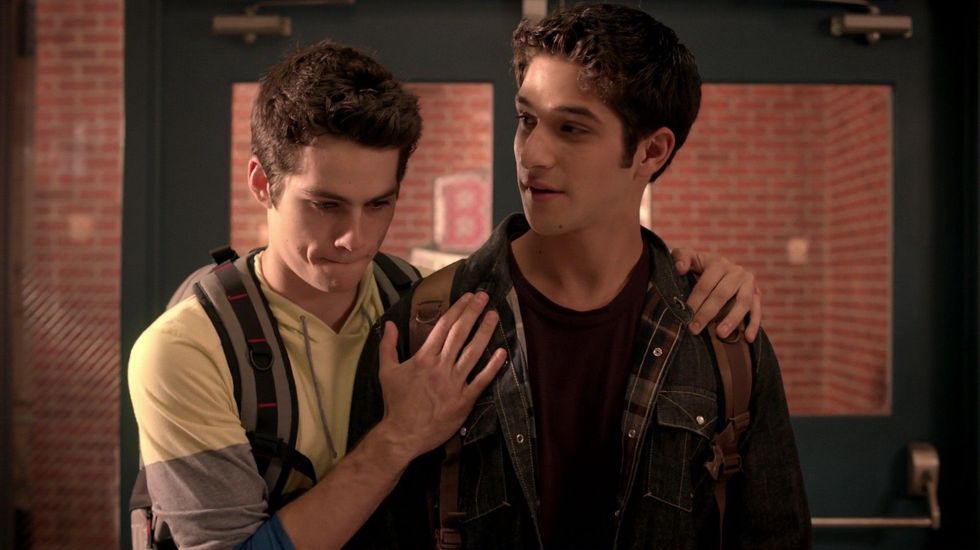
Between TV and film, viewers are constantly oversaturated with half-baked romantic relationships, the one “dumb” friend of the group, satirical dynamics of workplace relationships, and seemingly sociopathic protagonists who slowly learn to be capable of empathy. Yet the one thing that TV shows and summer blockbusters are sorely missing is portrayals of healthy, intimate, and realistic male friendships.
There are several categories of male friendships we typically see in TV and film respectively. In television shows, you typically have the “help-me-get-the-girl” friendship that is strictly used as a plot device for the main romantic pairing, or you have two guys stuck with each other, usually in a buddy cop genre, and call each other friends for the sake of plot purposes. Ironically, television shows have the most ideal circumstances to foster such a friendship given the amount of time a writer has to develop relationships, rather than trying to pull off something as convincing in a 2 hour film.
In film, not only are seemingly “healthy” male friendships even more convoluted than their television counterparts, but they are also practically non-existent. Male friendships in movies are depicted in a very circumstantial way: drinking buddies, the ex of the current love interest, etc. In fact, most male friendships are almost always written as two men contriving together to get the girl as their reason for being friends in the first place; a trope even more annoying than when an intelligent character speaks and another, not so intelligent character, asks them to “speak English”.
What is perhaps even more confounding than anything I’ve listed above is that we have a plethora of affectionate, healthy, and important female friendships in media, yet are severely lacking in male ones. I bet the question you’re asking now is: “Why is it such a big deal? What’s stopping us?”
To start, our personality, beliefs, opinions, likes and dislikes, are all based on how we were raised. This is why most of the time kids who grow up in a certain political atmosphere will most likely adopt those corresponding beliefs as they grow older. Yet, believe it or not, how we also behave is also largely dictated on what kind of media we are exposed to in our formative years. In more extreme cases, Psychology Today reports that: “Violence in media causes desensitization to violence. It may facilitate violent acts. Violence may be contagious by observational learning and social agreement.” This brand of media psychology also applies to how learning the dynamics of something like a close friendship can play into how we interact with our friends in real life. Because most male friendships play out in the countless scenarios previously stated above or, in the very worst case, are ridiculed by other characters that hint at a homosexual attraction (the popular 90’s sitcom “Friends” specializes in this), guys who see this are no doubt going to be less likely to make a genuine connection with another male friend namely because all those TV and film examples almost never make appearances in real life, and men are still unfortunately raised to believe that being feminine, sensitive, or anything that resembles homosexuality is to be avoided at all costs. Which brings me to my next point.
Because of this ingrained sense of masculinity most men are raised to uphold, there is little to zero give when it comes to something like being intimate in any way with the same sex, a blatant disregard for respect towards women, and the dangerous habit and capacity to show no emotion. Where did they learn this if not from their parents? Well, they learned it from TV shows who depict two men embracing as satirically homoerotic. They learned it from films that depict a semi-sober guy who disregards a woman’s personal space in their efforts to prove to his drinking buddies that he can get her number. And they also learned it from any movie or show that depicts a stoic, body-builder hero who maintains the same hard, unemotional and boring face throughout the entirety of his screen time as he encounters hardship after hardship. If we depict male platonic friendships in the correct light, we could see toxic masculinity slowly dissipate, which is a win-win for everyone involved. On the other hand, we also need to look at what’s preventing this kind of platonic representation.
What is also obviously still lacking in commercialized media is the normalization and representation of LGBT characters. In an effort to progress these efforts, fans and consumers of media look at genuine portrayals of male friendships and push it as gay representation simply because of the belief that two men who have great chemistry, are emotional with each other, or even engage in something as simple as a hug must obviously be in love with each other (examples include Steve Rogers and Bucky Barnes from the Marvel Cinematic Universe and Poe Dameron and Finn from Star Wars: the Force Awakens). Some have even gone so far as to claim that these movies are guilty of queer baiting! Yet, while the good intentions are there, writers who see this happening are understandably even more hesitant to include male friendships in their shows or movies, as they are afraid their efforts to normalize that type of friendship will be misconstrued as a romantic pairing that ultimately hinders the plot. Whether these concerns are justified or blatantly homophobic is up to you. However, shows who have successfully pulled off portraying healthy male friendships like Scott McCall and Stiles Stilinski from MTV’s Teen Wolf or Monty and Jasper from CW’s The 100, are shows both known for its diversity and representation of LGBT characters while simultaneously setting their shows in worlds where prejudices such as homophobia don’t exist.
While TV shows such as Teen Wolf or The 100 are starting to break the mold when it comes to depicting model male friendships, there’s still a lot of work to be done at the film level (Sam and Frodo from Lord of the Rings and Ponyboy and Johnny from The Outsiders are the obvious exceptions). All of this, so we can break the problematic societal construct of damaging male relationships.
















