In 1955, author Vladimir Nabokov published his controversial novel, “Lolita.” It is widely considered that his book romanticizes a middle-aged man’s lust for a 12-year-old girl. In consequence, I suppose it is not terribly surprising that many peoples' initial reactions to my fashion hobby are something along the lines of, “is that some sort of… pedo thing?” To answer that question: despite sharing its name, Lolita fashion is not a “pedo thing,” and is in fact entirely unrelated to Nabokov’s book.
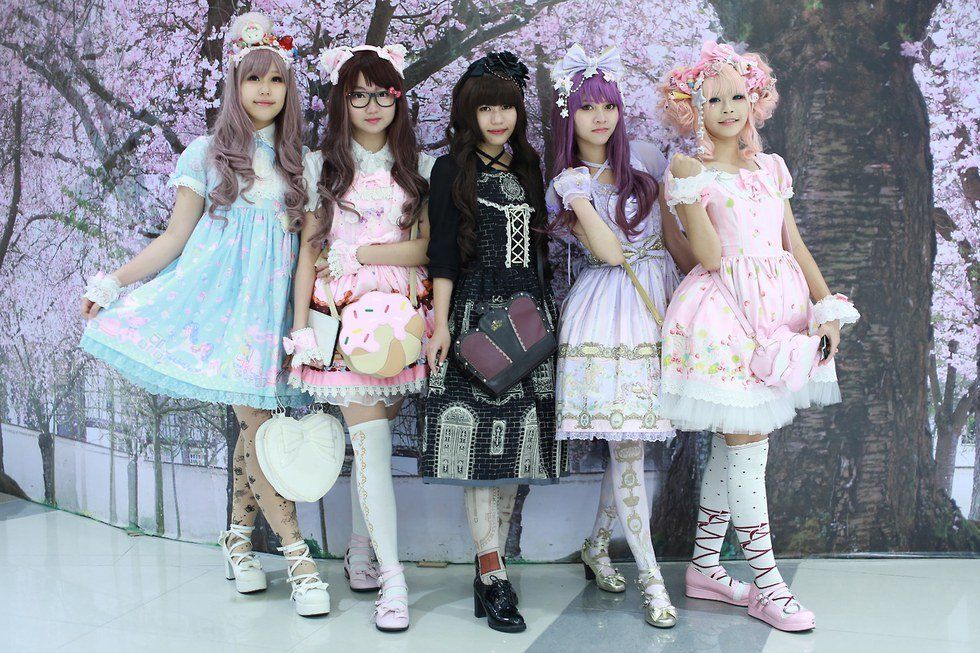
Pronounced roriita in Japanese, Lolita takes French Rococo-era women’s fashion (think Marie Antoinette) and adds vibrant Japanese pop culture. The fashion arose in the late 80s on Harajuku Street in Tokyo, Japan. Its influence has since spread across the world and Lolitas have emerged in virtually every country. Famous Lolita brands such as Angelic Pretty and Baby the Stars Shine Bright have opened stores outside of Japan (San Francisco, New York, Paris and Shanghai) and second-hand Lolita websites in all languages can be easily found on the internet. Communities of Lolitas, or “comms,” arrange meet-ups at tea shops or conventions all over the world to socialize and show off their outfits.
Lolita comes in many shapes and forms: “sweet,” “classic,” “gothic” and “country,” to name a few. All of these subcategories center around elegant knee-length dresses or skirts with petticoats creating either a “bell-shaped” or “A-line” silhouette.

One’s petticoat as well as the tailoring of the skirt determines whether it has an A-line (left) or a bell-shape (right) silhouette.
One’s outfit is complete with bloomers, lacy blouses, socks or tights, heels, wigs, purses, parasols, jewelry and headwear such as bonnets, bow clips and hats. We hold modesty in the highest regard with emphasis on one’s outfit covering bare shoulders and knees. Women who wear the dresses for a nymphet or lolicon fetish (arousal by role-playing a young girl during sexual encounters) are generally despised by the Lolita community, as they believe such behavior perpetuates the inaccurate association between the fashion and Nabokov’s book. As a kink-friendly individual, I personally am not offended by what other women choose to do in their clothes; however, questions from non-Lolitas about “daddy issues” do grow very tiresome.
Due to the fashion’s extravagant nature, Lolitas are approached by curious strangers constantly. “What is all this you got on right here?” “Are you in a play?” and “Hey, where’s Narnia?” are the most common questions I receive. I never quite know what to say in response. I tend to give everyone the same boring spiel on Harajuku fashion and Rococo-era France. It’s a shame that I am never asked why I participate in this fashion; the answer to this has so much more depth.
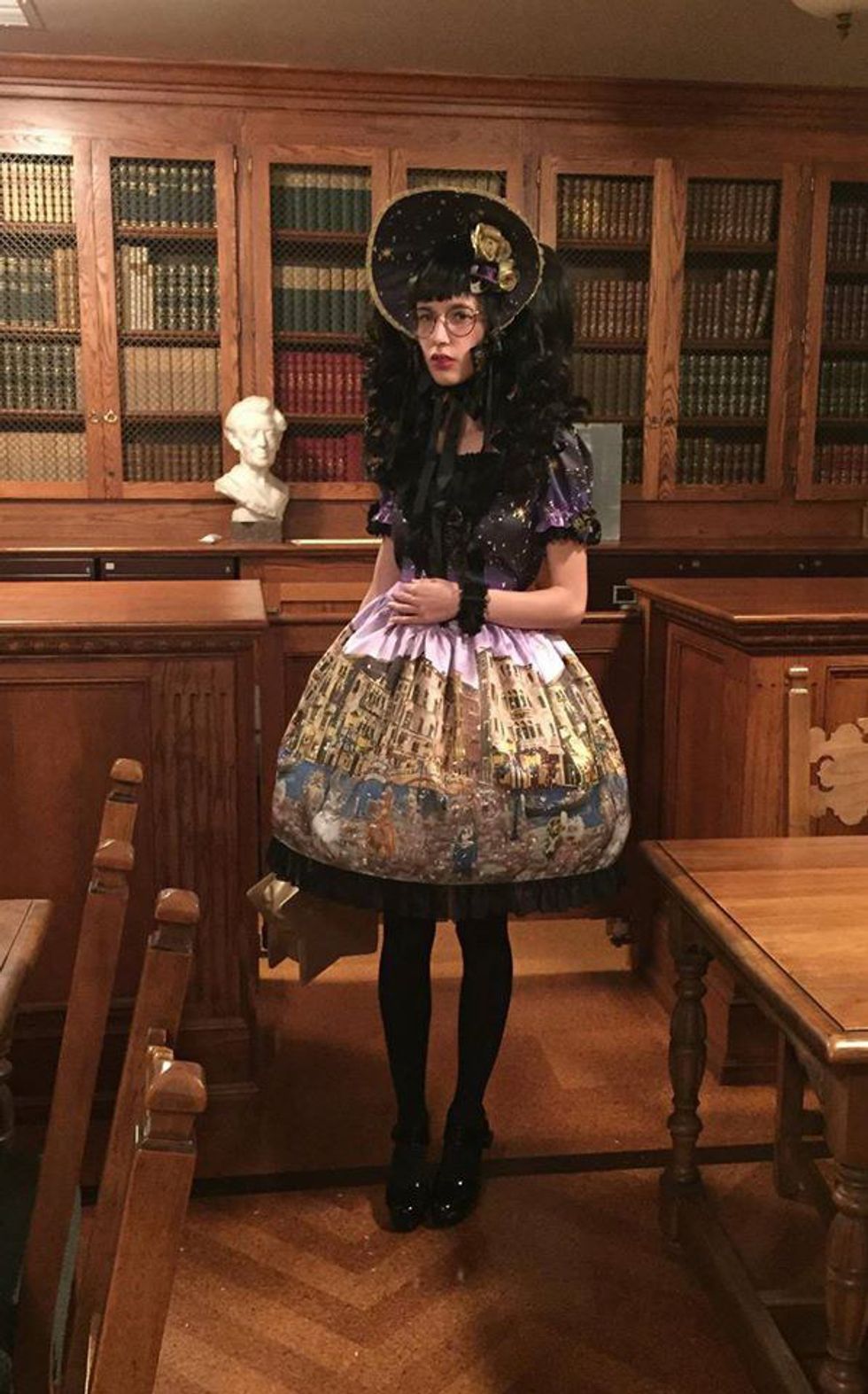 Me, wearing Alice and the Pirates’ “Starlight Carnevale” one-piece and bonnet
Like drag or cosplay does for some, I transform into another person while wearing Lolita. Normally, I hide my rampant insecurities behind being crass; wearing Lolita inspires a more genuine confidence in myself through feeling sweet and decorous. I find that engaging in human interaction while taking on this other persona gives my socially-anxious self a bit of a respite, not to mention that sipping tea and nibbling on little cakes in a frilly outfit makes me feel like royalty. We do not consider Lolita to be a costume, as we are not playing pretend; it is a fashion that inspires a beautiful and elegant persona in many of us. I have found a sense of belonging as well as close friends through the Lolita community. As counter-intuitive as it may seem, I have gained abominable strength through delicacy; lace, frills and bows are my sources of courage.