So how does it usually work? Do you remember the scene in "Titanic" where Rose Dewitt stands from her first-class perch? It starts with a quick glance when you first notice him, but then you look back at him, even if it's just for a glance.
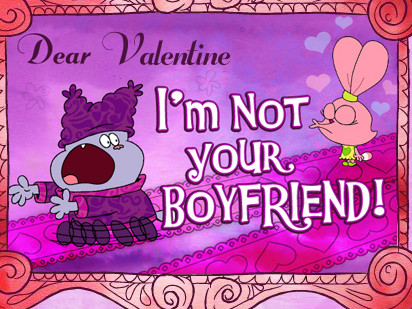
Hopefully, from there on out, it doesn’t quite go like "Titanic." You meet, you talk, and it progresses from there. My favorite stereotype of this sort of first-glance love came from the cartoon "Chowder." In the episode "Chowder’s Girlfriend," the titular character makes the exasperated claim: “I don’t wanna be a boyfriend. Boyfriends have to do all kinds of weird stuff. Like write poetry and hold hands and hold hands and be together forever.” That is often the image that we associate with being in love: being together, being happy, and sharing chocolates on Valentine’s Day.
However, maybe that’s not quite it. In middle school, I had an English teacher who loved imparting life philosophies as well as grammatical pedagogy. One Valentine’s Day, she made a remark that probably went well over our heads, considering that we were hardly legal teenagers at that point. She said something along the lines of, "Love isn’t holding hands or laughing. Love isn’t sitting under a tree in beautiful weather and talking about life. Love is changing a diaper. Love is crying with someone. Love is telling someone they need to fix their mistakes."
There’s a part of me that really can’t make much sense of this most of the time. Why do we help someone when there is no personal benefit? It makes sense, sometimes, with family members. We're just trying to spread our genes. Yet, some relationships don’t quite offer a foreseeable benefit, but we still hold on to those ties for dear life. There’s a part of me that wants things to follow a logical pattern, but when I consider this side more seriously, it scares me. There’s something human about doing dumb things, sometimes for the dumbest of reasons. There’s humanity in messing up and beauty as well. It might make all of the sense in the world to cut off a tie, or there might be a struggle in holding onto it, yet you’re happier holding on than you would be letting go. You should be happier for knowing them, for being with them, for helping them, and for accepting their help.
In closing, I wouldn’t quite be a Carnegie Mellon student without making a little hat-tip to Randy Pausch (for any of you who have never seen Randy Pausch’s book/lecture "The Last Lecture," search for it immediately). So, have you caught the head fake? Yes, this was an article prepared for the Valentine’s day season. It was initiated with that theme in mind, but as I delved in, it felt much easier to talk about the broad scope of bonds. Bonds aren’t always easy to maintain and there are certainly some that need to be severed. It’s important to think about yourself, what you want, your friends, and what they want. Think about what a bond means to you.