
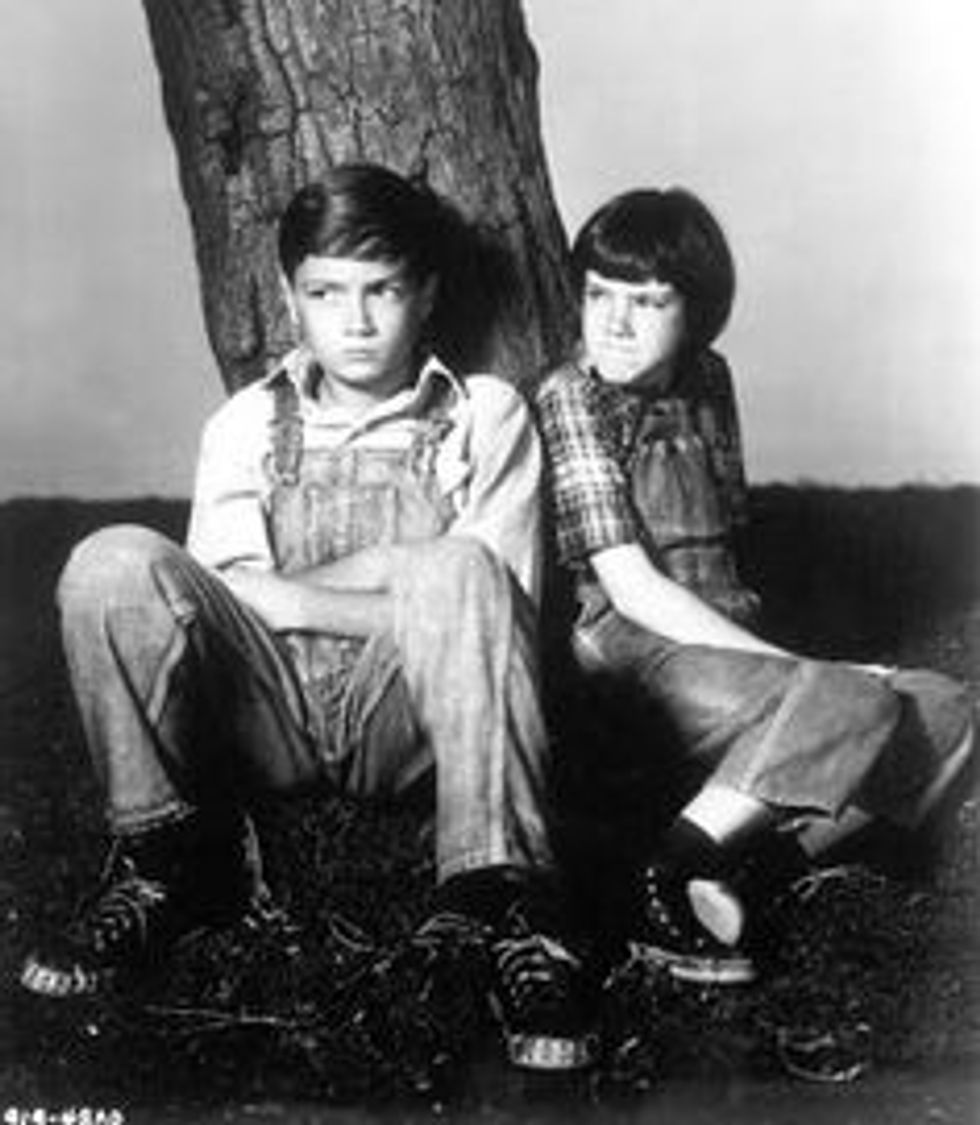
In light of the release of its not-quite-sequel, "Go Set a Watchman," on Tuesday, July 14, I would like to take some time to celebrate everyone's (ok, my) favorite classic southern novel, "To Kill a Mockingbird." Though written from the perspective of the young Jean Louise "Scout" Finch as she adventures and learns about life with her brother, Jem, and their best friend, Dill, it is a complex novel that faces a myriad of social and racial issues, as well as issues pertaining to Scout's coming-of-age. This novel is an eye-opener about the South in the 1930s, in both rural and semi-rural areas, and teaches - through the perspective of an innocence child - so many lessons about humanity.
"You never really understand a person until you consider things from his point of view - until you climb into his skin and walk around in it."
Atticus Finch, Scout's father, is arguably the most influential character in "To Kill a Mockingbird," and his superhero status is greatly due to the fact that the novel is being told from Scout's perspective. Like many young girls, Scout looks up to her father, and rightly so. Atticus spends a great deal of time in the novel sharing wisdom with his children, and this "walk a mile in their shoes" lesson is played out throughout the novel. Atticus teaches this lesson with many characters, but most notably with Walter Cunningham, Tom Robinson, and, of course, Boo Radley.
“It’s not okay to hate anybody.”
This one speaks pretty well for itself, but it is one of the major themes of the novel which has helped it stand the test of time. This book also focuses on societal outcasts. Atticus is seen as somewhat of an outcast because he defends Tom, a black man. He realizes this, and uses it to teach a lesson to his children about loving those who are unloved. He shows Tom respect and does not hate him because of his skin color. He shows respect for Boo Radley and encourages Scout to do the same, rather than fearing him. He even sets an important example by not hating Bob Ewell, the least deserving character in the novel. Atticus believes every person deserves a fair chance.
“Courage is not a man with a gun in his hand. It's knowing you're licked before you begin but you begin anyway and you see it through no matter what. You rarely win, but sometimes you do.”
Atticus sets an amazing example for his children of what it looks like not to give up. He also shows them what it's like to truly be brave. It isn't always what society wants us to picture. It's the person that doesn't give up and tries, despite their fears, the prejudices against them, and the knowledge that "you rarely win." He also works hard to paint a picture of reality for his children, as he sees, first hand, the harshness of the world, and doesn't want Jem and Scout to face it unaware.
“Remember it’s a sin to kill a mockingbird.”
One of the most important lessons Atticus gives Scout is to protect and emulate the mockingbird. When Scout asks Miss Maudie for clarification, she tells Scout that this is because the mockingbird causes no harm, but only creates beautiful music. This is why it is a sin. This is the greatest example Atticus provides of how one should live life. Hurting no others, and only creating beauty.

















