The nominees for 2015 Academy Awards were criticized for being extremely similar—with no female directors or cinematographers, and no actors of colors nominated. Why is that? Why is it so hard for diversity to be represented in media? TV shows like "Glee" are criticized for having characters that are too “blatantly diverse”-the stereotypical flamboyant gay kid, the privileged Jewish girl, and the sassy woman.
It seems like the only time we can see anyone who’s not straight, white and vaguely Christian, they have to be a cartoonish version of themselves. Even in shows that are praised for it’s diversity like "How to Get Away With Murder" with a gay character that is known for being promiscuous.
Why can’t we just have media that includes diversity, without what makes them different, be the only thing about them?
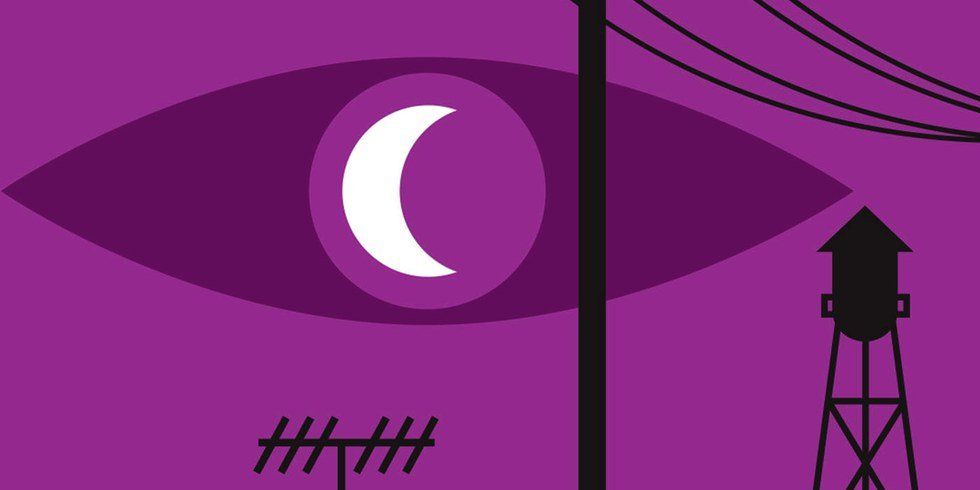
Let me offer an alternative: a podcast called "Welcome to Night Vale."
For the past four years, "Welcome to Night Vale" has been rocking the internet with its comforting existentialism and weird humor. Twice a month, writers Joseph Fink and Jeffrey Cranor flawlessly deliver the strangest, yet entertaining, episodes about a small desert town. The setup is the same each episode-Cecil Palmer, a radio DJ who soothingly describes the surreal going-ons of Night Vale, a town where anything can and will happen.
In the very first episode, Cecil starts talking about a new scientist who moved into town-Carlos, who has perfect hair. Throughout the podcast, we listen as Cecil and Carlos become closer and closer, until they fall and love and become a couple.
Many strange things happen to Cecil and Carlos—angels that don’t exist, forests that have a habit of kidnapping people, and old oak doors that lead to desert otherworlds. However, not once, in over four years, has the issue of Cecil and Carlos being queer come up. Nobody has to come out to their parents, no one has to work to get their friends to accept them, they simply live their weird lives, as a same-sex couple.
This is a common occurrence in Night Vale. We get to know the characters before getting any descriptions at all. In a recent episode, "Lost in the Mail," a girl named Basimah narrates what it’s like to have her father away in the Space/Time War. During the episode, Basimah mentions her father hoping that she would wear her hijab soon, and that she has a girlfriend. She doesn’t need to explicitly state that she is Muslim and queer, it’s just a part of her life. These aspects of Basimah are just that, aspects. They’re not plot points or a way to include different types of people, that’s just who she is.
Cecil brags about his niece Janice constantly, but it wasn’t mentioned that she uses a wheelchair, until another character suggests “healing” her. Once both Cecil and her stepfather Steve realize that he really means “fixing” her handicap, Steve is angry, insisting that there is nothing wrong with her.
And there isn’t. In Night Vale, being in a wheelchair isn’t a big deal. It’s not a person’s defining characteristic. Neither is being gay, or Muslim, or hispanic. All we know of these people is what Cecil describes to us, which is almost never physical. Even Cecil himself is ambiguous, with no clarifications on his race or ethnicity.
This is how all media could be. We could have queer Muslims because there are Muslims who are also queer, not just to make sure there’s LGBTQ and Muslims included in our media. We could have little girls in wheelchairs because there are little girls in wheelchairs, not to check off the disability box in a list of requirements.
I’m asking for media to work on this. I’m asking media to make diverse characters that are natural, not cartoonish. "Welcome to Night Vale" has been proving how easy it is for the last four years. It shouldn’t be a struggle to have diverse characters. It shouldn’t feel forced. Humans are diverse, so why doesn’t our media reflect that?