Almost half of the 2.2 million Americans in federal prison -- and one in 15 black men of the overall population of the United States -- are there for drugs. Even though the public’s attitude towards drug usage -- especially the more innocuous drugs, like marijuana -- is increasingly relaxed, the so-called War on Drugs has cost American taxpayers over $1 trillion dollars in the last four decades as the incarceration rate for drug-related offenses continues to spike. In the same way the 18th amendment didn’t stop people from drinking, keeping drug usage illegal hardly prevents anyone from using. That is proven every time extensive resources are directed to arresting a young person for using or dealing drugs. In order to really make society in the United States safer, drugs should be legalized.

What’s important to establish is that the idea of prohibiting drugs isn’t unfounded. There are undeniable negative effects of drug use. Frequent usage results in physical and mental deterioration. It’s also hard to be a “one-time” user -- or, in other words, an infrequent user -- of some drugs. After the second time one uses meth, it is virtually impossible to resist again, because the drug alters certain neuroanatomical elements in one’s brain that make it feel as necessary to survival as food and water. Drug addiction and its destructive personal effects should not be taken lightly. But the criminalization of drugs has done little to halt addiction, and results in unnecessarily punitive measures against low-level users and dealers, often young people, rather than the apprehension of the world’s real criminals.
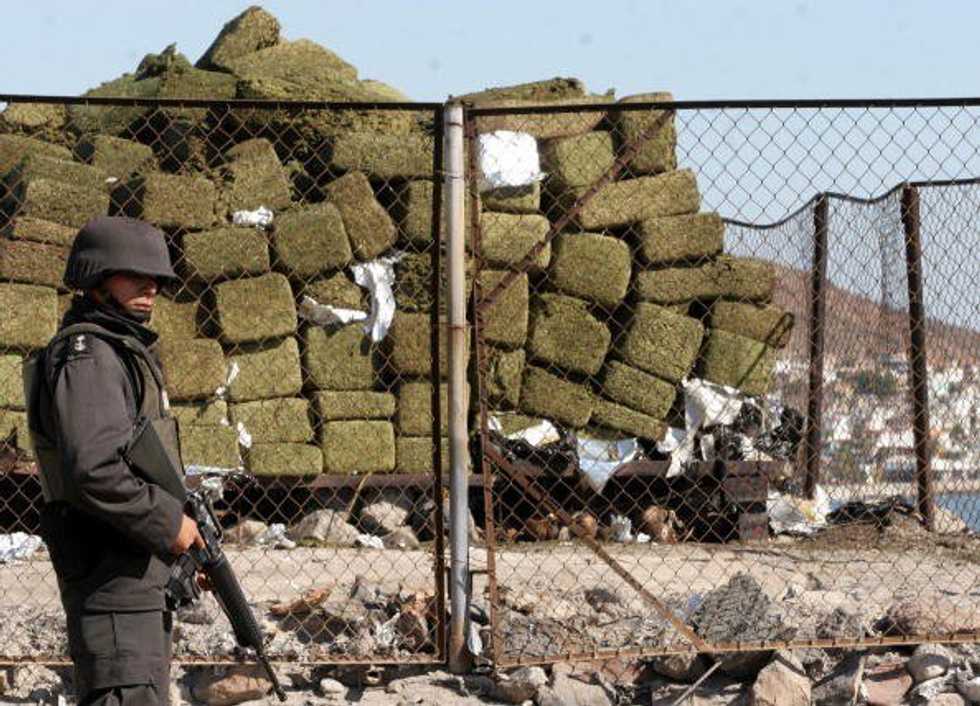
The most pressing concern about the criminalization of drugs, beyond the amount of people that have been thrown into prison for it, is the black market, which has resulted in great domestic and international harm. Supply for drugs is demand-led, but because drugs are illegal, that supply is both unregulated and produced mainly by drug cartels rather than private companies or governmental organizations. Not only is this a huge monetary deficiency to our domestic economy, but every drug purchase funds despicable entities. The Attorney General’s office is finding that more and more drug cartels are trafficking and smuggling humans, as well; the addition of human trafficking earns these groups more than $40 million dollars annually. Overall, the black market for drugs comprises 8 percent of global trade. As long as drugs remain illegal, users’ money will be funneled to these groups, making them more even more powerful and ultimately harder to stop.
Legalizing drugs now would provide law enforcement with a massive arsenal of tools with which they can take down international drug cartels and reduce the spillover of crime that lands in the United States. Rather than being tasked with tracking, investigating, and arresting low-level dealers and users, many of whom are otherwise law-abiding citizens, law enforcement could establish cooperative connections with domestic dealers and users who could provide them with information about their supply sources without fear of legal punishment. Working with information that is freely provided is more reliable and faster than attempting to work out deals and finding valid threats with which to extract the same information from people who have been arrested. If law enforcement has access to the knowledge that every dealer and user in the United States who is not otherwise a criminal has, finding the key operators of the black market -- who are also traffickers, money launderers, and escaped convicts -- becomes a whole lot easier.

Ultimately, to engage in drug use is a decision that people sometimes choose to affirm. Most usage involves soft drugs like marijuana, which presidential candidates and presidents themselves have admitted to using (or smoking but not inhaling). Recreational usage, depending on the drug, doesn't always prompt addiction, but legalization would permit for the spread of information regarding safe drug use and avoiding addiction. If people commit a violent crime under the influence of drugs, they should be arrested, as they would be under the influence of alcohol. It is true that many hard-core, long-time drug users exhibit dysfunctional behavior and criminal activity. This should be prosecuted separately; ultimately anyone who is going to abuse their children or become a pimp won’t need a substance to do it. Moreover, poverty-induced drug use isn't helped by arresting the easiest targets: college aged-users and low-level dealers. To arrest someone for using or selling, especially if they are otherwise a law-abiding citizen, is a waste of resources and an unnecessary destruction of young people’s futures – especially since most college-aged users of drugs do so recreationally and surrender it as they move into the workforce, family life, or both. Resources do not need to be directed to arresting people for personal decisions that are not uniquely damaging to society and have the potential to be economically prudent.
Narcotics departments use extensive resources to send detectives undercover to make purchases of drugs as a means of gathering evidence for an arrest. Such arrests are presented by media outlets as takedowns of players in the "drug trade." What drug trade, though? The drug trade between kids in college who get high, but who also get high marks and are good kids? The drug trade on the corner because people are starved of money and opportunities? First, that’s not true. Drugs are as everywhere as ever. Second, identifying low level drug usage as the "drug trade” is either a wild misunderstanding of what the drug trade really is, or deliberate proliferation of misinformation. With these kinds of persecutions, all that really happens is that kids get arrested in a sea where the big fish continue to swim. Why do people view these kinds of takedowns, that functionally destroy people's futures, as victories, even though the real drug trade, shielded by money and mansions, goes unscathed? Imagine if a detective who goes undercover to find cocaine was able to go undercover to discover a brothel in Tennessee, a hotspot for human trafficking, instead. What would leave us better off?