
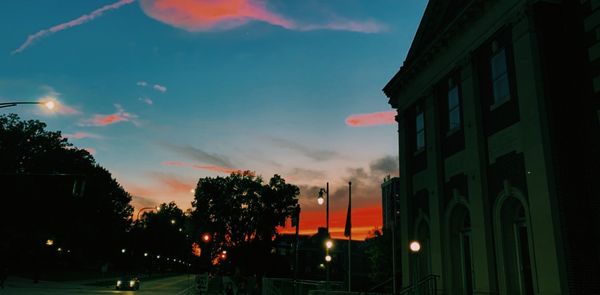

As someone who grew up in the woods of a small Alabama town and moved to suburban Dallas, one of the most refreshing parts of my job at a golf course is working in the outdoors. A two-hour lightning delay kept business fairly slow for most of today, but by the end of the afternoon, the few of us employees and club members left were treated to a beautiful sunset and a cool breeze. As I was leaving, the security guard and I traded remarks about how enjoyable the weather had become. The guard and I tried to explain exactly how it felt outside, each of us knowing what the other was trying to say, but neither of us quite having the words. Eventually, my companion put our collective thoughts into a sentence, saying, "The temperature is best when...when you can't even really tell there is a temperature." I found this to be a profound thought that pertains just as much to the human condition as it does to weather.

As human beings, we tend to avoid radical and challenging thoughts. (I intentionally use the word "tend," knowing by both observation and speculation that there are notable exceptions.) We exude a great amount of effort taking care of ourselves and those close to us through our jobs, hobbies, schooling and just general affection for one another. While this is not only a necessary task, but a noble one, our attempts at self-preservation have given us tunnel vision. We ignore the hot and cold in life, being aroused only to the thoughts and actions that make us comfortable or directly threaten that comfort. Media, politicians and entertainment exploit and enlarge this weakness, providing us with stories that easily spark opinions (usually only a few opinions, though, and ones that most people tend to share), but rarely incite true change from their viewers. We pity those killed by gun violence, we talk about how horrible our political parties and presidential candidates are, we talk in vague and ominous terms about the environment and then we squabble about why other people don't make a change. Both the intellectual burden of identifying issues and the burden of consciousness to solve them have been lifted from the shoulders of the everyday American.
Naturally, the last issue Americans want to discuss is poverty. The very existence of the poor makes us uncomfortable, whether out of distaste or guilt, to the extent that our country has been clearly segregated into impoverished and well-off communities. While issues that pertain to our interests dominate the news, our fellow Americans continue to starve without notice. Economic plans and tax breaks revolve around a middle class that plays the victim to the upper class while continuing to ignore the true victims. Like everything else, we tend to expect someone else to take care of it. But the media rarely portrays issues pertaining to poverty and the stories of the impoverished because if we focused on it for too long or too often, we would realize that doing something about poverty is our responsibility. That realization would make us uncomfortable, and the news, living in the fear that we might turn it off, has no desire to make us too uncomfortable.
Most of us have come to adopt one of two opinions pertaining to solving the issue of poverty. We believe either that the government must do more in terms of spreading wealth through welfare programs, or we believe that the government is incapable of helping the poor properly, arguing that people should pay less taxes towards welfare programs and give more to local charities. But in reality, both of these arguments work together to solve nothing and further our own sense of nobility and security. While the welfare system helps many impoverished people "get by," the government rarely offers any help in building individual character or permanently fixing the problem. Having a little bit of money, food or even a cell phone is unlikely to erase the mindset of survival that the poor have lived with for a long time. They need encouragement, education and exposure to a different society than what they have grown accustomed to, and government housing and food stamps cannot do that on their own.
Yet, we expect all of these people to become heroes — to rise above their circumstances and decide what they want to be and go after it vigorously. Everyone ought to be a feel-good story. We expect the poor to be extraordinary — to defeat all of the odds and become self-made individuals that understand who they are and who they ought to be while most of us are content to continue to keep living the lives that we were born into without much question. Meanwhile, some support local charities or churches, without getting their own hands dirty. But based on the United States' rising poverty levels, the few good Americans who do go out into the field building relationships with and bringing aid to the poor are clearly outnumbered. Naturally, everyone else becomes angry (but not too angry...) with the government, and the cycle repeats.
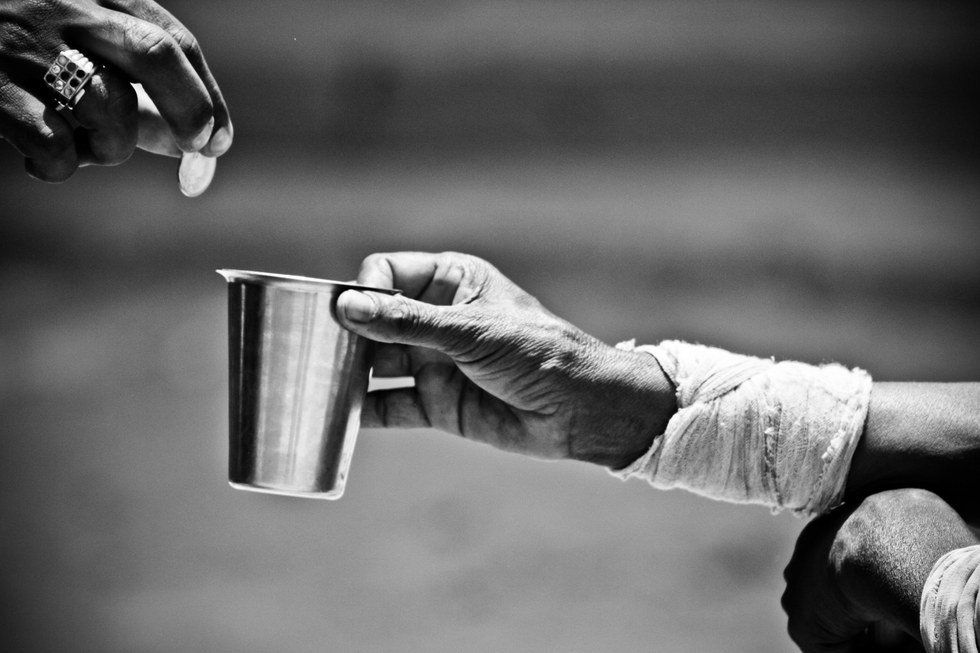
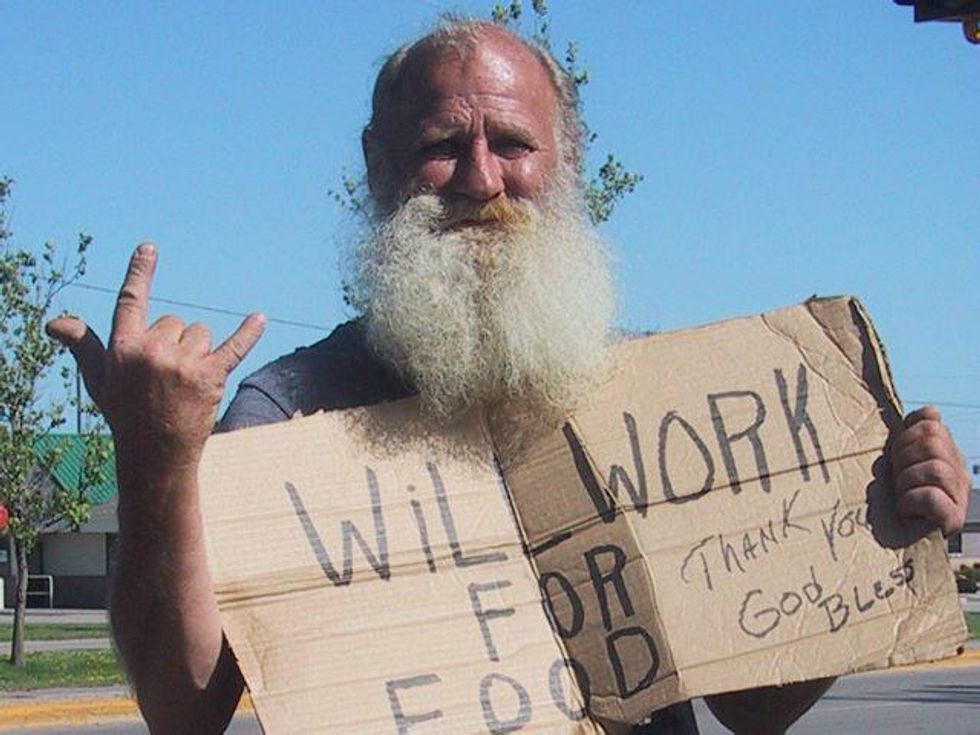
Impactful and observable change among the poor in the United States will take realization and sacrifice. We can no longer ignore poverty simply because we have never known a world without it, but must realize it as an issue worthy of our time and discussion. We have to grapple with the fact that around 20% of our children live in poverty and the fact that our own views helped make that fact a reality. And then, we must take action. I'm willing to argue that most of us don't know a homeless person by name which is quite sad, considering there is no lack of them in the United States or here in Dallas. Go out and meet one today; sacrifice your time. Take the initiative to bring food, clothes and encouragement before they have to make you feel guilty with a sign on the side of the road. Then, keep coming back. Volunteer, become personally invested in your fellow Americans. Push for greater funding for the schools in the impoverished areas of your community. Your local politicians listen to you because you reelect them, so vote and behave in a way that shows your care for someone other than yourself and those closest to you. You and I must discontinue our laziness. It is time to help our fellow Americans overcome the psychological and physical barriers of poverty.

















