


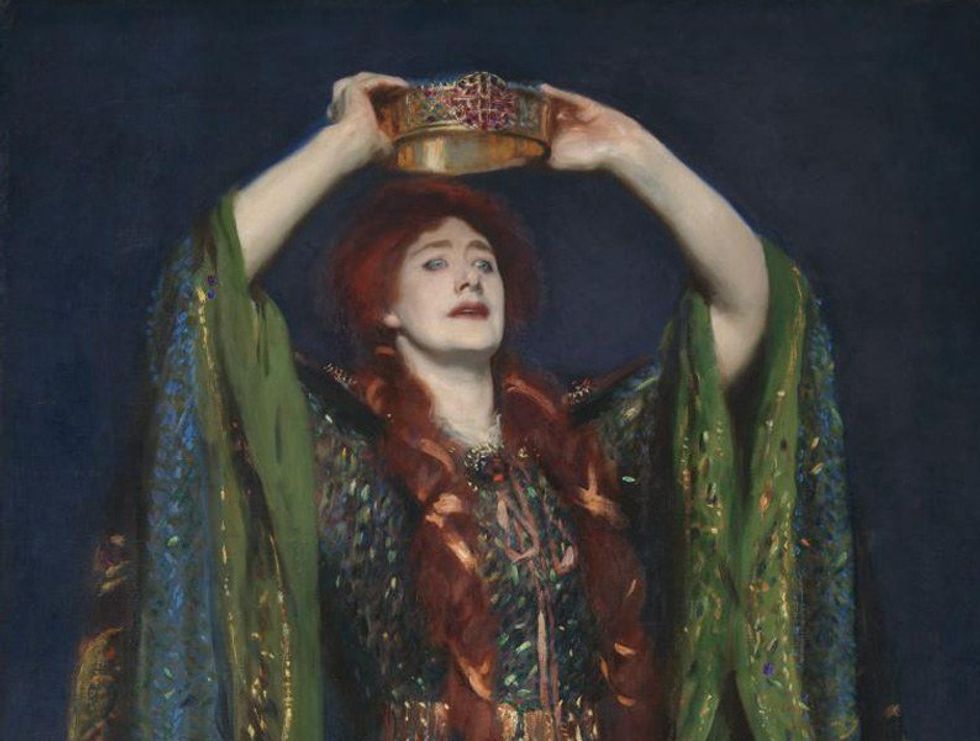
This week, when a teacher asked me for the name of an author I enjoyed and I responded with Shakespeare before I had time to think about it, I wound up confessing to a class of strangers that I care about Lady Macbeth more, perhaps, than the average person ought to.
The first response of course was a laugh, and then the familiar protestation: but she’s evil!
I didn’t have time to respond with a twenty-page defense of Lady Macbeth’s honor (and, given time, I very well could), so I forced a smile and kept my head down. However, in the short space I have here, I can dispel some common misconceptions about the Lady.
1. Lady Macbeth is a murderess! False. Throughout the course of the play, she herself never murders anyone – there is a scene where she says that she tried to take care of Duncan for her husband, but as the king slept he looked too much like her father for her to actually carry it out. Lady Macbeth never actually commits murder.
2. Lady Macbeth is the only reason her husband murders the king and therefore the reason everything goes to heck! False. Macbeth is considering regicide even before he gets home. She encourages him to act like a man and take what is rightfully his, but he has already been toying with the idea by the time his wife tells him she thinks it’s a good one. Additionally, if Macbeth had stopped killing after killing Duncan and taking the throne, they would have been fine. He didn’t consult his wife before having his best friend and an innocent family murdered, though, and so because of this she couldn’t tell him no, honey, you don’t actually have to do that, that’s a very stupid plan, and more people died unnecessarily, including the Macbeths.
3. Lady Macbeth was willing to kill her own baby, why are you defending her?! False. Listen. This is the woman who couldn’t kill a man who resembled her father; why would she ever be able to hurt her own, actual child? This is hyperbole, exaggeration meant to stir Macbeth into being less indecisive, both by the gravity of the claim and by the reminder of the child they lost. She wouldn’t actually hurt a baby, much less her own; she just needs something shocking enough to get her husband to stop being so wishy-washy.
This is a woman who is clever, who knows what her husband needs to get him to accomplish his goals, who is human. She is not evil, and she certainly is not the “fiendlike queen” Malcolm calls her in the final lines of the play. The Lady is a woman who loves her husband and is willing to do whatever she can to help him get where he deserves to be – and who makes a mistake and suffers for it.
















