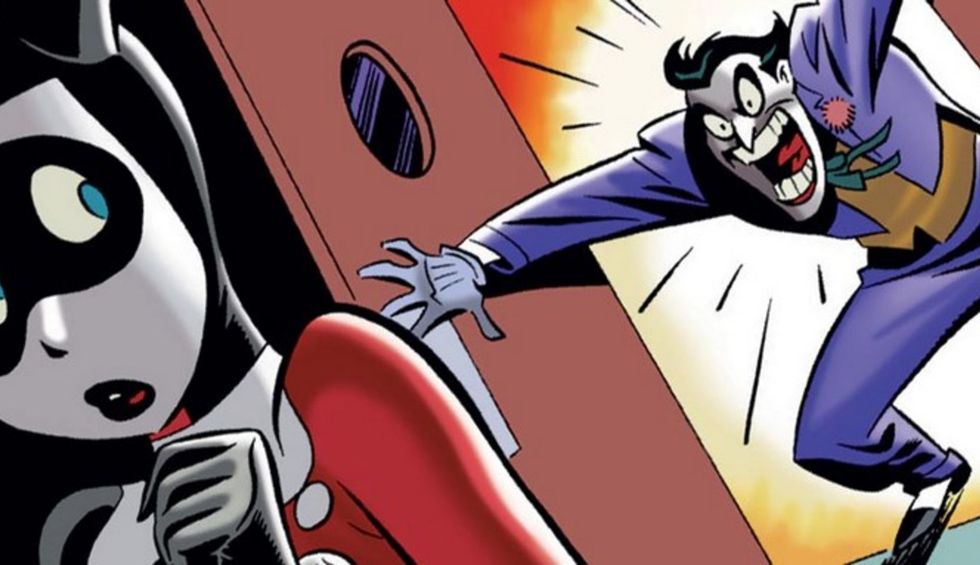
When Harley Quinn was introduced at the Joker's sidekick in 1992, she became a fan favorite. The relationship between the Joker and Harley Quinn also became popular and has been since. A quick Google search will show that the Joker and Harley are madly in love. But, Harley Quinn and the Joker should never be seen as an ideal relationship.
Cute, right?
 Cute, right?
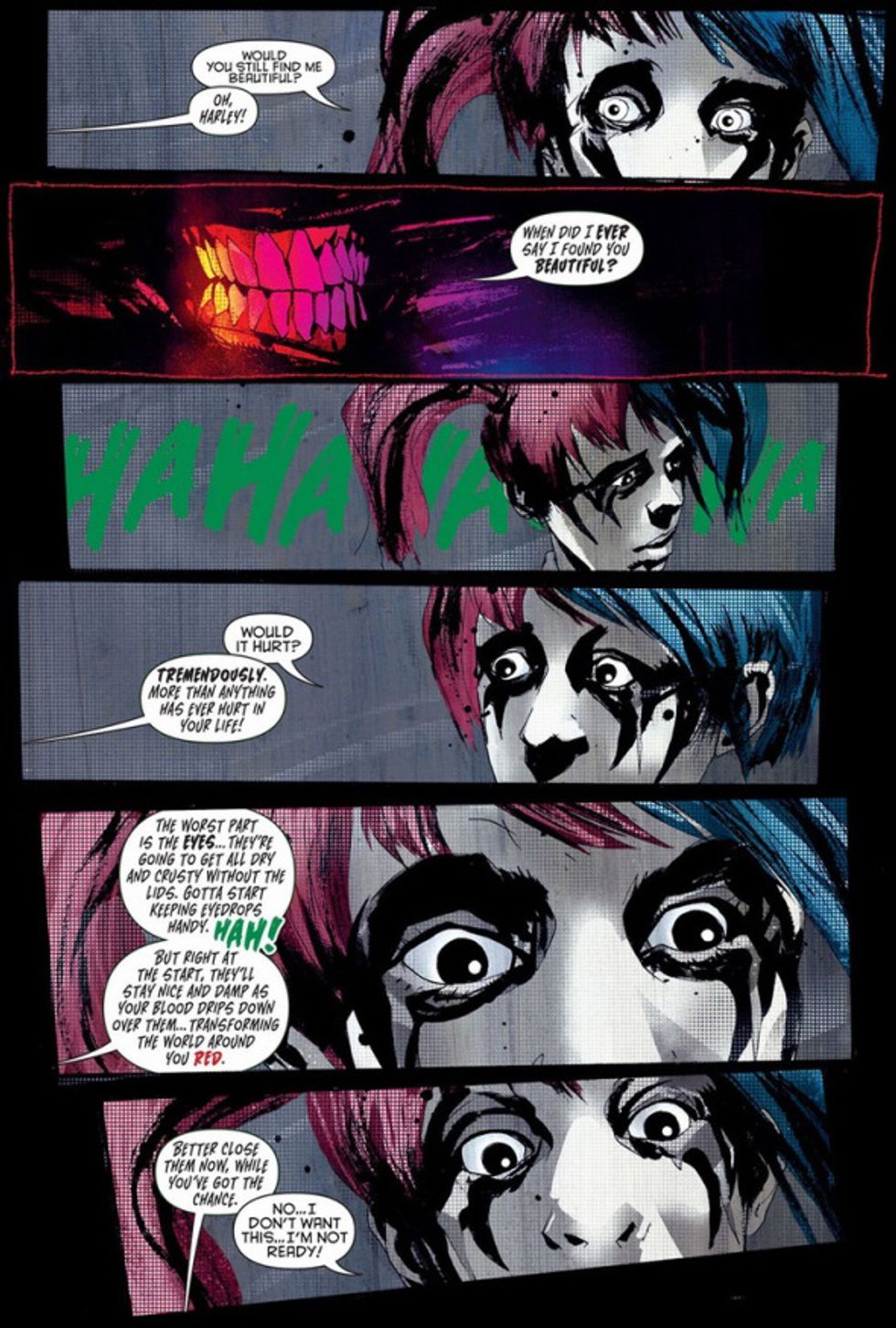
Let's take a look at Harley Quinn's origin in the comics. Dr. Harleen Quinzel is the Joker's therapist in Arkham Asylum. He charms and manipulates her into falling in love with him. He makes her believe that he is not a murderous psychopath, but a tortured soul. He convinces her to break him out of Arkham. He turns her into Harley Quinn by pushing her into the same vat of acid that turned him into the Joker.
Harley Quinn is crazy for the Joker, but the Joker is obsessed with Batman. She wants nothing more than to help him kill Batman. But, if Harley gets in the way of Joker's obsession with killing Batman, it doesn't end well. Here's a clip from "Batman: The Animated Series" that shows this:
Did you see that line at the end? That's textbook behavior of a victim of domestic abuse. Keep in mind this was in a cartoon! Mr. J was not being mean to her; he was just mad at Batman and she just got in the way. Comic book or not, no person should ever have to make excuses for an abusive partner. It's not just when she interferes that he abuses her.
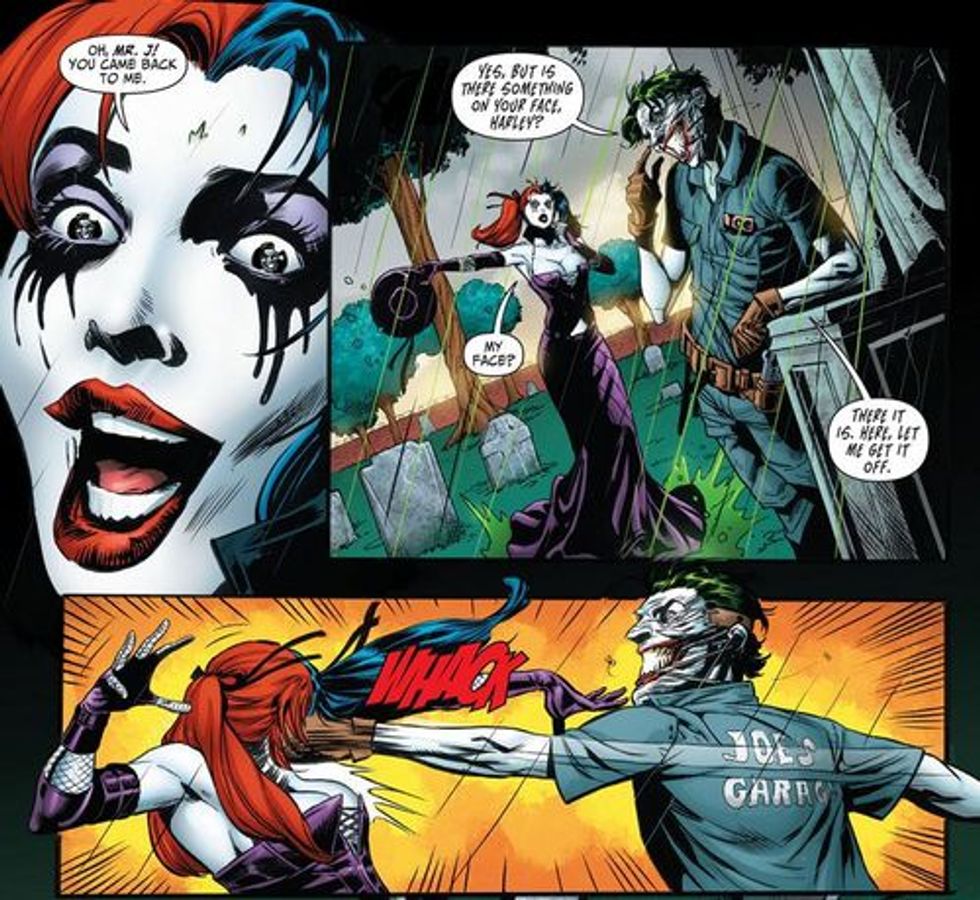
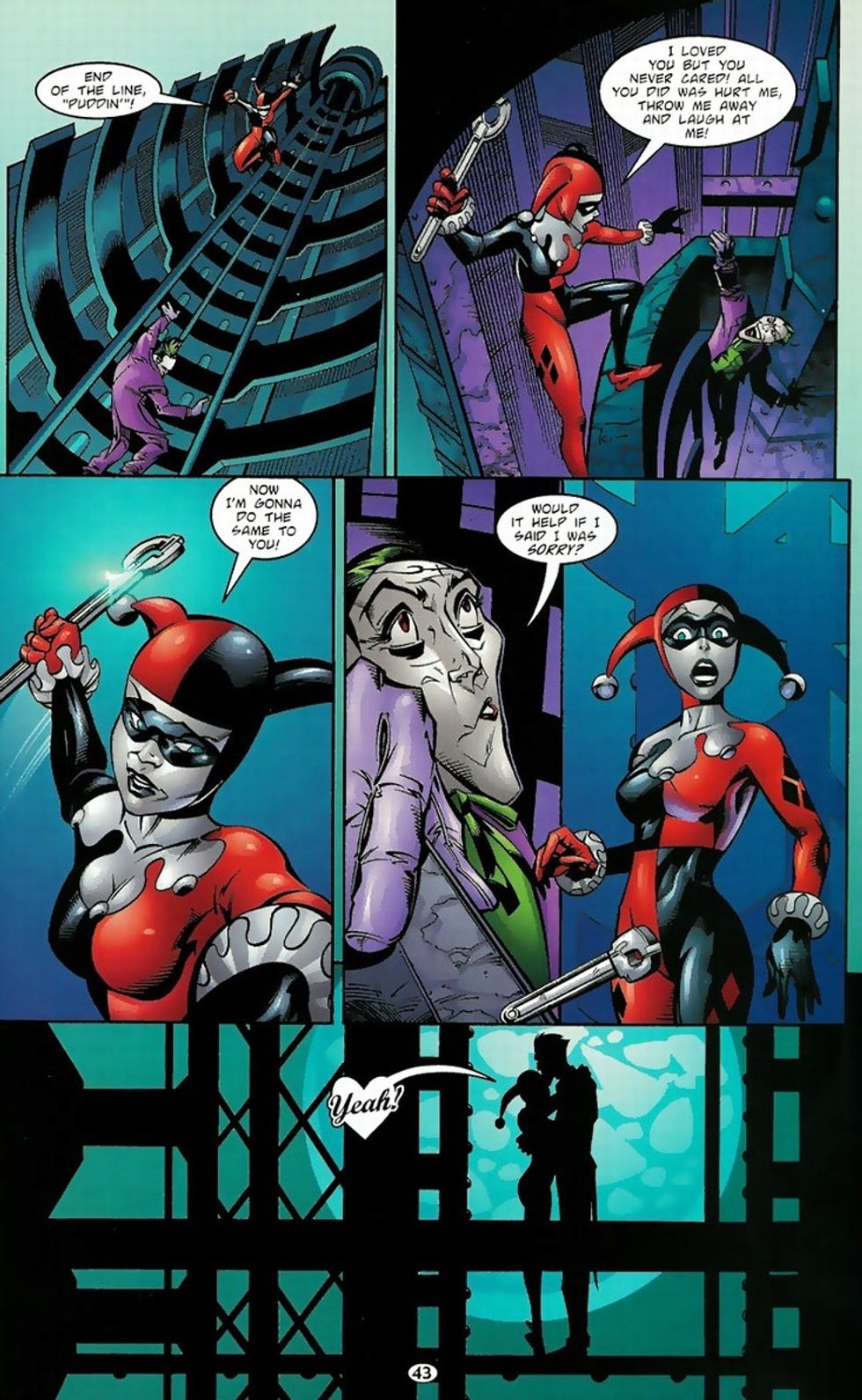
The film gives us glimpses of this, but they never outright show the toxic and abusive relationship. We see the Joker hand Harley over to Monster T, but it's taken as a joke and The Joker shoots Monster T and takes Harley back. Later, Batman is on the hood of Mr. J's Lamborghini and he drives into a river to get away. He leaves Harley to drown and be captured by Batman.
But the rest of the film, he's trying to save her. Their relationship is shown as romantic, downplaying the abusive relationship for the potential marketing as #RelationshipGoals. Here are three scenes that were either changed or deleted to show this romance:
“Removed several scenes with the Joker to repaint his relationship with Harley as more loving rather than abusive.”
“Joker and Harley get into an argument after he rescues her in the hijacked helicopter. In early cuts he reportedly pushes her out to kill her, then the helicopter gets shot down. This was apparently reworked into the helicopter getting shot down first and Joker pushing her out to save her.”
“Joker and Harley then get into a fight, which ends with Harley pointing a gun at Joker’s head. Joker sweet-talks Harley into lowering the gun, charming her, then backhands her across the face. Afterwards he sweet-talks her again and they kiss.”
Obviously this is problematic. But why? For those who are getting their first glimpse of the Joker and Harley's relationship with "Suicide Squad," they're missing the main point of the relationship. He frequently abuses her, and she feels like she deserves it. These new fans don't get to see the realistic portrayal of domestic abuse that the Joker and Harley's relationship is in the comics.
Along with that, we don't get to see Harley try to find her identity outside of being the Joker's sidekick. In the comics today, she has gotten out of the Joker's shadow and become her own person. This shows that victims of domestic abuse have hope. 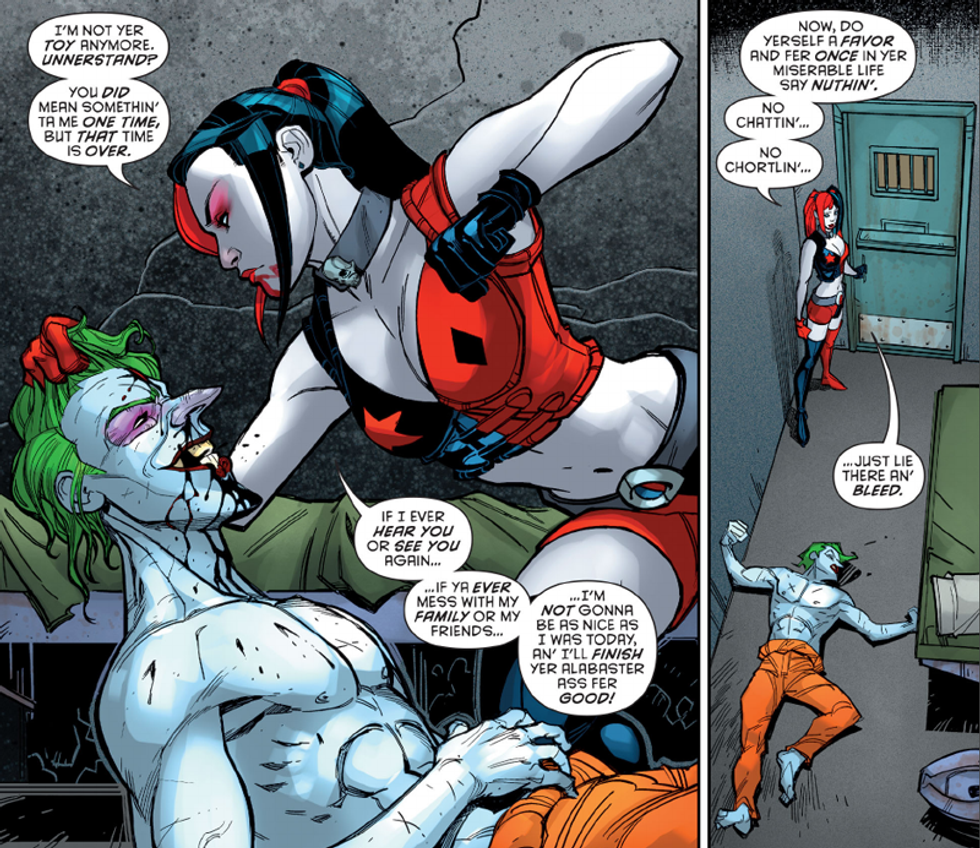
Despite bad reviews, the DC movies are popular. They would be a great platform to show teens and young adults a realistic portrayal of an abusive relationship. But by not showing this, they contribute to the 57 percent of college students who don't know the signs of an abusive relationship. There are already plans for more films featuring these two, so there is still a chance for Warner Brothers to show the Joker and Harley's abusive relationship for what it is. Along with that, for the sake of actual abuse victims, stop romanticizing the Joker and Harley Quinn's abusive relationship.