
One of the most fascinating aspects of Italian culture is the blurred line between Church and State. In America, we very clearly see the separation of the two, but in Italy, the same cannot be said. Just recently, my friend called our local movie theatre that plays American movies to inquire about the showing of the newest Fifty Shades movie. She was met with the grim response, “We don’t like this this kind of film; we think it is lowering our culture.” We were all mildly surprised at this answer as Italians seem to have no problem with the ridiculous amount of PDA that is accepted on the streets, on the train, and in cafés. The arts is not the only area that mixes with Italy’s religious background, but also the Catholic Church heavily influences family structure.

Before Italy was unified in 1861, it consisted of many Papal States controlled by the Papacy in the Vatican City. This long history with the Vatican is infused into family structure, specifically concerning ideas of divorce, abortion, and procreation. The legalization of divorce was established on December 1, 1970, but it would take four more years before it was finalized. The four extra years consisted of battles between conservative Italian political groups and the younger generations pushing for change. Afterwards, even though divorce was legal, the process required a five-year separation period to ensure divorce was the answer. The five-year waiting period was eventually reduced to three in the 1980s, but the fact that there was a waiting period at all demonstrates the Church’s role in condemning divorce. The government was heavily influenced by the Church in creating this condition to the law, which cornered couples and presented obstacle after obstacle to obtain separation. Movements towards greater personal liberties not only characterized the 1970s in Italy but also in the United States. Abortion was legalized in the 1973 Roe vs. Wade decision in the United States Supreme Court, and it would be five more years until women in Italy obtained this same right. This decision in Italy did not go over smoothly, but rather was, and still is, a vaguely outlined right. On May 22, 1978, abortion was approved, and law 194 makes the woman the principal author of the decision, but there are several articles that restrict the right. These restrictions can be seen in Article 9, which allows medical and ancillary workers to refuse to perform the operation, and women also need to prove that the pregnancy entails mental and physical risk in order to terminate. These seemingly minor articles are reason enough for doctors to decline and present the difficulty of finding a doctor willing to perform the operation due to the medical worker’s personal conflicts with the Church, which prohibits the termination of a pregnancy.
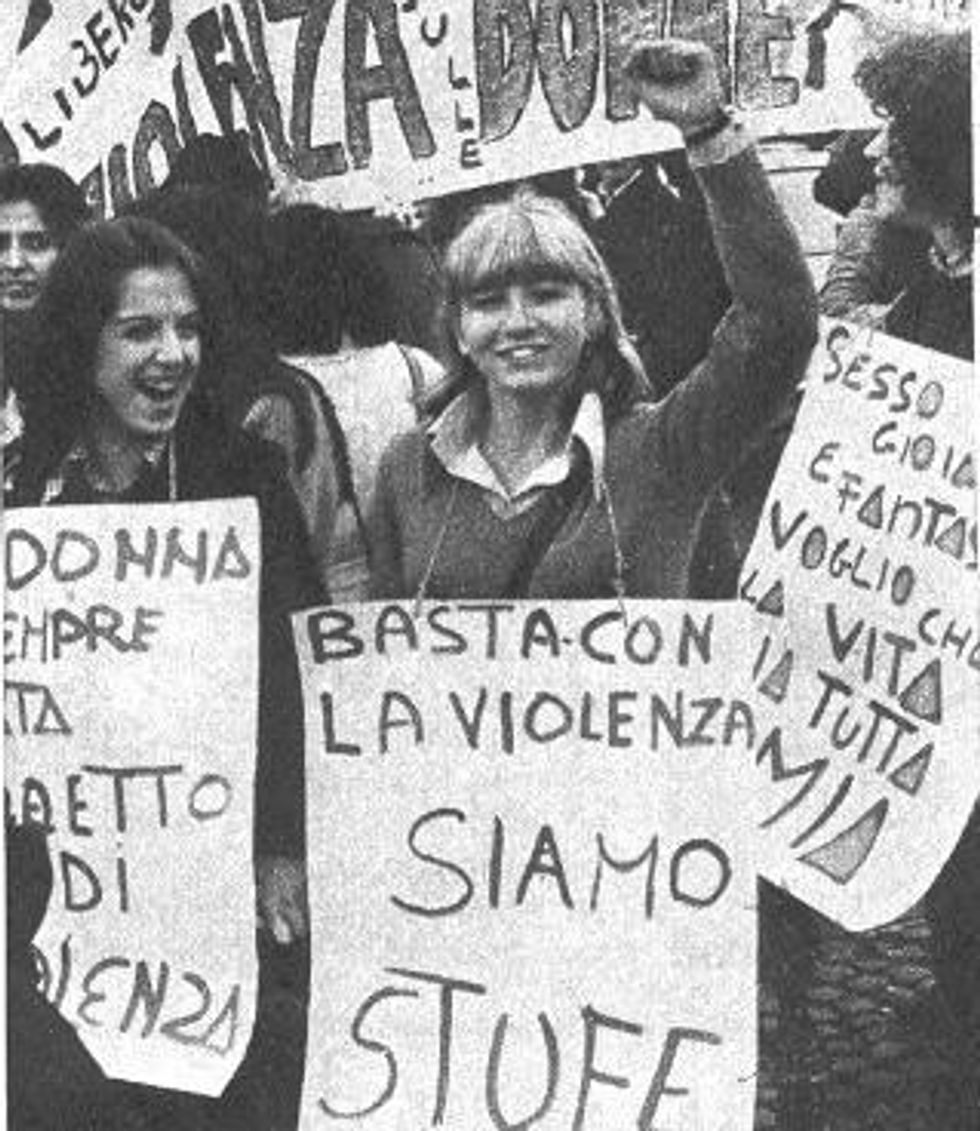
The shrinking birth rate is quite an issue for Italian society, as Italians again are in conflict with the Church’s values of raising children and the lack of financial support from the State. The declining birth rate, breaking the traditional mold, and gender role issues are not solvable overnight, and it will be a while before Italy sees solid changes. It took thirty- three years for reforms to occur in the 1970s, and based off of the combination of Italians’ hatred for change and the amount of time it takes to institute change, I can only assume it will be a while longer until new reforms are made.