
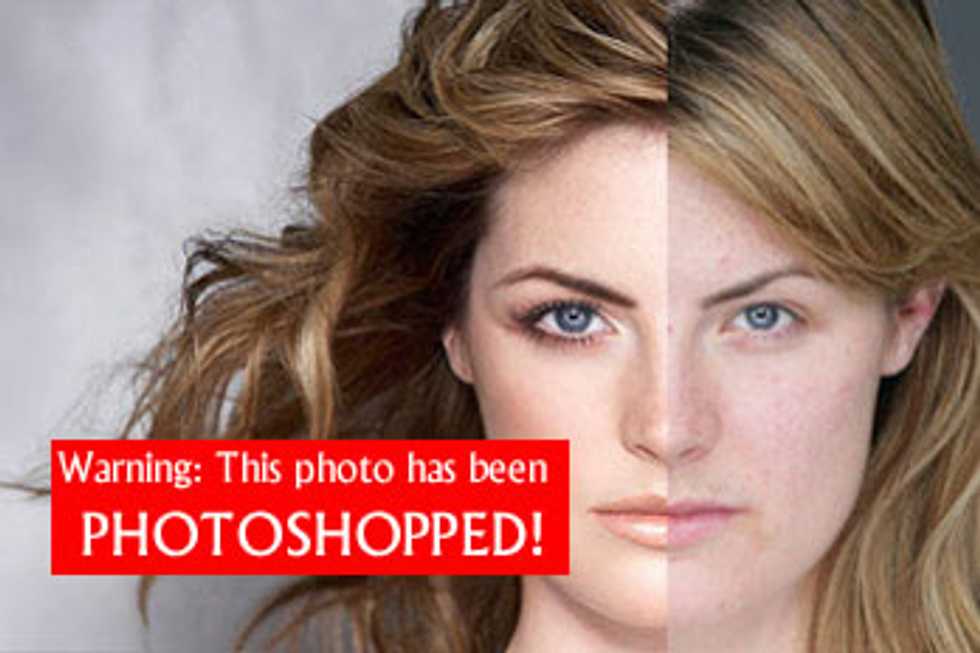
As of January 1st, Israeli congress instituted a law to help prevent eating disorders among women of all ages in the country. The “Photoshop Law” requires models to have a BMI of at least 18.5 which is the lowest a person can weigh to still be considered healthy. The law also requires all model agencies to clearly label which ads featuring photographs of models that have been digitally altered.
The Photoshop Law was instigated as a result of the terrifyingly increasing percentage of women engaging in eating disorders. The issue was ignored until the semi-recent passing of a famous Israeli model, Hila Elmalich, who died in 2007 due to heart failure caused by anorexia.
The passing of this law reflects the positive values that the Israeli nation encompasses; natural beauty, prosperity and good mental health. The Photoshop Law not only protects the well being of models, but also it helps spread awareness of eating disorders, sending a positive message to media consumers that being underweight does not equate beauty.
While it was passed under good intention, some discrepancy has risen in response to the qualifications of the law. Shai Avital, owner and CEO of Elite Israel, a famous modeling company, claims that the law disregards the fact that some models’ low BMI could be due to genetics. While he swears that all of his models have a higher BMI than the law requires, he worries that women might be out of a job from no fault of their own.
Avital raises a valid point that the Photoshop Law has the potential to negatively affect women in the industry. However, the loss of a few models’ jobs to prevent the “thin ideal” from corrupting the rest of Israel’s female population is incomparable. It’s important to look at the bigger picture, even if it might compromise a few women’s careers.
This great stride taken towards lowering the percentage of eating disorders spreading quickly across Israel should be replicated in Western countries experiencing the illnesses even more severely. Recognizing the problem and accounting the numbers is one step, but taking charge and actually acting upon it is another that many countries find hard to do. Hopefully the Photoshop Law inspires a chain reaction to help cure women of all ages suffering from eating disorders.

















