As most of you already know, there has been yet another sexual assault on Ramapo’s campus. This news shocked the whole community and honestly made me sick to my stomach. How could this have happened not once, but twice? When will the assaults end? After all that money was spent, all the professionals called, all the investigations made, all the violations given out, and not one thing has changed.
Ramapo’s plan to curb this issue? To increase law enforcement on campus and give everybody who is drinking under 21 an underage violation. But does that help? What about 21-year-olds? Are they now unable to be assaulted because every one under 21 is not able to consume alcohol? Sure, banning alcohol may lessen the likelihood, but it sure won’t erase the problem completely.
Ramapo’s main concern is that it is never the victim’s fault, but blaming alcohol is basically victim blaming.
In the words of our school president, “Too many times, predators use alcohol as a weapon to overpower victims.”
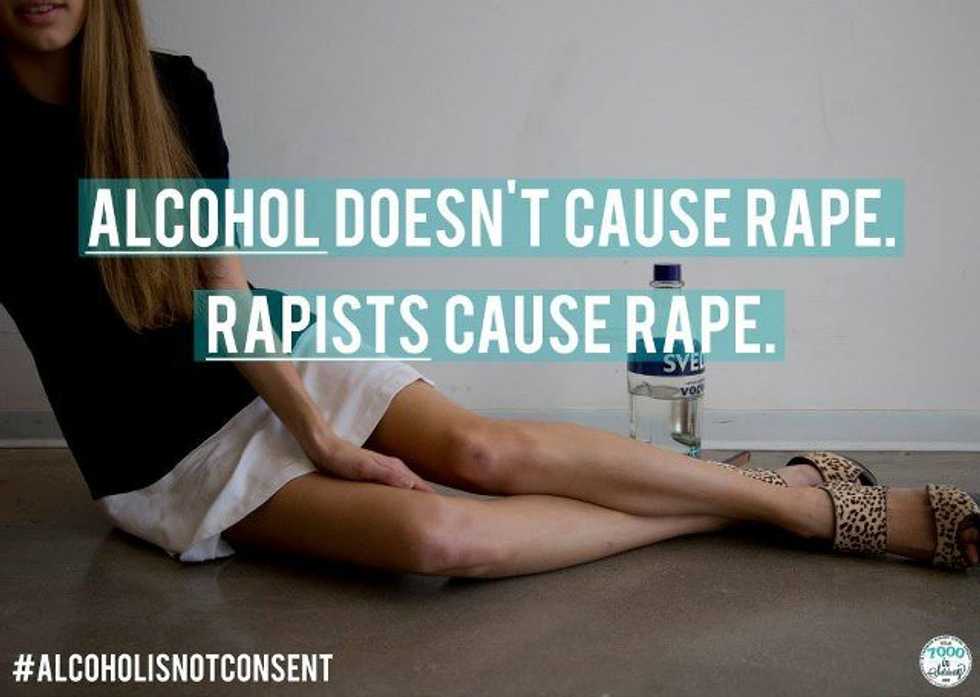
Who’s to say this wouldn’t have happened even if there was no alcohol present? Alcohol doesn’t sexually assault people, predators do. People’s judgment may be impaired, but alcohol is not the cause. If Ramapo thinks that banning liquor will halt these assaults, then shame on them.
According to collegedrinkingprevention.gov, the average percentage of sexual assaults that included alcohol on college campuses lied somewhere around 50 percent. In theory, if Ramapo were to eliminate alcohol, only half of the problem would be solved. What about the other 50 percent? Without alcohol, that 50 percent would have still been assaulted. Would Ramapo’s “prohibition” have helped these victims?
The study also concluded that alcohol does coincide with sexual assault, but does not cause sexual assault:
“The fact that alcohol consumption and sexual assault frequently co-occur does not demonstrate that alcohol causes sexual assault,” the article stated. “The casual direction could be the opposite; men may consciously or unconsciously drink alcohol prior to committing sexual assault to have an excuse for their behavior.”
Even if Ramapo were to completely ban students from drinking on campus, a whole new set of problems could arise. When on-campus parties are not an option, people turn to bars or off-campus house parties. With the increase of people drinking off campus, the number of people who are driving under the influence will increase, as well.
On-campus parties also mean mass amounts of security, which is a good thing. When students go to off-campus houses or bars, there is no security rolling around making sure nothing suspicious or harmful is happening. Of course, there can be people on-campus with bad intentions, but with the amount of public safety officers and the desk attendants guarding the doors to the dorms, the chances of any assaults happening on campus is reduced in comparison to the bar scene.
As a student body, we should be standing up for victims of assault and ensuring their safety and the prosecution of their assailants. However, when the administration shines the light on alcohol instead of recognizing this as a sexual assault problem, the students engage in this issue instead of the real issue at hand.
In February of 2015, a Ramapo student started a petition, which received over 1,000 signatures from concerned students trying to fight back new rules like a $500 fine for a first offense alcohol violation and that students “should not assume that the Good Samaritan Policy applies to them” if an incident occurred. Once the petition reached the administration, it was ignored, pushed to the side.
Members of the student body are frustrated. Not only because we feel as though our voice is not being heard, but because the issues at hand aren’t being dealt with. We want to be proud to wear the name Ramapo on our T-shirts and tell people about our college. However, the administration’s actions in regards to the assaults are no reason to be proud of being a Roadrunner. In order to make change, we need to face the problem and address it as it is: Repeated sexual assaults on campus. We cannot blame the victim. And we cannot blame everything on alcohol. At some point, we each need to be accountable for our own actions. By saying this is an alcohol-driven issue, we are giving predators an excuse and victims the burden. And this needs to stop.