

I recently found myself subject to the hungover, Saturday blues, looking for something to keep my friends and I occupied as we battled with the frightening thought of entering the fried-food-scented, student-infested dining hall.
As most 21st-century teenagers do, we turned to Netflix for entertainment and, unlike most 21st-century teenagers, opted for the “Documentary” category.
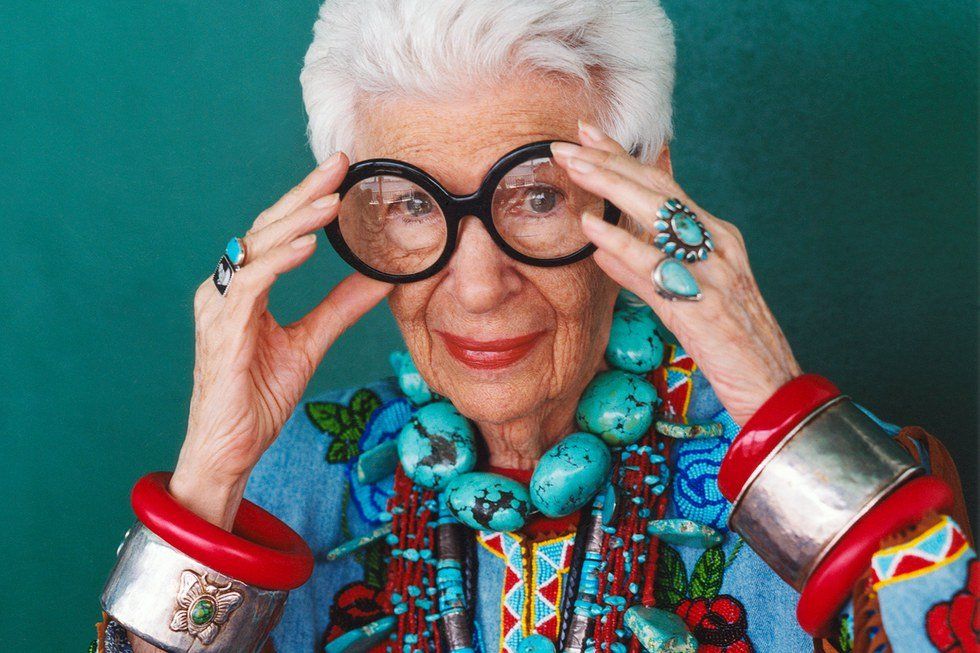
I spend an uncanny amount of time watching documentaries and appreciate their ability to shed light on the often untold stories of others, so we settled on Richard Eyre’s “Iris.” With its banner donning the face of a wrinkled, elderly woman dressed in gaudy, clunky jewels in front of a technicolor backdrop, it seemed more comical than thought-jerking. As if this oddly unorthodox image wasn’t captivating enough, the film's biography read, “Albert Mayles focuses on a fashion legend, who at 93 is still at the top of her game, choosing dresses, advising models and haggling with buyers.”
“A granny fashionista?” I thought. I’ll bite.
Fond of anything abnormal and unusual, we didn’t think twice about our selection and proceeded to hit “play,” enduring that drawn-out, sluggish buffering typical of Netflix.
After watching the 74-minute-long film, which followed the daily life of flamboyant and unexpectedly outspoken Iris Apfel, the quick watch that was intended to be the backdrop to our boredom had transitioned into a serious life lesson on true happiness and passion; Apfel’s story surpassed any lax expectations we had going into our viewing and encouraged conversation about our own lives.
Needless to say, I didn't expect to be quite so touched by the elderly icon’s story.
In short, Apfel—a graduate of New York University—is a fascinating character. She defies agist stereotypes and does so with absolute grace. Unapologetically, she spews truth from the opening scenes of the film—showing Apfel among her high-end, collectible-cluttered Manhattan, New York home—to its closing, ending on an ironically similar note.
Apfel, who comfortably refers to herself as “ugly,” exudes complete comfort in her situation through and through. She admits she’s not conventionally attractive and that she could care less if the world disagrees with her stance on beauty. To Apfel, beauty comes from passion and a commitment to your own destiny.
She's made a decision to live (and dress) on her own terms, which according to Apfel, "[is] something that expresses who you are in your own way.”
Constantly, throughout the film, we hear the Astoria, Queens native tell that, although her age poses an unavoidable obstacle, she finds that there's no sense in giving up passion or giving into pain. Interestingly, too, despite film footage from her youthful business travels to Europe—during a time when she was designing rooms inside the White House—the most impressive work we see Apfel do is at her current age.
“Iris” follows the shockingly busy life of Apfel, from Dazed Magazine photoshoots, clad in couture fashion and sky-high wigs, to the annual Council of Fashion Designers Awards, casually chatting alongside rapper Kanye West (who's nearly half her age). Sure, Eyre offers a fashion-based narrative, as Apfel has been one of the most influential figures in both fashion and interior design history, but the overall message shines as brightly as the ostentatious Dolce and Gabbana jewelry that covers her feeble, boney wrists: age is but a number.
It’s a painful cliché, barred from any writer's vocabulary; however, Apfel’s disregard for her achy joints and cane dependency, choosing passion over pity, illuminates the idea that the elderly hold passions of their own. In essence, the loss of passion is a choice, unrelated to the often unavoidable pains of old age.
From helping models find their own unique styles, empowering them to be "individuals," to setting up national showrooms, which showcase her trademark style, she's now finding her first place spot at the top of the fashion game pedestal.
In essence, Apfel makes “elderly” look “badass,” a concept I can’t say I’ve considered before. Living in a world where we’ve begun devaluing the worth of our elders, comfortably labeling them “senile” and “confused," Apfel effortlessly models the often unrecognized beauty of old age.
We’re so quick to define agist stereotype nonconformists as “youthful,” but the reality is that youth isn’t quantified by perspective, liveliness and an ability to move at your desired pace. Rather, it’s just a way of saying we’ve yet to reach the freedom of adulthood, but we’re out of childhood’s resentful shackles.
Iris is a walking testament to the idea that old age doesn't inhibit drive, it just poses some obstacles to overcome.
Maybe if we took the time to lend a willing, listening ear to the elderly in our lives, we might come across more stories like Iris'—stories of driven elderly, refusing to let age keep them from the things that inspire them. Elderliness is a beautiful thing, not the death sentence to our hopes and dreams.
It's uplifting to think that we don't always have to be limited by age. Rather, as Iris shows, age really can be "just a number" with a little persistence and a whole lot of passion.















