

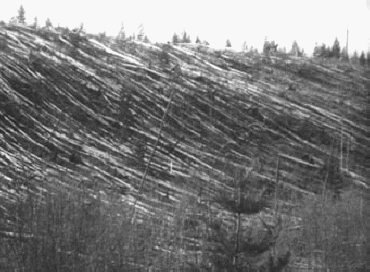
The morning of June 30, 1908, deep in the frozen tundra of Siberia, there was what can only be described as a massive explosion. The force of this explosion was equivalent to 1,000 times that of the Hiroshima nuclear bomb, or approximately 15 megatons of TNT. The atmospheric shockwave caused by the blast circled the earth twice and caused the skies of Asia and Europe to shine with an abnormal light for the two nights following. The force of the explosion was roughly equivalent to that of the Russian Tsar Bomba nuclear test, which is the most powerful explosion in recorded history. If you were to visit Tunguska right now, you would see thousands of flattened trees all pointing outward from an epicenter. Luckily, nobody lived in the area in which the explosion took place, and so there were no deaths. Here’s the crazy thing about this whole event … nobody knows exactly what happened.
The original theory is that an asteroid or comet crashed into the earth and caused a massive thermal shock wave; however, no cosmic body was detected near the earth at the time. Another problem with this theory is the lack of a crater. In 1927, a geologist by the name of Leonid Kulik mounted an expedition with local guides to discover what happened, but as the party approached the epicenter, the guides abandoned Kulik, thinking that the gods had come to kill them. To this day, no crater has ever been discovered… only a point at which the flattened trees face away from.
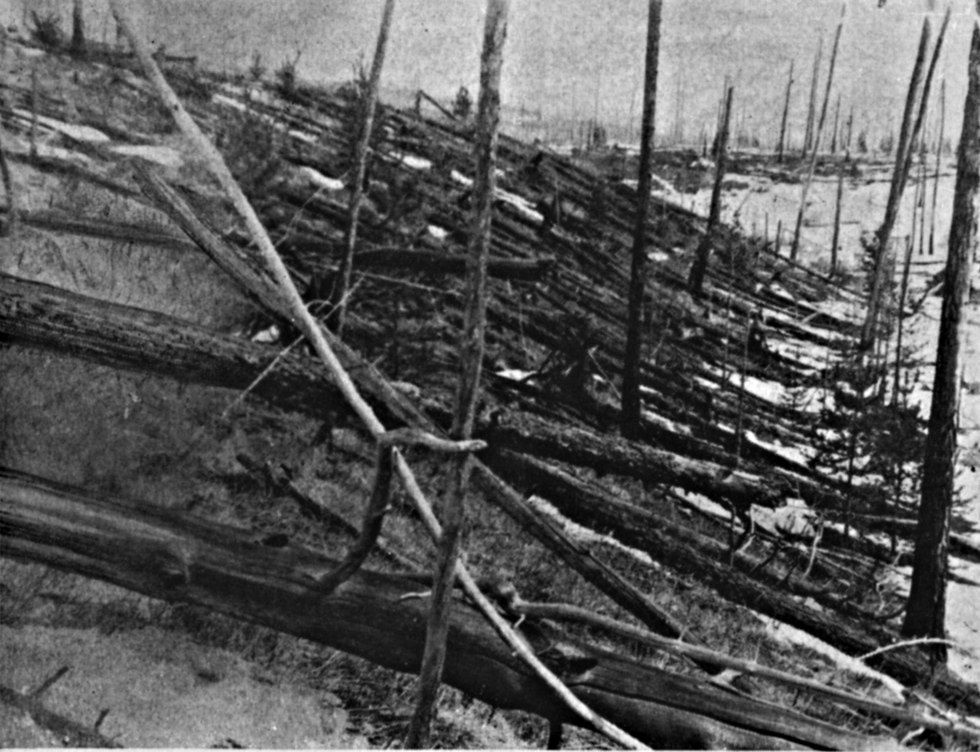
The Tunguska event has baffled scientists for over a century, and modern science is no closer to discovering what transpired than Kulik. Theories range from an asteroid exploding in the atmosphere to secret wireless tests by Nikola Tesla to aliens. 
I’m aware that my explanation of the event sounds like the trailer to the next "Avengers" movie, but I promise I’m not making this stuff up – sometimes truth really is stranger than fiction (I apologize for the cliché). The reason that this event resides in the realm of historical obscurity is because it happened in Siberia, and nobody died, but imagine the impact the blast would have had if it occurred in a densely populated area! Millions could have been killed.
At face value, the Tunguska Event serves as a powerful and humbling reminder of our limitations in scientific understanding. It is easy to fall into the myth that we can find the answer to any question on Google, but viewing our world with an aura of mystery makes for a more exciting existence. Unanswered questions motivate us, and perhaps no question stands with stranger consequences and more mystery than Tunguska.















