
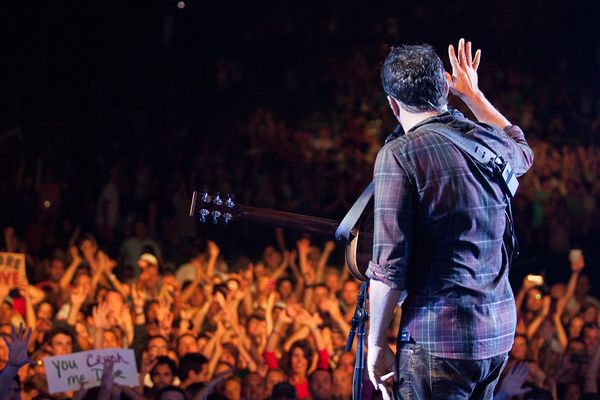
During my high school career at Hellgate High in Missoula, MT, I frequently spent weekend nights babysitting for family and friends. I learned many important things from the kids I looked after—one lesson is particularly salient at the present moment, as we bask in the glory of Katy Perry’s star-studded Superbowl Halftime show.
I was washing dishes after serving the kids a nutritious dinner of macaroni and cheese when Morgan, age 6, walked into the kitchen and heard me singing to myself. She likely had heard a poorly-done rendition of a Bob Dylan ballad—or perhaps it was a kitchen-side cover of one of Springsteen’s classics—regardless, it took Morgan by surprise. She seemed astonished… disgusted, really.
“Are you singing someone else’s song?!” she inquired in disbelief, prompting me to turn off the kitchen sink in order to address the situation with the gravity it (apparently) demanded. I knelt down. “Yeah…I am,” I responded with caution, unsure of the source of this impassioned 6 year-old's motivation. “Never sing someone else’s song!” Morgan insisted. “Sing your own song!”
It has been a few years since this babysitter-berating occurred. Since then I have continued to listen to other people’s songs and have not stopped humming along. However, I have noticed that there is quite a bit of literal truth in what Morgan said. I often turn to music for emotional release or validation, hoping that my “Summer’s End” playlist will provide solace during an ephemeral bout of melancholy; expecting Daniela Andrade’s rendition of “Latch” to universalize a passing yet isolating sense of loneliness.
However, these foreign melodies rarely play the strings of my heart in the way that I expect them to, leaving me feeling just as un-understandable as I felt a few minutes before hitting "play." Bearing in mind music's merit as a therapeutic tool, I have noticed that, for me, the most effective instrument of emotional validation and release is poetry. That is, writing my own words, or, as Morgan would say, singing my own song.
Despite the fact that I have accepted poetry as a more effective tool than music, I still turn to music for enjoyment on a daily basis. This is largely because it is a quick, ready-made emotional fix and listening to a song demands much less mental energy than writing a poem. However, I also believe that my reliance on music stems from a want to make universal my experiences on this planet—while being unique is applauded in many aspects of life, those who do not relate to icons of pop (or indie) culture generally face at least some measure of social stigma.

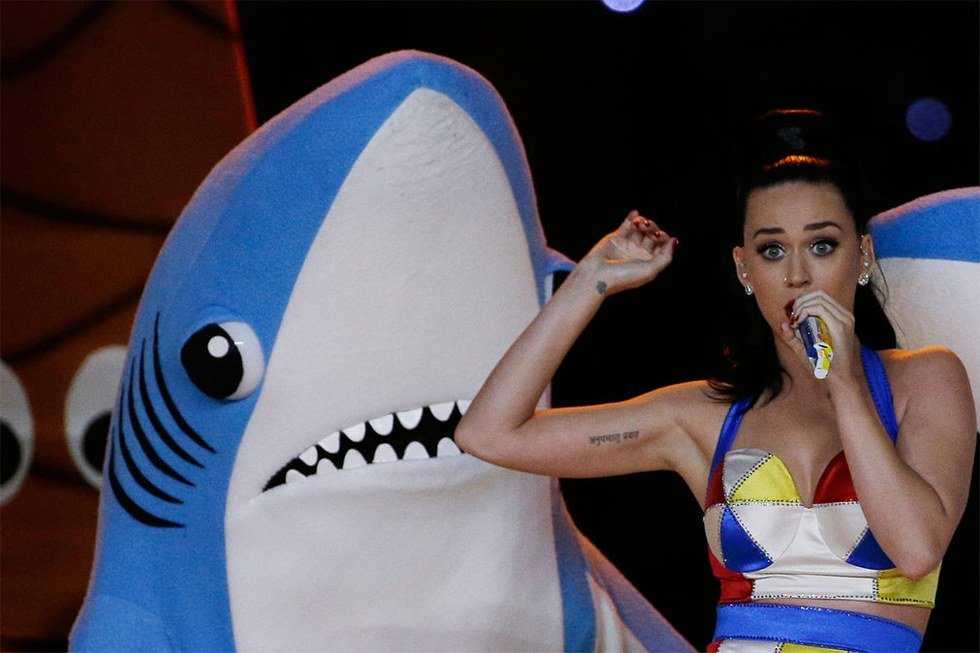
This is where we must defend our friend Left Shark— the off-beat, seemingly un-choreographed background dancer during Katy Perry’s performance of "Teenage" Dream during this year’s Superbowl halftime show. Left Shark might be accused of having poor dancing skills, being day-dreamy to a fault, or for adding scientific truth to the notion of dancing sharks.
However, maybe none of these accusations are correct. Maybe Left Shark was simply singing his own song—and happier for it. After all, the drastically different rhythm, energy, and choreography that Left Shark exhibited suggests that Left Shark wasn’t deviating from a given routine or suffering from momentary stage-fright, but rather was responding to an entirely different melody than the one the rest of the performers were dancing to, albeit in a rather contrived fashion. In fact, it is unclear as to whether or not Left Shark was even aware he was at the Superbowl at all, which leaves room for the possibility that Left Shark’s faithful pursuance of singing his own song has brought him to an entirely new reality, one more enlightened than our our current one-song-fits-all system.
Regardless of Left Shark’s spiritual state, one thing is clear: Left Shark did not forget the moves. Left Shark was starting a movement. Left Shark sings his own song, and we should too.

















