
This month marks the one year anniversary of the worst essay I’ve ever written. It was my college entrance essay, and it was garbage. College applicants could pick from one of three very broad topics, and I had (of course) chosen the one about personal struggle and overcoming adversity, the really pathos centric one. My first attempt had been to write about my 3-year-long volleyball career, which seemed great at first, but when I realized how overplayed the story of the bench-warmer to varsity starter was, I tossed the idea. Not to mention I had quit the sport entirely because I’m intensely sensitive and my new coach had made me cry. So as far as persevering goes, I wasn’t necessarily the poster child for overcoming the hardships of high school extracurricular sports. The subject was fatuous, the writing was breezy and excessively inspirational, and the true, nitty-gritty passion was lacking entirely. After having punched out the 650 words in a standard Times New Roman font, I realized that if I handed in that essay, it would most definitely land in the “ANOTHER SPORTS ESSAY (audible sigh)” pile, along with some narrative about a near-sighted baseball player and a gymnast with vertigo. And so I sat and struggled over this incredibly simple essay, one which could be about any number of things, and one which would have a greater impact on my future than anything I had ever written before. The cursor blinked on a blank document, and I began to wonder if I had ever even faced adversity, or if I had anything that I was so fervent about that I could write a full paper on it.
I sat ruminating on the three essay topics for a good amount of time without any ideas. There wasn’t that eureka moment, that sudden spark of genius which sent my fingers making sweet love to the keyboard. Instead, the interior of my mind played a fuzzy-sounding, jazz instrumental, like an empty Motel 6 lobby at 2 in the morning. I was convinced of absolute failure on my behalf, and so I closed the laptop, and stared at my wall. My wall with a poorly applied coat of grey paint, my wall with two massive corkboards of memories (or as my mother would call them, “those awful piles of crap on your wall”). My wall with playbills, and paintings, and posters of paintings, and letters from friends and teachers. My wall, with all these haphazardly harmonious pieces of colorful paper all over it. These papers that were so important to me, and for what reason? Alas the eureka moment, the great A-ha whereby “Take On Me” played somewhere distantly in the background and my fingers flew across the keyboard synchronically to the flare of that sweet Norwegian synthpop. My subject, as inspired by my wall, would be the arts, and as the second of the three essay questions asked for me to reflect on something that I would want to change in the world, I took not to ending world hunger or seeking world peace, but instead to something a little more personal, and it was keeping the humanities, which I feel so personally for, alive.
In an age where smartphones can capture the beauty and color of a scene in an instant, where we have computers in place of instruments, and enough books to be read for a hundred years without conclusion, why would we continue to acknowledge artists, expand the field of liberal arts, and grant money to art programs at schools, where instead we can implement fancier technology? Why read novels when we can watch stories, or read 140-characters-or-less tweets on a screen the size of a toaster pastry? When every sign points towards this mass expansion of technology and depletion of creativity, why defend it? So many questions, I know, and yet my redundancy is not in vain.
Instead, it can be answered by a series of facts. School violence is at an all-time high. Funding for school art programs is at a considerable low. In 2014, the suicide rate in the United States was about 13 per 100,000 people, the highest recorded rate in 28 years. There have been countless articles written by scholars, doctors, and even just regular, everyday people, who say that lack of self-expression and inability to express their emotions, had lead them into depression. And so using one’s logical mind, no need to think too creatively on this one, there can be some amount of conclusion between a world where arts are losing their significance, and a population where lack of self-expression is leading to an increase in unhealthy behavior.
When I took Art History in high school, we began our lessons in the Paleolithic Era, some 40,000 years ago, as this was when art was, by historic records, born. Previous to this time period, it’s unknown to us what humans were doing, but for all intensive purposes I am going to assume it was somewhere along the lines of throwing rocks, having sexual intercourse, throwing poop, and grunting. While this may sound incredibly similar to a scene you watched on an episode of MTV’s "The Jersey Shore," these ancient people were, and I know this is hard to believe, actually less developed than the cast of your favorite reality TV show. These are the people who didn’t have art, who didn’t have any form of beautiful, tangible, readable, hearable, self-expression. These are people who didn’t have the opportunity that we have to grow as a person through music, or learn about themselves by letting their pen do the expressing for them. These are people who probably tried on many accounts to eat their own poop, and we are not these people!
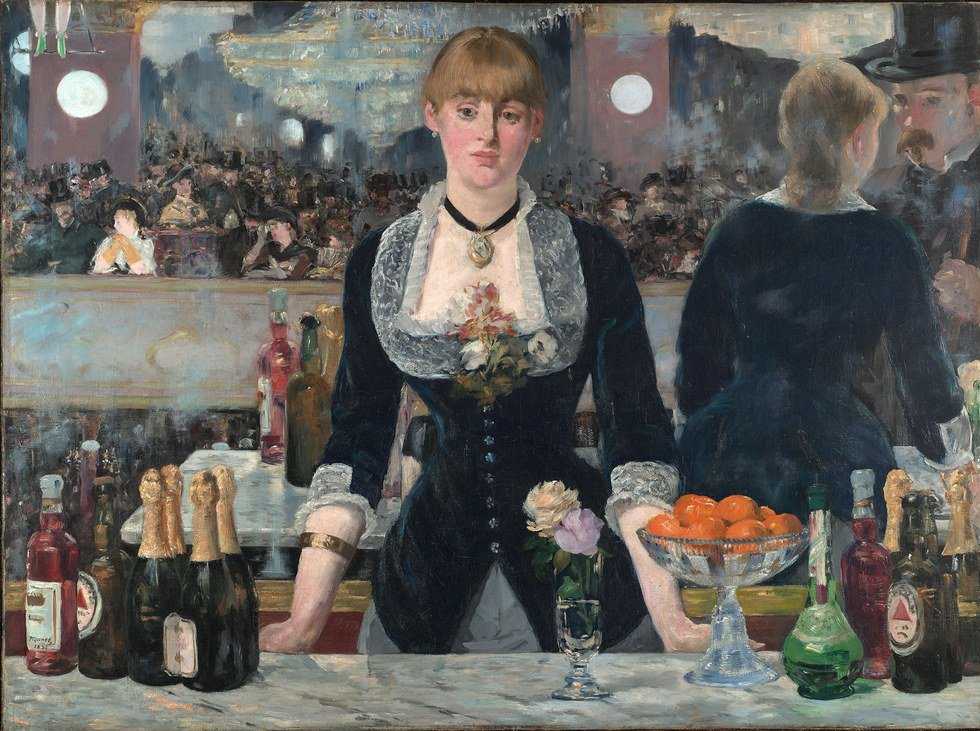
Our contemporary society is one built on the arts and on expression. Our greatest Renaissance men who designed massive flying machines and giant catapults also sculpted the Venus De Milo and painted the Sistine Chapel. Peter Cooper, inventor of Jell-O and the washing machine, along with a large list of other technological and scientific accomplishments (which were too complicated for me to summarize in this small analogy I am making), founded the Cooper Union not just on the basis of education for hopeful engineers and architects, but for hopeful artists as well. Creativity cannot lay dormant, for some of the world’s greatest thinkers and producers both recognized and embraced their creative flare, and found success through its application.
Oscar Wilde once said that, “It is through art, and through art only, that we can realize our perfection.” There is no wrong way of making art; it is the purest, most judgment-free form of escapism; it is an instrument which never plays out of key. Art is what you want it to be, and while the Dada movement certainly pushed that statement to its limits (see Duchamp’s Fountain, a urinal turned upside down and written on with a permanent marker), there’s no denying that it has acted as a catalyst for the progress our society has made over the course of the past couple thousands of years. It has acted as an outlet for the struggling, a voice for the unheard, and a reminder that we are more than cogs in a machine. We are not monkeys armed with screwdrivers. We are delicate, thoughtful, and we make art with great deliberation and reason. Art is not dead, and the fact that it continues to march on after years of oppression shows how significant it is to our culture. It is more than a hobby, an extracurricular, or a pastime. Art is essential to the growth and development of our society, and with that its citizens, and should continue to be recognized and held to such a great importance.