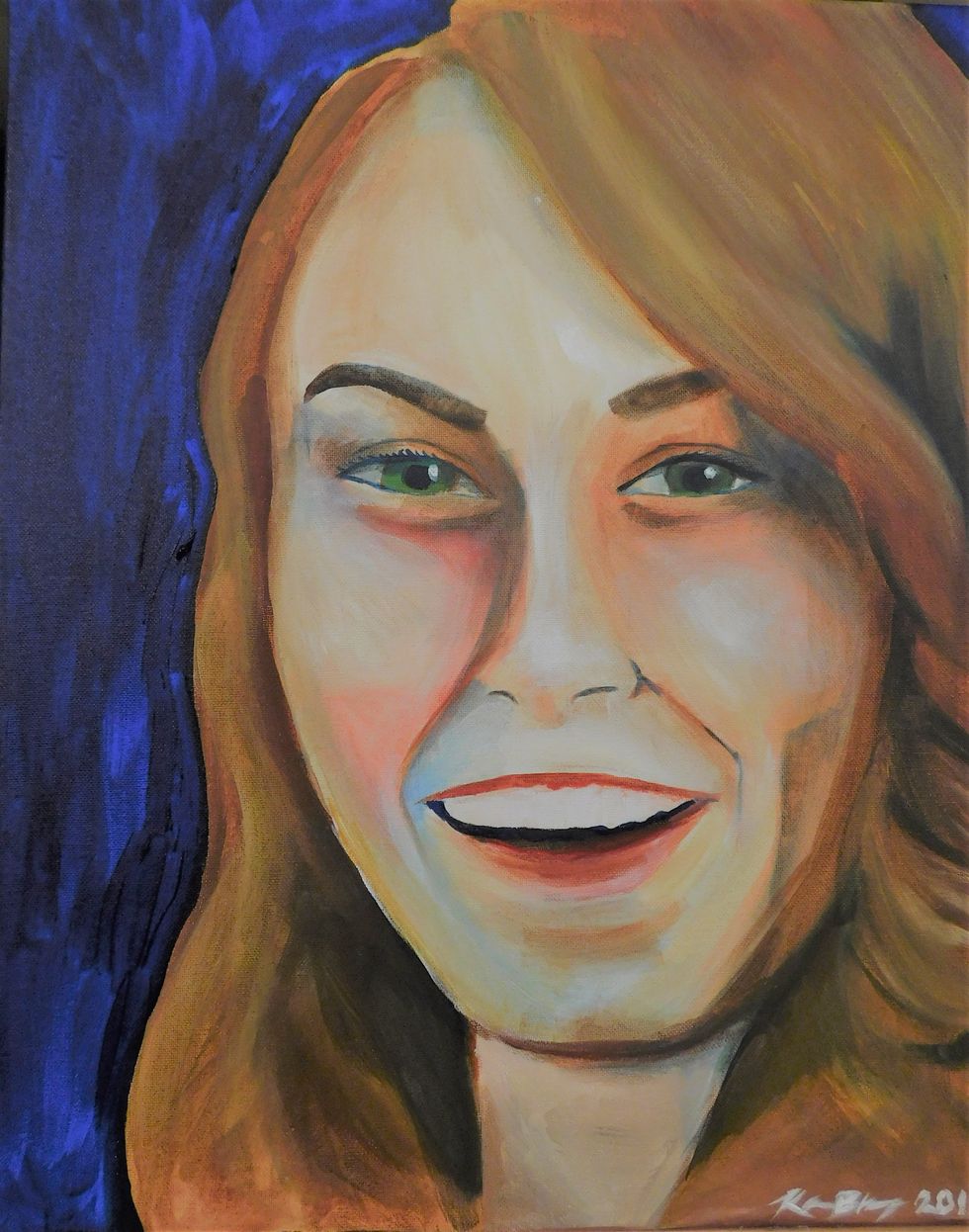
Have you ever wondered how blobs of paint can be spread in careful strokes to create a recognizable figure? Painting is a process that involves layering, adapting, and editing. Here you'll learn how I paint portraits. Feel free to adopt this process or create your own.
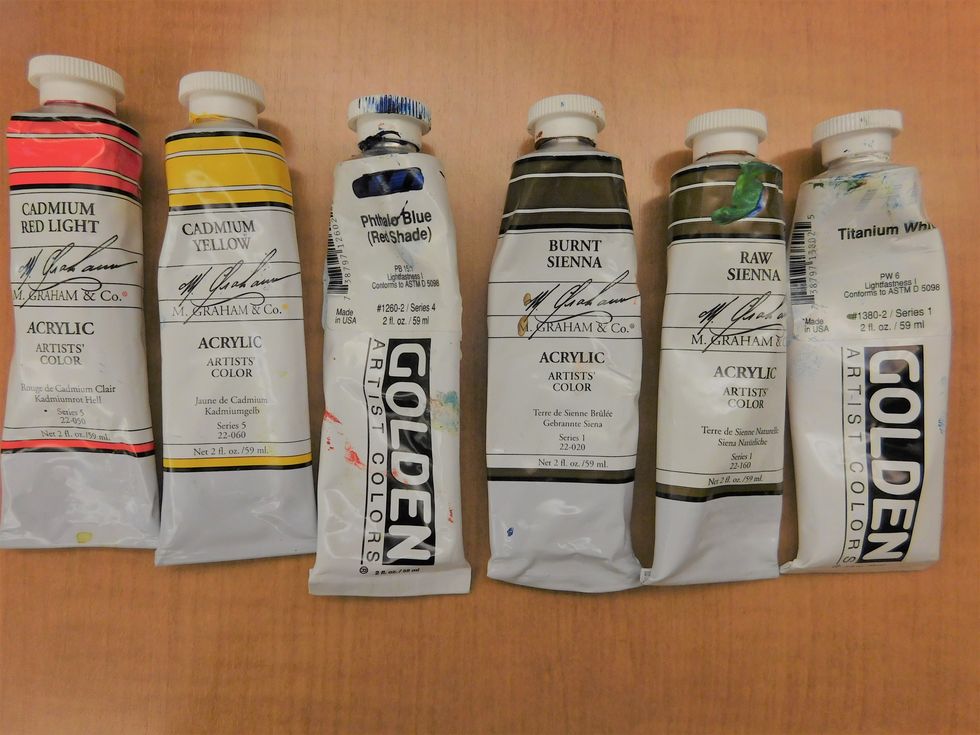
Materials: The type of paint used is very important. For all of my portraits, I use all of the following colors: Cadmium Red Light, Cadmium Yellow, Phthalo Blue (Red Shade), Burnt Sienna, Raw Sienna, and Titanium White. Golden Acrylics is usually recommended, but I also use M. Graham because it blends well for skin tones.
(Note: the 'Red Shade' of the Phthalo blue is important; 'Green Shade' is available but doesn't work in this process in terms of mixing and layering.)
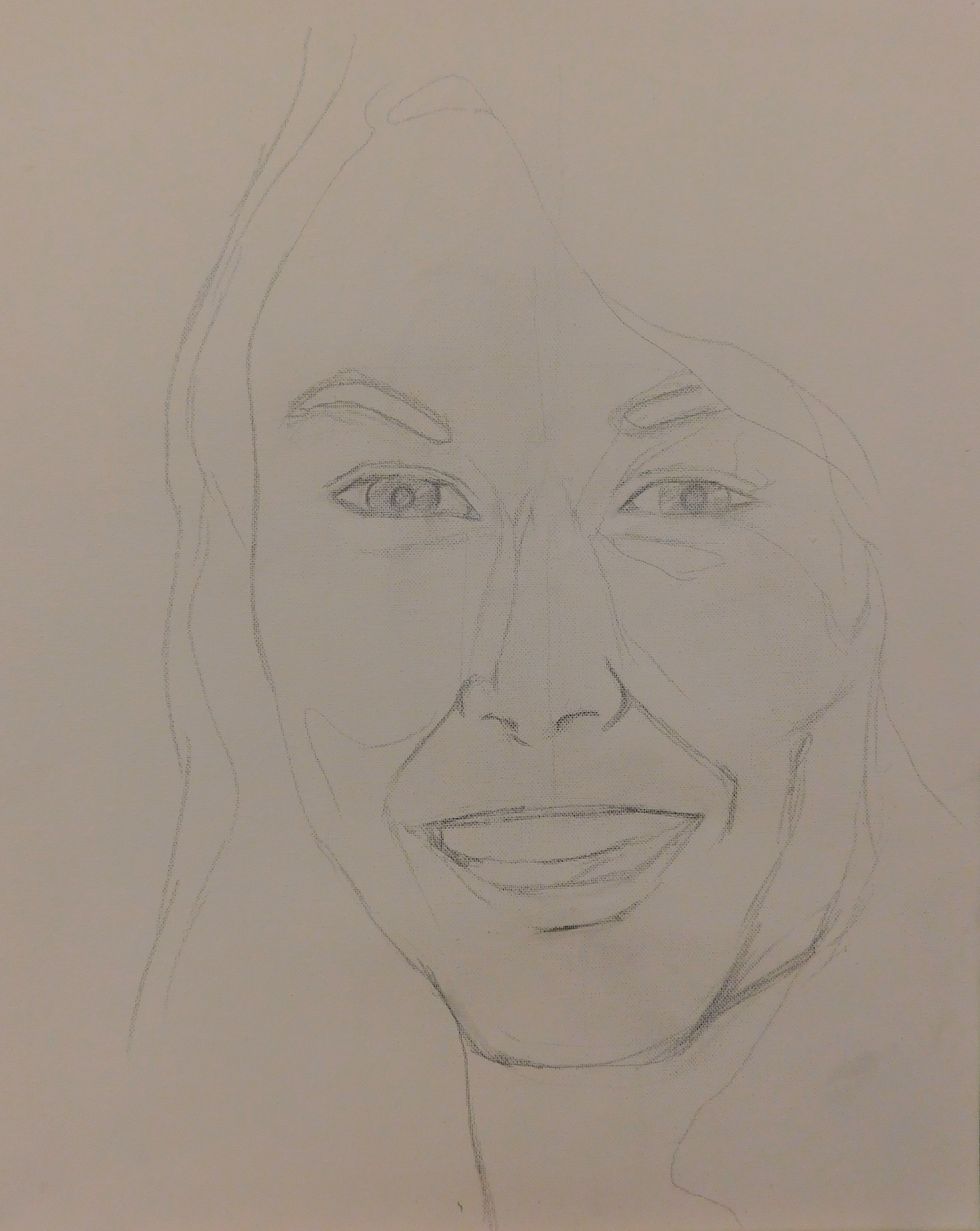
First draw the portrait in pencil. Anatomical features should generally be correctly placed, but remember that the finished painting will always look different than the pencil drawing. The purpose of the pencil sketch is to provide a general guideline on where to paint.
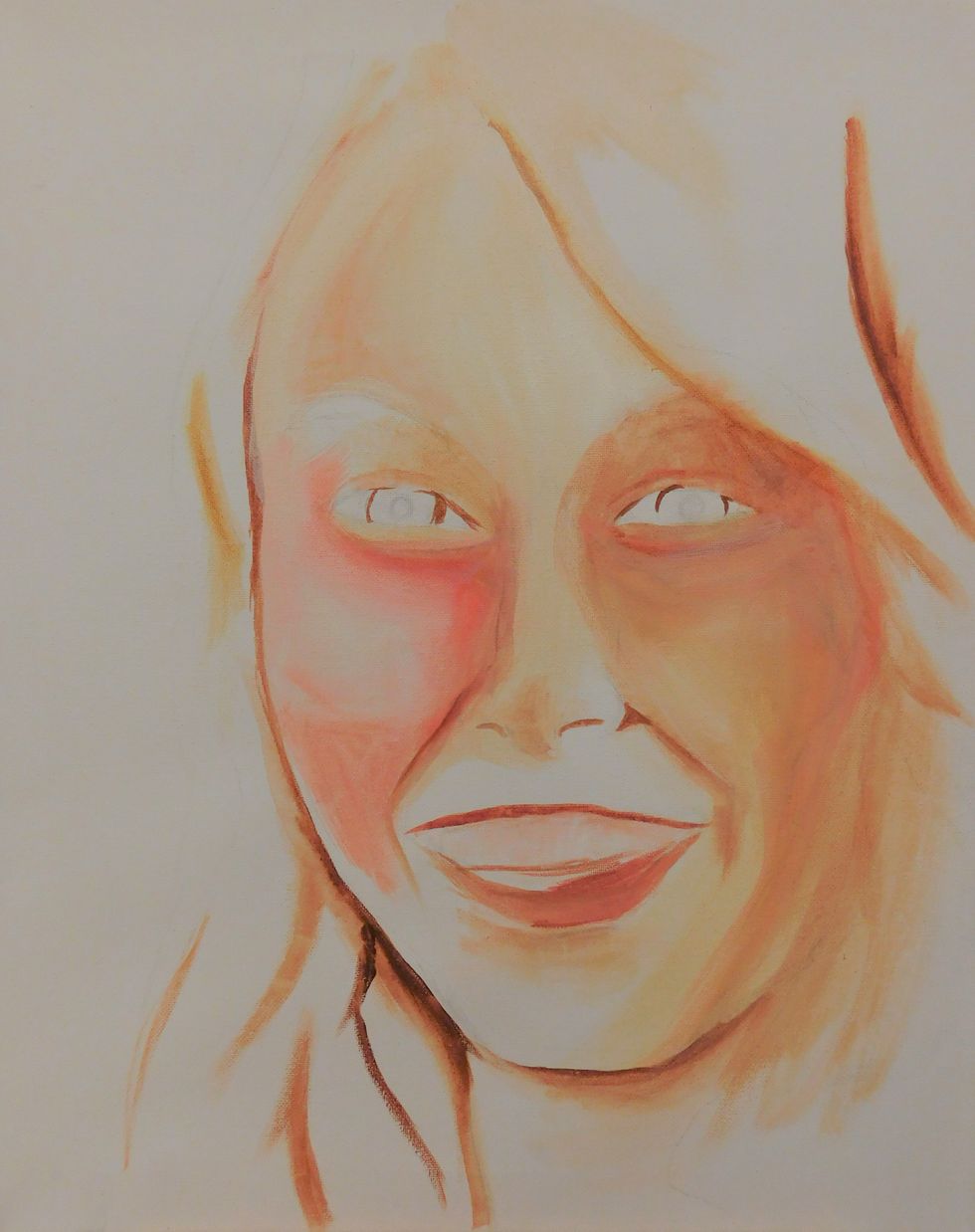
Layer warm colors. In fleshy pink sections of the photo reference, don't be afraid to exaggerate red colors. In darker sections, include burnt sienna. Do not blend in white. You are not trying to achieve the skin tones of the face; you are just trying to provide a base for further colors to be layered.
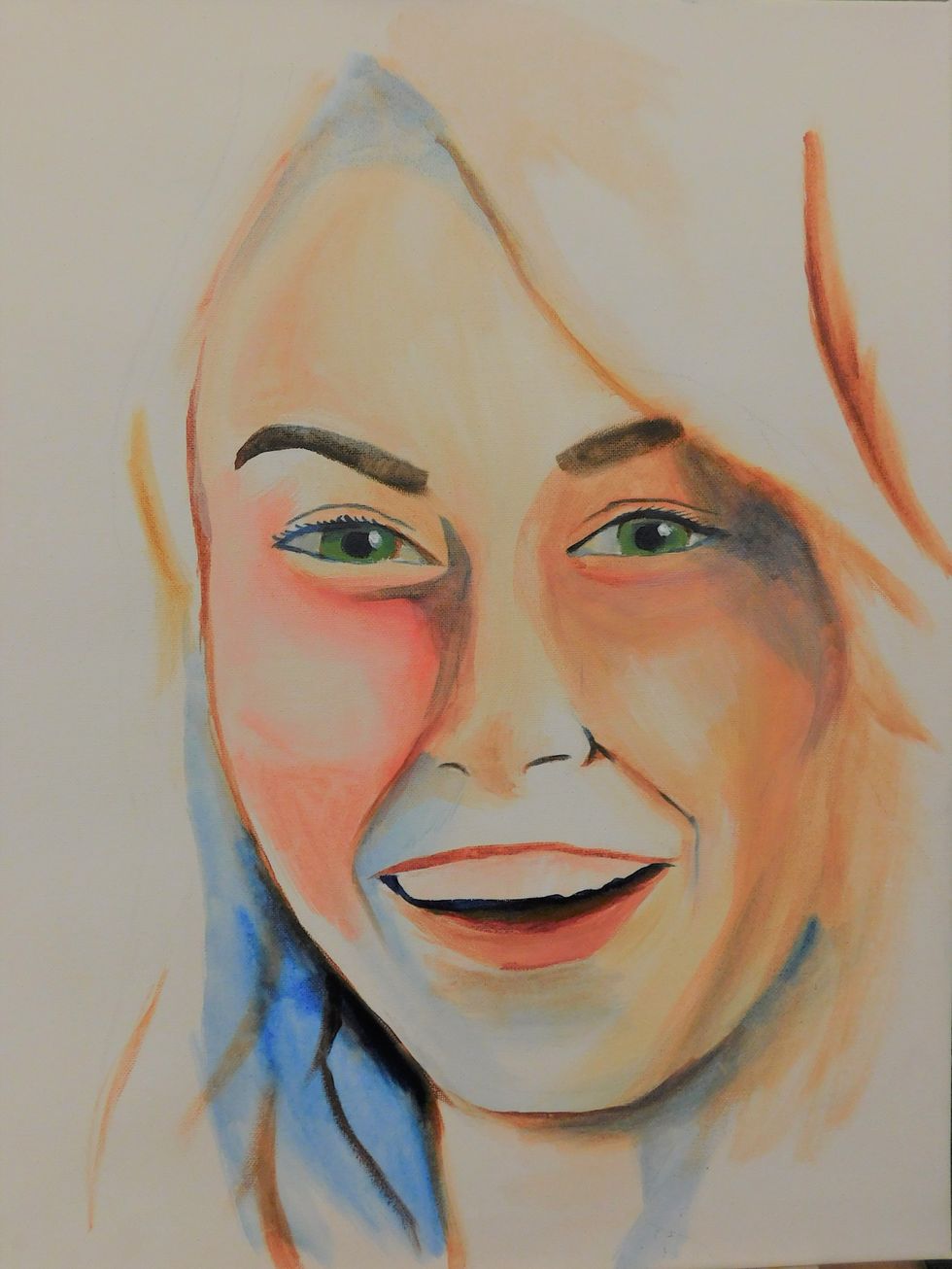
Define features and add blue. Although it may seem odd to add blue to a face, it's very important to establish depth, by emphasizing what portion of the face is further away. Notice the blue portion of the right side of the face; it establishes the shadow cast by her hair. For darker features in the eyes and hair, mix the Burnt Sienna with Phthalo Blue to create a very dark color. These colors are especially helpful for defining features, such as the eyes.
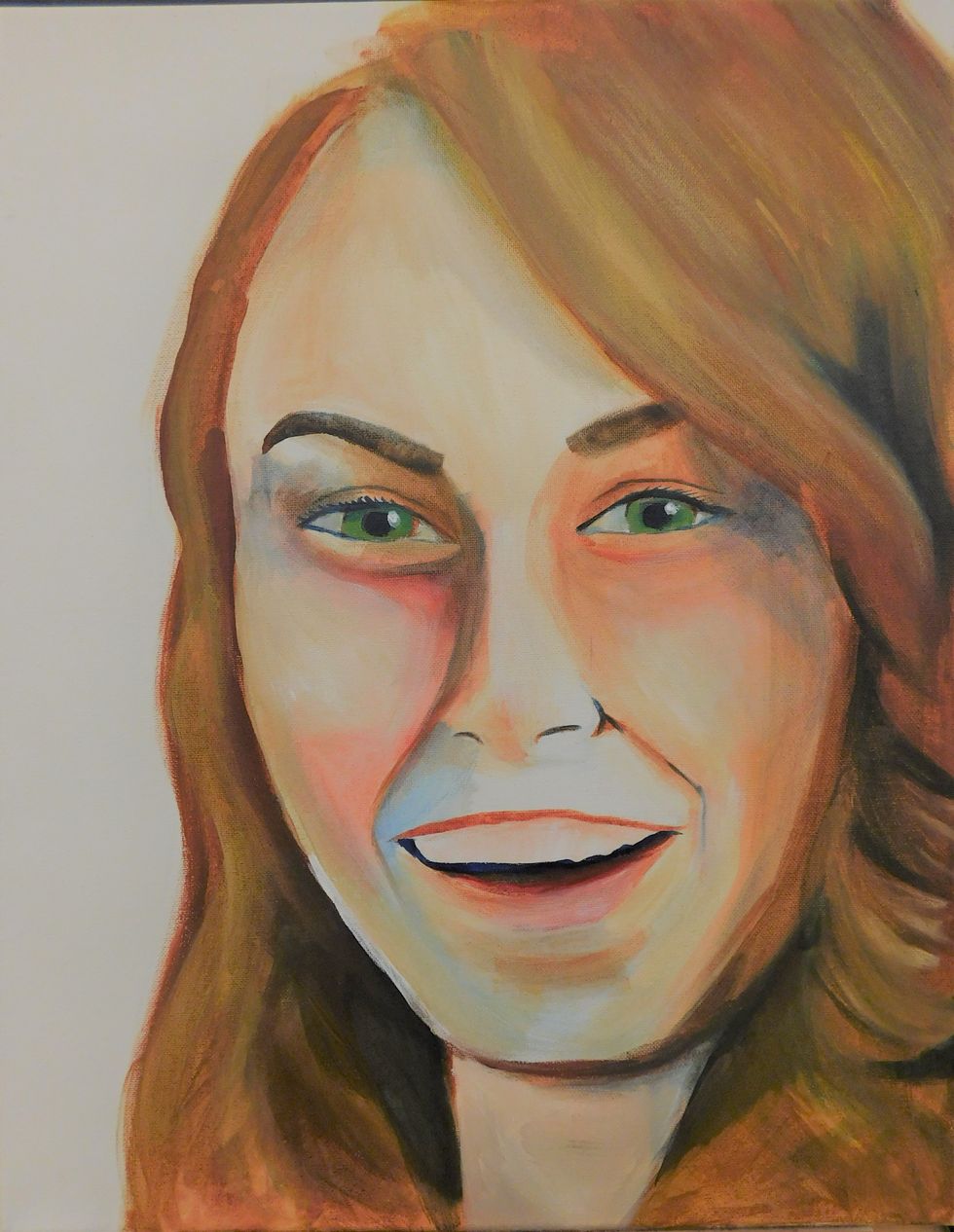
The hair was done a little differently. I layered a Raw Sienna and Burnt Sienna on her entire hair. I waited for this to dry, added Phthalo Blue (or Phthalo Blue and Burnt Sienna) to the darker portions of the curls. I mixed Cadmium Yellow and White to create highlights, layering these highlights last.
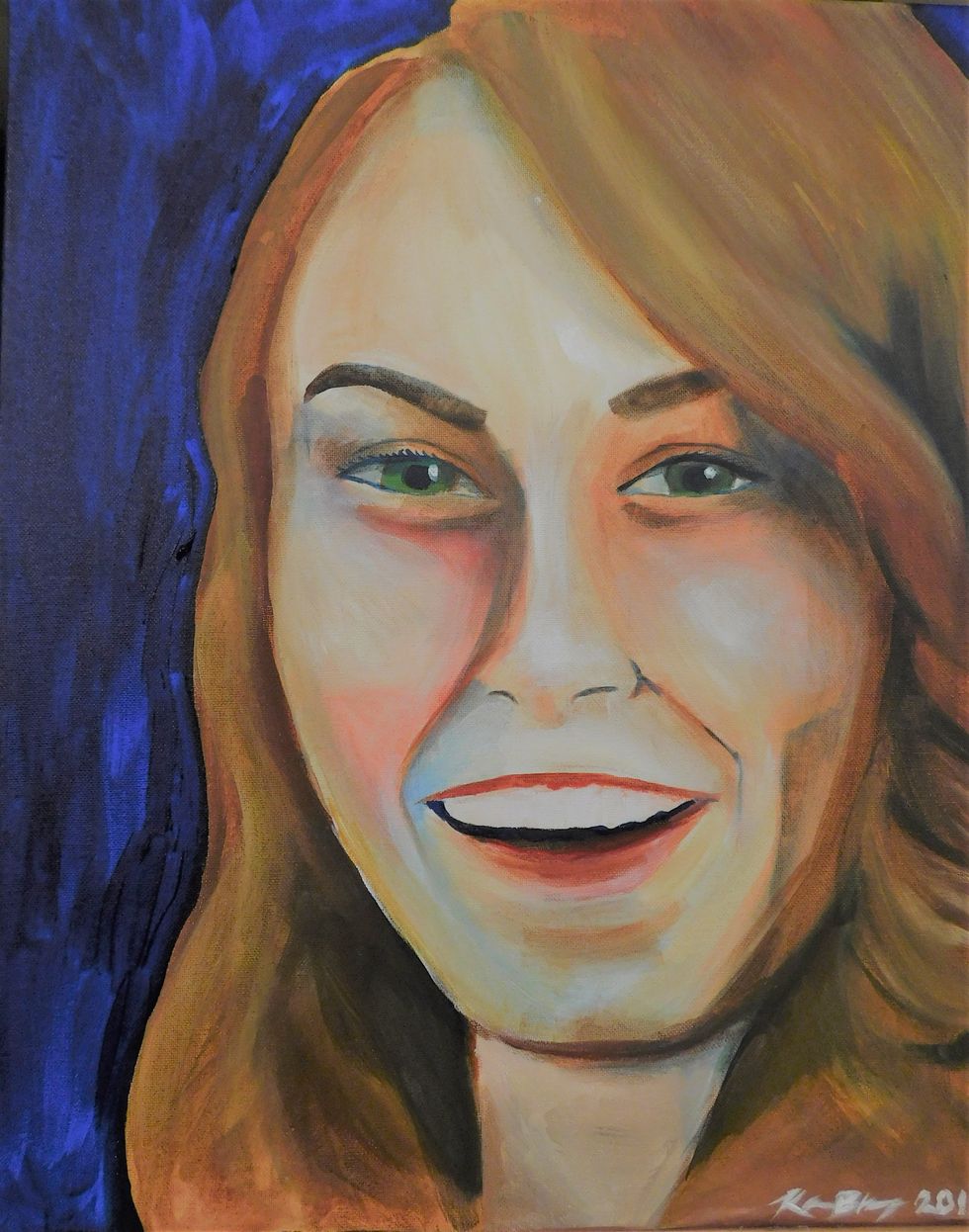
I established the background with Phthalo Blue only. I added some shadows to establish near the hairline to transition from the skin to the hair. I also defined some features in blue. Finally, I added my signature and year of completion.
As explained before, painting is a process. The entirety of the painting took me over two hours to complete. If you need some experience before diving into your next portrait, consider working in the following areas: (1) sketching portraits in pencil only, and (2) blending those acrylic colors on a test sheet of paper.
Happy Painting!