Looking at the recent surge in superhero films, I can't help but feel old. There was once a time where we would get one, maybe two if we were lucky, a year. It was an event. I remember seeing the first Spider-Man opening weekend – the original Tobey Maguire one. We all had to wait for them to announce they were even doing a second one. Fast forward to 2016. This year alone, we have four superhero films, two each from Marvel and DC. This mass production of countless comic book movies is thanks to Marvel, who took one of the biggest gambles in film history, jumpstarting the shared universe model of filmmaking. But how did Marvel, a publisher who at one point was losing money on a regular basis, create a multiple-billion dollar franchise, and what did that do for film?
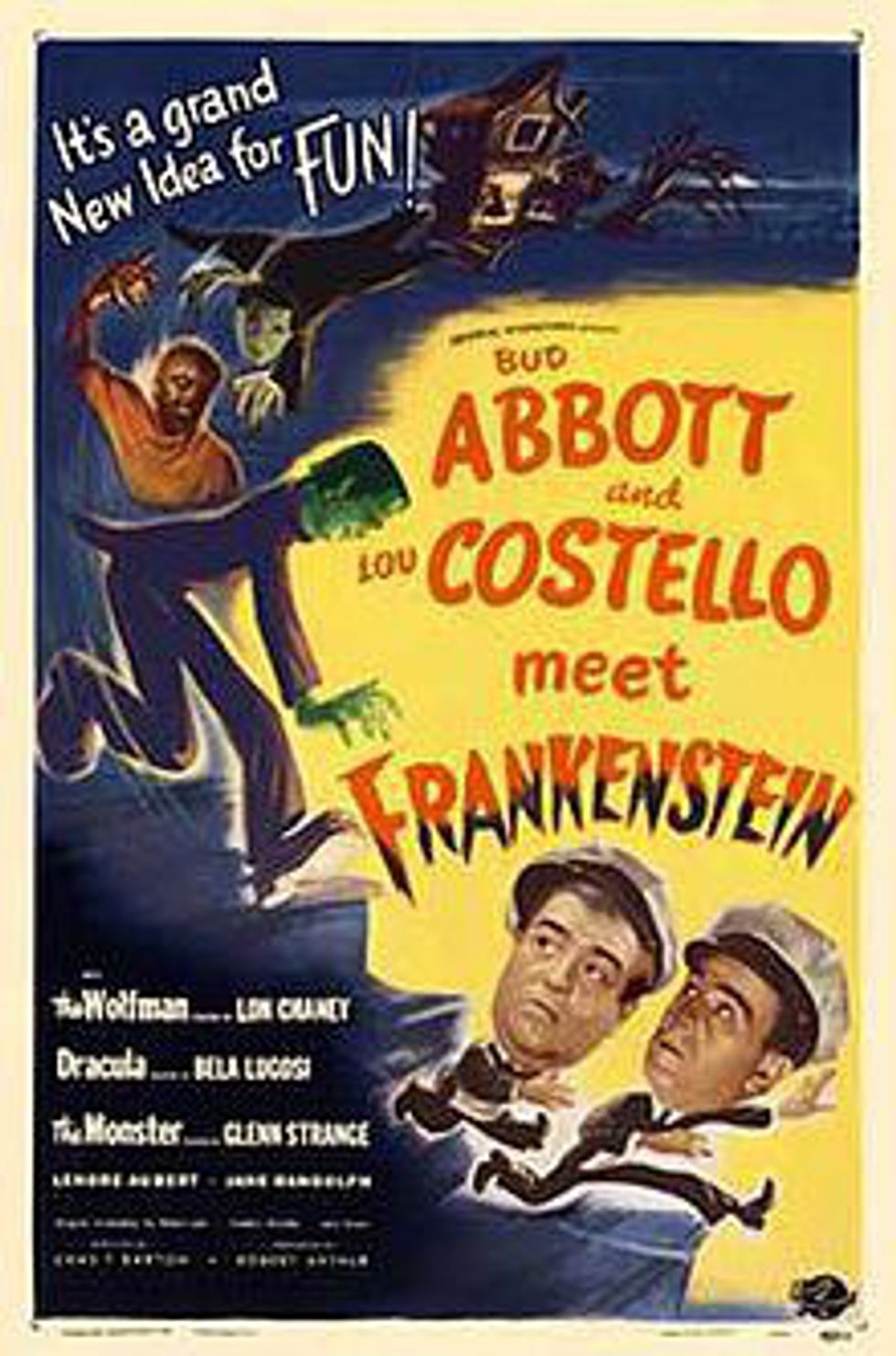 The
shared universe concept isn't new. Universal Studios established
their classic monster movies to be in the same world, characters and
creatures crossing over into each other's films – Frankenstein
Meets the Wolf Man, House
of Frankenstein, House
of Dracula, and the ultimate
crossover, Abbot and Costello Meet Frankenstein.
In the years following, directors and studios would sneak in small
references to other works, such as John Hughes saying that the family
in Planes, Trains, and Automobiles
lives down the the street from the Benders (their son, John, having
appeared in The Breakfast Club),
and George Lucas including a group of E.T. The Extra
Terrestrial aliens during a
Senate meeting in Star Wars: Episode I: The Phantom Menace.
However, the comic book film shared universe can be traced back to
the Tim Burton/Joel
Schumacher Batman
series. A quick line in Batman Forever
established the city of Metropolis existing within this film
universe. Then, in 1998, when Burton signed on to direct Kevin
Smith's ill-fated Superman Lives,
Burton rewrote much of the script, but kept a short scene in which
Batman would have had a small cameo, played by Michael Keaton. DC
would later attempt a Batman Vs. Superman
in 2003, where the two heroes would get spin offs, and Justice
League Mortal, to be directed by
George Miller, and the plan was again to do spin-offs out of this
film. None of these projects made it past pre-production, Superman
Lives being a few months away
from filming when it was canceled.
The
shared universe concept isn't new. Universal Studios established
their classic monster movies to be in the same world, characters and
creatures crossing over into each other's films – Frankenstein
Meets the Wolf Man, House
of Frankenstein, House
of Dracula, and the ultimate
crossover, Abbot and Costello Meet Frankenstein.
In the years following, directors and studios would sneak in small
references to other works, such as John Hughes saying that the family
in Planes, Trains, and Automobiles
lives down the the street from the Benders (their son, John, having
appeared in The Breakfast Club),
and George Lucas including a group of E.T. The Extra
Terrestrial aliens during a
Senate meeting in Star Wars: Episode I: The Phantom Menace.
However, the comic book film shared universe can be traced back to
the Tim Burton/Joel
Schumacher Batman
series. A quick line in Batman Forever
established the city of Metropolis existing within this film
universe. Then, in 1998, when Burton signed on to direct Kevin
Smith's ill-fated Superman Lives,
Burton rewrote much of the script, but kept a short scene in which
Batman would have had a small cameo, played by Michael Keaton. DC
would later attempt a Batman Vs. Superman
in 2003, where the two heroes would get spin offs, and Justice
League Mortal, to be directed by
George Miller, and the plan was again to do spin-offs out of this
film. None of these projects made it past pre-production, Superman
Lives being a few months away
from filming when it was canceled.
Meanwhile,
all was not well at Marvel. In the 1990s, no thanks to the speculator
market, the company began falling financially. To recoup losses, they
started selling film rights to their characters. As time went on,
rights reverted back due to studios not wanting to work on a genre
that was percieved as a disaster, as films like Batman and
Robin and Steel
almost rang the death bell. By 2006, Marvel had jumped back to the
top, and their character rights were still somewhat scattered. Rights
to X-Men, Fantastic Four, and Daredevil were held by 20th
Century Fox, while Sony held onto Spider-Man and Ghost Rider. Avi
Arad, realizing they held rights to Iron Man, Captain America, Thor,
and co-owned Hulk with Universal, decided to get a group together to
plan out these films to be connected, leading up to an Avengers film.
The rest is history – Robert Downey Jr., a washed-up has-been actor
was cast as Iron Man, and despite not even having a finished script,
the film went into production, releasing in 2008 alongside Hulk
reboot The Incredible Hulk.
Due to the success of Iron Man,
the Tony Stark cameo in the end of The Incredible Hulk
officially showed the Marvel Cinematic Universe would be happening.
In 2009, Disney bought Marvel, and with that, following the end of
the Paramount contract, Disney would distribute all MCU films. Slowly, the films threw in little references and cameos from previous works, such as Samuel L. Jackson as Nick Fury. Each project was produced independently from each other, but would occasionally meet up. As time went on, this did begin hindering filmmakers working for Marvel, but that is a story for a different time.
Fast
forward through Iron Man 2,
Captain America: The First Avenger,
and Thor. Two actors,
Edward Norton and Terrance Howard, did not reprise their roles as
Bruce Banner/Hulk and James Rhodes/War Machine in the sequels over
money and creative issues. In 2012, Marvel released The
Avengers, and proved that this
concept would work. They immediately started work on other projects
and sequels, all building up to Avengers: Infinity War and
its follow-up, due for release in 2018/2019. Meanwhile, Marvel spread
their universe into television, and began getting rights back to
certain characters, including Daredevil, Ghost Rider, Ant-Man, and
made a deal with Sony to co-own Spider-Man. However, usually the
characters didn't cross over into each other's movies, unless it was
an Avengers movie –
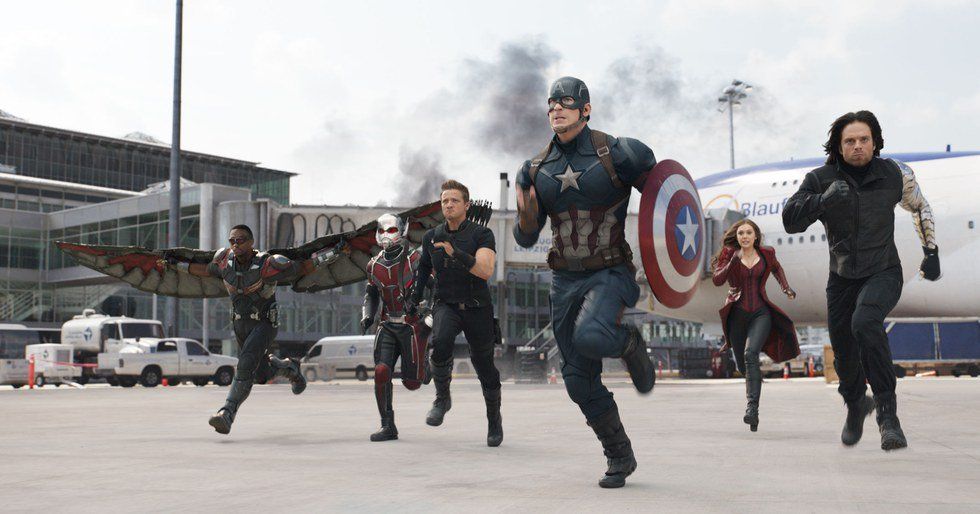
that is, until Captain America: Civil War,
where Captain America and Iron Man went to war with each other,
dividing the Avengers and establishing a new tone for the franchise
going forward. As per Marvel Studios president Kevin Feige, “it's
all connected”, except for when it's not – look at the pre-Civil
War films compared to Batman
v Superman, which deals with the
exact fallout of Man of Steel,
and likewise for Suicide Squad. Civil War
showed that yes, these solo films can include the others and not feel
like another Avengers,
something Marvel hopefully will continue to do.

So
what did all this do for Hollywood? It showed there was potential to
create entire universes of films and television, all connected and
integrated, as well as generating more money for the studios. Disney
has announced a similar style with Star Wars,
where in addition to the main “saga” line of films, we will be
seeing a Star Wars Anthology
series, telling different stories of the galaxy far far away. Sony
also considered doing their own Spider-Man universe, but after the
critical and financial failure of The Amazing Spider-Man 2,
the deal with Marvel was made, leading to the second reboot and third
leading actor in ten years. They also are considering a Ghostbusters
universe, but in a similar situation to The Amazing
Spider-Man 2, the money from the
surprisingly well-received reboot was not what they had expected. DC
Comics has jumped in, doing a similar method to their earlier
attempts – introducing characters like The Flash, Wonder Woman,
Batman, Cyborg, and Aquaman before their solo films in
Batman v Superman: Dawn of Justice.
Godzilla, King Kong,
and
possibly Pacific
Rim are
often in discussion about connecting their franchises. Even
Universal is attempting to remake their shared universe of monster
films, starting with Dracula Untold,
and leading up to a Van Helsing reboot.
Quinten Tarrentino has also said that his films are pretty much in
the same world, with characters being related or otherwise connected
to other characters across his works, creating a more subtle shared
world.
The
shared universe concept is nothing new. It has been done long before
Marvel Studios worked on The Avengers,
and it will be done long after Marvel drives the superhero genre into
the ground. While sometimes, it just shouldn't happen (who really
needs a Silmer-focused spin off of Ghostbusters),
it can lead to countless directors and writers and actors working on
multiple projects at once, all able to do their own thing, but still
have ties to a previous work. It also can get a bit annoying, having
to see the previous MCU movies to understand what exactly happened in
Captain America: Civil War
and where each character and situation is when the film opens. But at
the same time, those who have seen the last few movies will get the
in-jokes and references, and the little references to “the
incident” will make more sense. Either way, the shared universe
concept allows for something for everyone among their projects –
somebody who was not interested in Star Wars: The Force
Awakens may be interested in a
gritty war film like Rouge One: A Star Wars Story.
Even attempting to make this work was a gamble, and it is still
paying off, not just for Marvel, but for any franchise ready to show
more than just a single aspect of a world.