


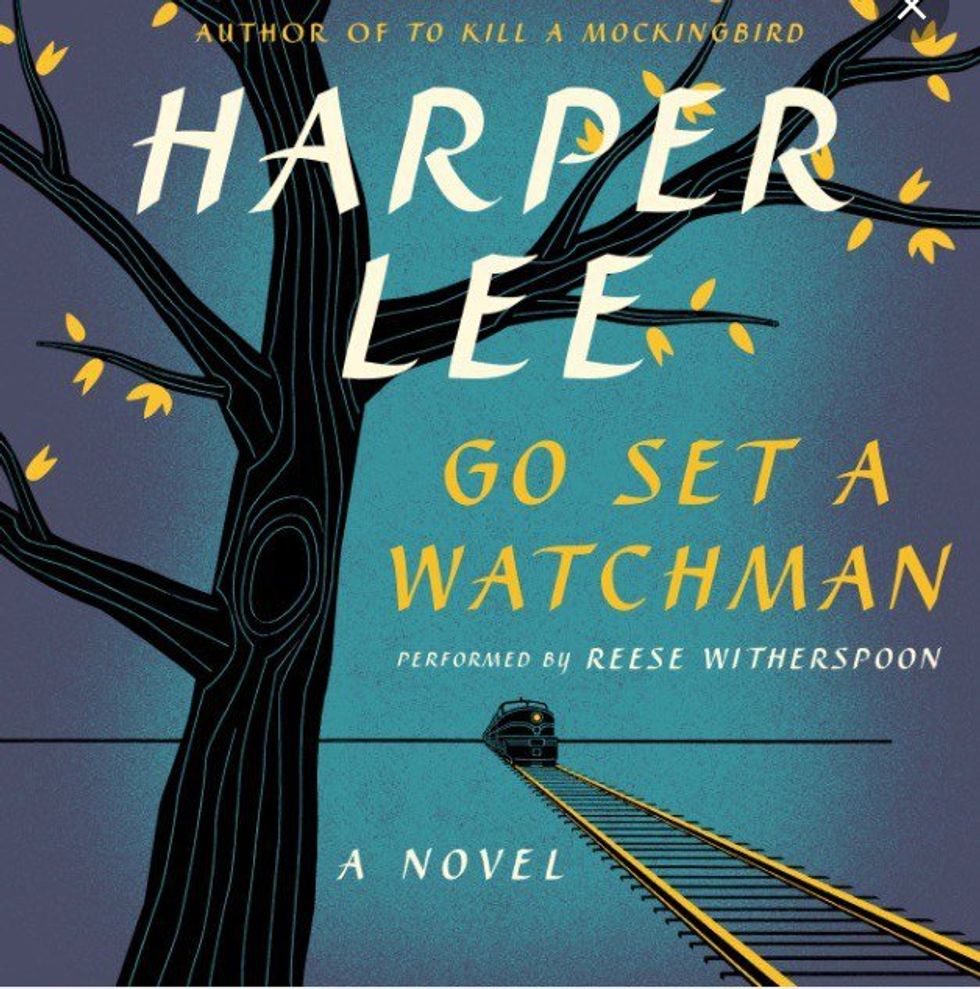
The release of Harper Lee's sequel to "To Kill a Mockingbird" was both anticipated and criticized. It was clear that "Go Set a Watchman" was to be published against Lee's wishes and that in her fragile state brought on by old age, she was being taken advantage of. After reading the book, it's quite clear why Lee may not have wanted Watchman published.
I have heard multiple people talk about the fact that "To Kill a Mockingbird" is the best book they have ever read, or even the book that made them enjoy reading. I feel as though it'd be appropriate to hold its sequel to equally high standards — a progressive literary masterpiece that has the power to ignite change on both a micro and macro level.
The problem with "Go Set a Watchman," though, is that it undoes everything that is good about "To Kill a Mockingbird," in addition to putting forth horrifyingly racist ideas.
First and foremost, it strips Atticus of all of his most revered traits, like the fact that he was not a racist and treated each human with the utmost respect. Watchman downplays Atticus' representation of Tom Robinson in Mockingbird which was the ultimate gesture of progressivism as a respected white man fought for the equal treatment of all men, regardless of the color of their skin — as a selfish gesture that Atticus did, not out of selflessness and the desire to give a man who was seen as a second-class citizen a fighting chance, but for selfish reasons grounded in the racist ideas that Watchman tells you actually ran through his mind.
Second, Jem is dead, and the whole novel feels a little bit empty without him. Readers are forced to wonder how Jem would have dealt with finding out that Atticus is actually racist, though it is safe to assume that he would have at least helped Jean Louise come to terms with it.
Whether it was what Jean Louise thought about her father or the fact that she spent most of her time in New York, where the spirit of civil rights was different than it was in the south at the time, she was the only one in "Go Set a Watchman" who was unprejudiced. Readers feel sorry for her, as Lee communicates Scout's solitude quite well and in detail. It was disheartening, confusing and abominable all at once.
I was disappointed in "Go Set a Watchman." It was well-written, but it was upsetting. To have read "To Kill a Mockingbird" and to have understood the magnitude of its social influence, and then to have it stripped of so much of its honor was disconcerting. Once Watchman was published, it changed Mockingbird forever, because the former has the last word in every matter discussed and set forth in the latter.
















