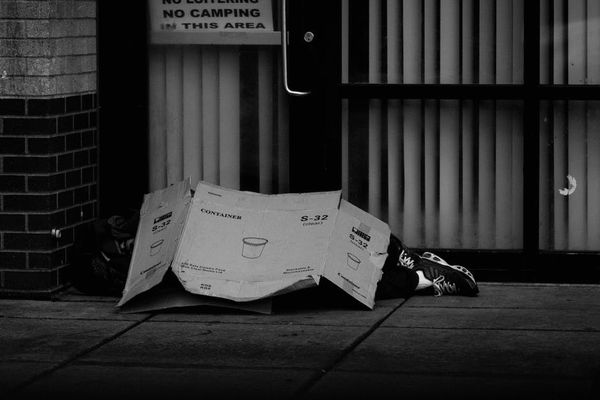
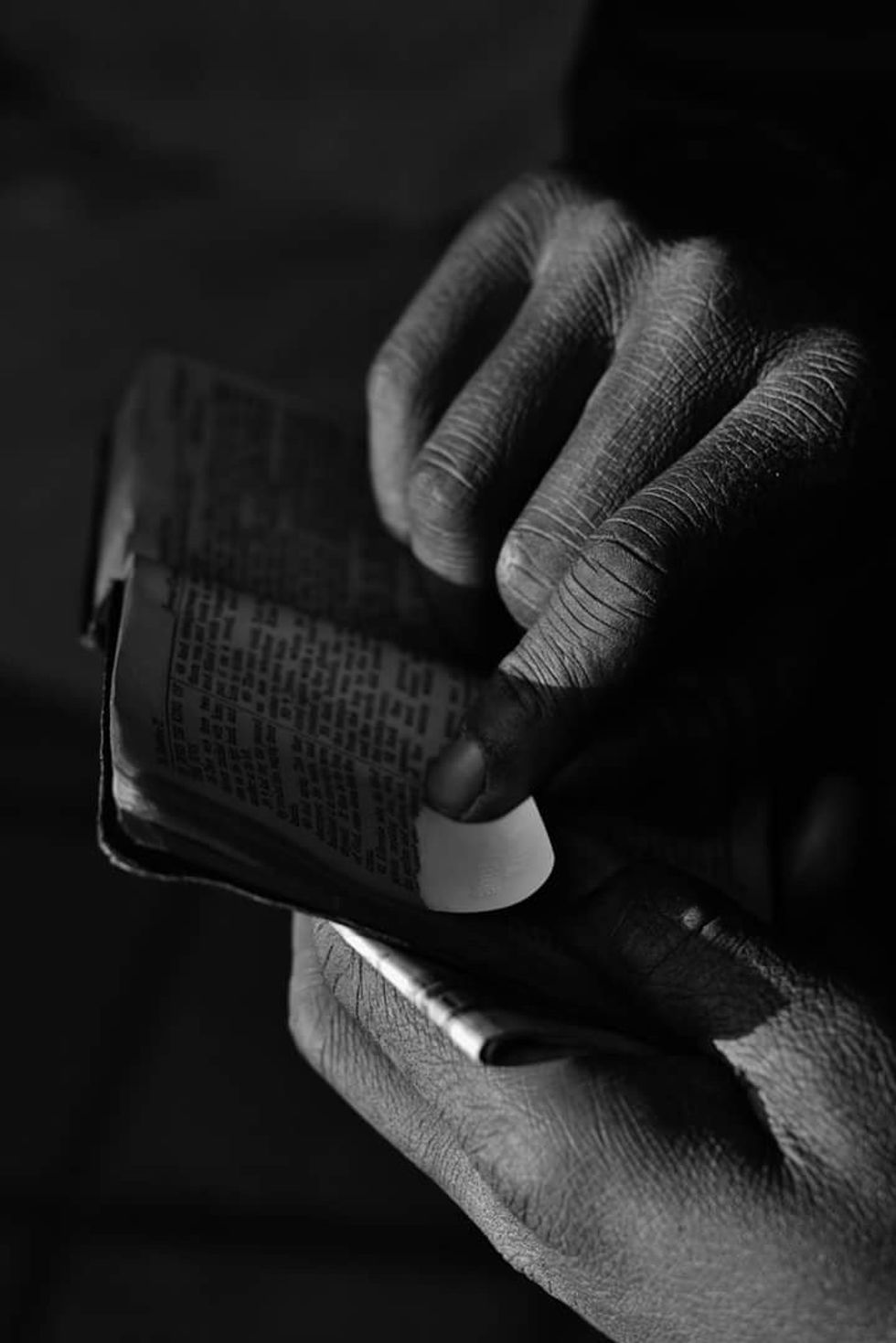
Imagine if the person begging on a busy city street could hear each passerby's’ thoughts. Now imagine if you, dear recently-shopped passerby, could hear theirs? Now think, as a passerby, we often partially do know this. The person begging often holds up some paper or cardboard with their message. So we already know a good bit about them because of their vulnerability and volition. In response, however, we often have these trust issues too, which I think are gut reactions and need to be broken down.
Attitude or Belief?
We often feel like we might get tricked, might give our money or our offered gift for the ‘wrong thing’. Well, I think if we were compelled to carry our responses around for why we don't give on cardboard just as they are, it would say, “I don’t believe I should.”
Passerby Explanation
If we’re busy, it's a begging person's unlucky day. When we hear them, we might barely look or smile at them at all. I was standing at Brandenburg Tor last week and someone purportedly deaf and mute asked me to sign a petition for deaf and mute kids, along with a small gift. My friend saw this person one year ago at the same street corner. So she already knew the catch and said, “they’re lying”. Well, I might think they are too. They may not be deaf, but they certainly still might need the money. Haven't they thought this up precisely because no one believed them when they sat by the streetside? Convictions built from prior experience lends one to decline when they feel tricked. Another instance is that, while walking to your local grocer you pass the same two folks begging day in and out, you tell yourself, "I only give to big organizations I can trust, not individuals. I feel set with my money there and fulfilled personally too. Anyways, these folks will just go to those organizations whenever they need help." Or you only believe in buying food or giving some physical thing, lest when you give money they misuse it, so when you offer your leftover snack bar and they decline or refuse, you're offended by them and leave.
Passerby Belief
So say the one begging at the street corner is lying, but you’ve figured it out. Although they may be looking for a bottle or some other substance, is that an unrealistic request during a cold winter? Weren't you yourself gonna drink a cold one tonight? After this long week aren't you gonna go out with friends? What would you want on a freezing night where all you could do is hold out, think about your slimming options, your future, or the condition of your children, while your fingers finally numb completely again? We want things to change but only when they're how we premeditatively decided they will. We bring our moral platitudes into a complex world and the puzzle pieces barely link. When these control how our compassion reaches people, that's called Ethical Compassion. “I only give to X when I only buy X for him when…” This is a contortion of compassion. It comes about often from when a friend tells you about this one time they were gypped. It makes us as passerbys think we can read all the thoughts of the person begging. But that's just silly. Our thoughts cannot encompass a population of people who end up begging for so many different reasons. Nor can they explain why the person begging would like money instead of food (a simple reason is they may not be hungry).
Ethical Compassion seems to provide some sort of complete manual, but at its base lie only pre-conceived and perhaps evidenced notions which often render us more cold, less compassionate.
To gain a new perspective, I think it's good to use the story of the Apostles Peter and John. Acts 3. Skip eight verses ahead and the man is already jumping and leaping while crowds pour in to hear the source of Peter's healing authority. But the story is more than a lesson of God's miraculousness, rather it frames much of what I'll call Hopeful Compassion. Peter and John are going towards the area of the temple where everyone prays at the ninth hour (3PM). They had an agenda, but they stop at the entrance. A man lame from birth, an impairment beyond his control, which renders him a social outcast, begs passerbys for gifts outside of the temple. Every day he was carried under the gate called Beautiful, asking for and expecting some alms in return. When Peter and John hear him, they stop and say "Look at us." Peter's command is abrupt, but ask yourself, "what was the man looking at?" The apostles' feet or his pan of alms. Here he begs under the gate "beautiful", but seems to not fully grasp his beautiful dignity or the beauty of God's presence within the temple--it's just been daily living. Until he obeys Peter and they fix eyes. Suddenly it's a moment of held breath and rising tension. "I don't have your silver or gold, but I give what I have. In the name of Jesus Christ of Nazareth get up and walk!" And he was jumping and leaping and...--not quite yet. First Peter took him by the right hand (how closely he stood to him) and lifted him up, then his feet and ankles were made strong. Others looked and were amazed, thinking, wasn't this the man who begged? How beautiful it is that Peter and the early church delivered so many brothers and sisters to Christ from spiritual chains after Peter untethered this man's physical ones? Whether it's been family, friends, or a one's personal actions, everyone has something which has rendered them lame. When we give up our preconceived ethical compassion and look at the outcasts around us, God reveals to us these true weaknesses as well as Hope. We will be healers, smilers, talkers, and gift-givers. We will desire our small role in God's bigger picture. Our compassion will be preparing the way for when God sends his Peter to make beauty beneath the gate. Far-sighted compassion like that is called Hope.Hope Through T-Roy
He'll even use you when you got no idea. Around January 4 years ago I decided to go downtown to shoot. I remembered thinking that I'm hardly ever out and about to intentionally take the photos and that was it. Pretty much just about me. As I reached downtown Philly, walking right out from eighth and market stop I met a man who asked for money. I said yeah I have it, but I only had a 20. I asked him if he wanted anything and he said a big-mac. I got it from the corner on that chilly Saturday afternoon and thought to myself that this was an adventure larger than myself. I returned and as he ate we talked. Small-talk like his name, his job, his interests. His name was T-Roy. He was a street-cleaner who earned the most minimal wages. He cleaned most days and was still in straits. I never learned if he was homeless, but life was hard and he bundled up. He held a Bible in his hand, full of notes. So we talked: T-Roy began sharing his thoughts and opinions on some passages in Matthew and Revelations and I shared my own. We connected along a bridge important to both of us. We both learned. A few times he asked for a bottle of wine holding out cash in hand, but I said I couldn't get it.Finally, I plucked up some courage and said may I take pictures of you and he said sure. I went downtown looking for pictures, not an actual person, but God challenged my expectations of the first and causes me to wrestle with how real it of the second. My biggest regret today is not giving T-Roy those pictures via email or anything and my prayer is to do so one day. God had to use my desire to capture something meaningful to draw me towards being open to anyone, including T-Roy.
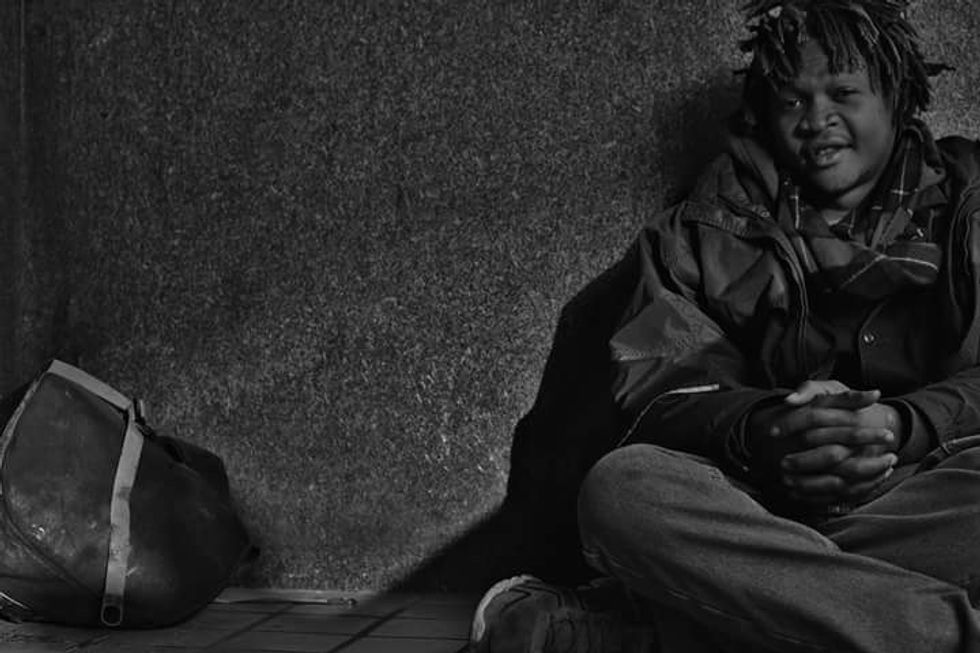
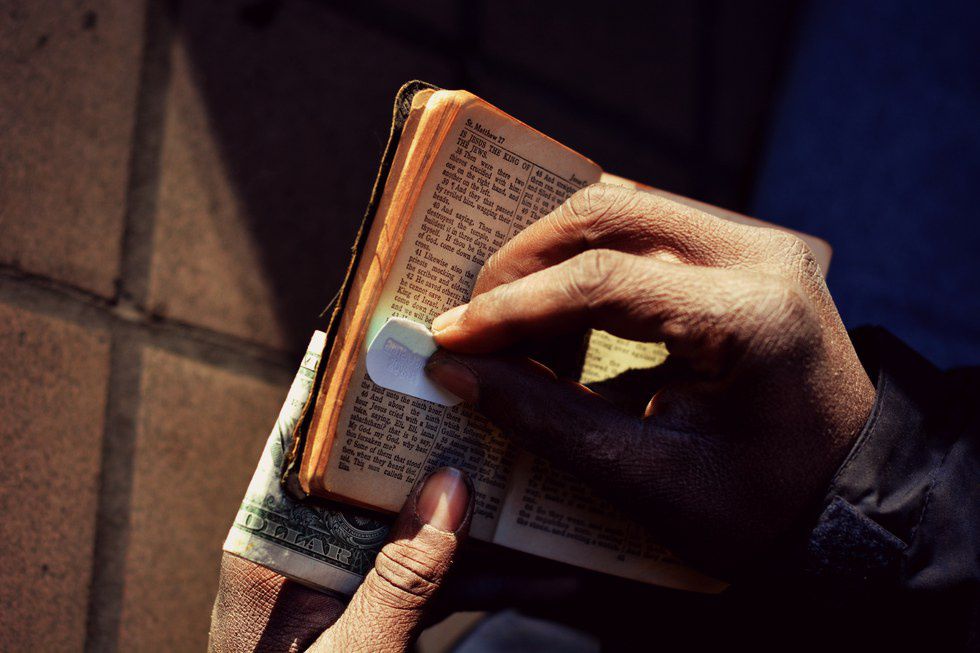
(Top: Untitled, Bottom: "T-Roy in Gold", Aaron Henry Photography)
Since God has already moved through the torn curtain to the arches named beautiful, so should we. So that will mean always, always, always engage somehow. Don't ignore either academically, premeditatively, or cold-heartedly. If you can give a gift, think about what you, just-purchased-something passerby, were thinking to buy. If you don't have gift pray someone else passing by will. If you're bold, speak to them. Don't wrestle out their story but listen to whatever they say. Like all people, they need affirmation of value and long-term hopeful compassion. That there's something more than daily expectations of food or alms & gifts. And when this good news and joy rest in us, how many more people will know how beautiful they are and He is?