The Hijab Is A Personal Choice, Not Your Political Symbol For Women's Oppression | The Odyssey Online
Start writing a post
Politics and Activism

The Hijab Is A Personal Choice, Not Your Political Symbol For Women's Oppression

It's time to debunk the myth that Muslim women need saving. It's time to respect personal choice.

668
The Hijab Is A Personal Choice, Not Your Political Symbol For Women's Oppression
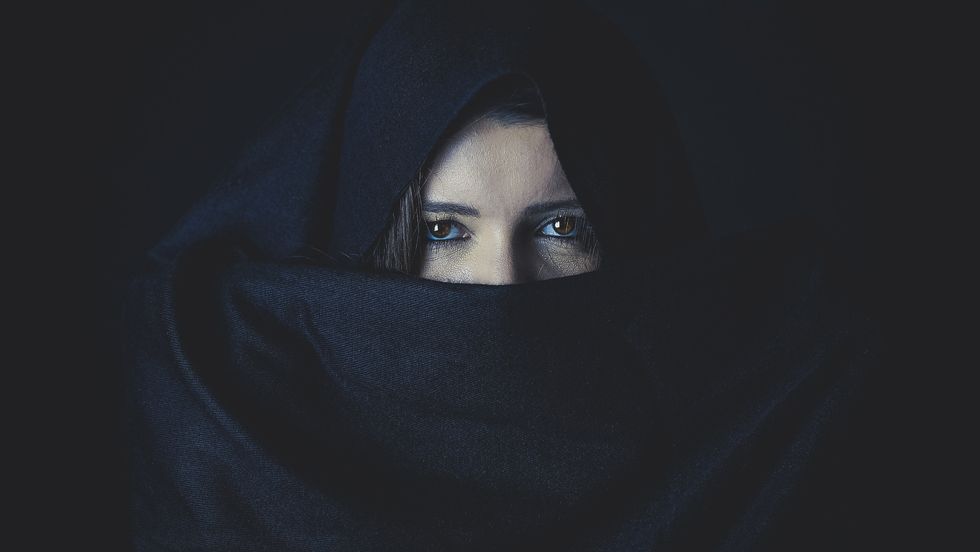
Photo by Vinicius Amano on Unsplash

With much of the Islamophobia that takes place in the United States today, it is not surprising to find that the hijab, a traditional form of head covering worn by some Muslim women, is debated as a symbol of women's oppression.

As an article in the New York Times reads, “Today, well-intentioned women are wearing headscarves in interfaith “solidarity.” But, to us, they stand on the wrong side of a lethal war of ideas that sexually objectifies women as vessels for honor and temptation, absolving men of personal responsibility.”

As many already know, the tradition of women's head covering was a notion of respect and modesty. Today, many would argue that the hijab perpetuates oppression because of the history behind it. While this tradition was certainly not empowering, Muslim women today have different perspectives on the hijab in different areas of the world and from different backgrounds.

Many Muslim women, when asked why they wear the hijab, respond with attitudes of respect for their religion and culture. In an article in USA Today, Sameeha Ahmad, a student at the University of Maryland, was asked about her decision to wear the hijab: "The way you look at it from a religious perspective, it empowers you by strengthening your relationship with God. It’s a step you are taking to further yourself within your own religion.” For Sameeha, the choice to wear hijab is influenced by religion and the desire to represent it, a right that was not enforced upon her.

Many people believe that no woman should have to wear the hijab because it is demeaning and a form of objectification. This mindset is at the root of ethnocentrism: assuming that Western culture is the correct way of life. It also homogenizes all Muslim women into a single group without respect for personal choice and individualism. While it may seem like an attempt to help save Muslim women, it is entirely wrong and disrespectful. Who’s to say Muslim women need saving in the first place?

The decision whether or not to wear hijab is a personal decision; it is influenced by culture and religious identity. While this decision may be influenced by history and family values, it in no way perpetuates oppression. The hijab is not forced upon Muslim women, therefore it is not oppressive. It is choice.

In response to this cultural issue, I know my responsibilities as a non-Muslim, white American woman. I know that I am responsible for respecting a woman’s choice whether or not to wear hijab or head cover of any kind because it is not my place or right to critique someone else’s culture.

At the end of the day, it is unfair to reduce an entire population of women to a single item of clothing. While the hijab may have been originally enforced as a sexist notion of women's respectability, that is not how most Muslim women perceive it now when they make the conscious decision to wear it. The perspective that Muslim women need saving is very ethnocentric because of the way it assumes all Muslim women are oppressed by Muslim men; it is an attempt to Westernize all Muslim women under the assumption that the Western way is "best." Hijab is Muslim culture, their religion. It is important to remember that if we want to help and liberate women, we must respect the ways in which they want to be liberated, even if their goals are different from our own.


Report this Content
This article has not been reviewed by Odyssey HQ and solely reflects the ideas and opinions of the creator.
Entertainment

Every Girl Needs To Listen To 'She Used To Be Mine' By Sara Bareilles

These powerful lyrics remind us how much good is inside each of us and that sometimes we are too blinded by our imperfections to see the other side of the coin, to see all of that good.

645352
Every Girl Needs To Listen To 'She Used To Be Mine' By Sara Bareilles

The song was sent to me late in the middle of the night. I was still awake enough to plug in my headphones and listen to it immediately. I always did this when my best friend sent me songs, never wasting a moment. She had sent a message with this one too, telling me it reminded her so much of both of us and what we have each been through in the past couple of months.

Keep Reading...Show less
Zodiac wheel with signs and symbols surrounding a central sun against a starry sky.

What's your sign? It's one of the first questions some of us are asked when approached by someone in a bar, at a party or even when having lunch with some of our friends. Astrology, for centuries, has been one of the largest phenomenons out there. There's a reason why many magazines and newspapers have a horoscope page, and there's also a reason why almost every bookstore or library has a section dedicated completely to astrology. Many of us could just be curious about why some of us act differently than others and whom we will get along with best, and others may just want to see if their sign does, in fact, match their personality.

Keep Reading...Show less
Entertainment

20 Song Lyrics To Put A Spring Into Your Instagram Captions

"On an island in the sun, We'll be playing and having fun"

540371
Person in front of neon musical instruments; glowing red and white lights.
Photo by Spencer Imbrock on Unsplash

Whenever I post a picture to Instagram, it takes me so long to come up with a caption. I want to be funny, clever, cute and direct all at the same time. It can be frustrating! So I just look for some online. I really like to find a song lyric that goes with my picture, I just feel like it gives the picture a certain vibe.

Here's a list of song lyrics that can go with any picture you want to post!

Keep Reading...Show less
Chalk drawing of scales weighing "good" and "bad" on a blackboard.
WP content

Being a good person does not depend on your religion or status in life, your race or skin color, political views or culture. It depends on how good you treat others.

We are all born to do something great. Whether that be to grow up and become a doctor and save the lives of thousands of people, run a marathon, win the Noble Peace Prize, or be the greatest mother or father for your own future children one day. Regardless, we are all born with a purpose. But in between birth and death lies a path that life paves for us; a path that we must fill with something that gives our lives meaning.

Keep Reading...Show less

Subscribe to Our Newsletter

Facebook Comments