
News about the 88th Academy Awards started popping up weeks ago when it came out that all of the nominees for Best Actor, Best Actress, Supporting Actor and Supporting Actress were all white for the second year in a row. This caused enormous controversy, spurring an "#OscarsSoWhite" hashtag and pushing numerous celebrities, including Will and Jada Pinkett-Smith, to boycott this year’s awards.
So, naturally, viewers waited for the Oscars to address this, and address it they did, along with various other relevant social problems. Host Chris Rock’s entire opening monologue was about the lack of diversity in Hollywood, and the comedian stated outright that racism in Hollywood does indeed exist. He did this effectively through humor, and half-joking that the Academy Awards were also known as the “White People’s Choice Awards.”
Rock referred to racism in Hollywood as “sorority racist,” as opposed to Civil-Rights-Era racism, “We like you, Rhonda, but you’re not a Kappa,” the host mocked, comparing subtle racism in everyday situations with the type of racism displayed by the entertainment industry. Racism is nowhere near eradicated, but when a popular comedian talks openly about racism on one of the most-watched TV events of the year, it makes me feel like we’re a step closer. This was an uncomfortable conversation that Americans were often reluctant to have, and by discussing it at the beginning of the Oscars, Chris Rock forced America to have it.
The racial awareness didn’t stop there. A segment was aired that comically replaced main actors in this year’s top films with black actors, including Whoopi Goldberg showing up at the end of each scene. Later, in an amazing moment, President of the Academy Cheryl Boone Isaacs came onstage and gave a speech telling Hollywood that it’s time to increase diversity, saying, “Inclusion only serves to make us all stronger.” The speech was even more powerful considering that Isaacs is a black woman.
While the race issue was the one that was most anticipated by the public at this year’s Oscars, the rest of the night featured testaments to victims of sexual abuse and to the LGBT+ community as well. Sexual assault awareness was a major theme, and Vice President Joe Biden came onstage to denounce rape culture, “We must and we can change the culture so that no sexual abuse survivor thinks they did anything wrong.” After the VP spoke, Lady Gaga, a survivor of this kind of abuse herself, came onstage and sang a ballad about it called, “’Till It Happens to You.” A large group of sexual abuse survivors, with phrases like “not your fault” written on their arms, stood behind her. It felt both monumental and necessary.
Near the end of the awards, Sam Smith won Best Original Song for “Spectre” from the most recent James Bond film. During his acceptance speech he dedicated his award to the entire LGBT+ community, looking up to the lights and stating his hopes that one day we can all be equal. Me too, Sam.
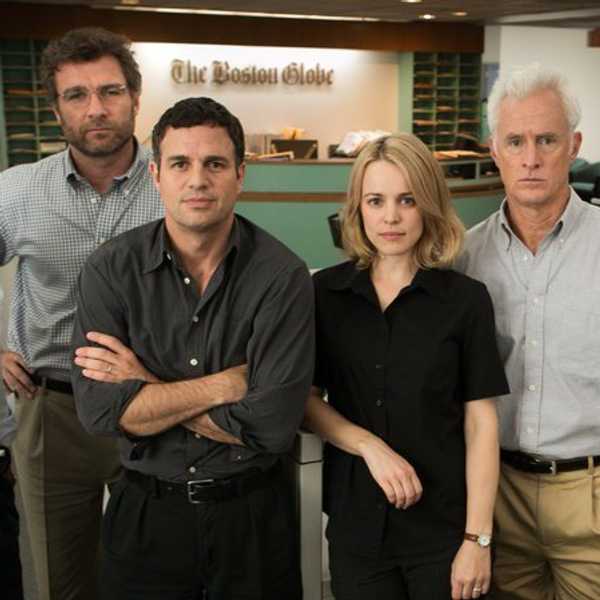
The progress displayed by this year’s Oscars was shown not only through performances and speakers, but also by the films themselves. Two heavily nominated films that night, “Carol” and “The Danish Girl”, featured lesbian and transgender protagonists, respectively. Leonardo DiCaprio used his very first Oscar acceptance speech to stress the importance of protecting Earth’s climate. Finally, echoing the emotional performance put on by Lady Gaga earlier in the evening, “Spotlight”, a film about a group of journalists who try to bring attention to the sexual abuse of children by priests, took home Best Picture. Producer Michael Sugar stated in his acceptance speech that “This film gave a voice to survivors,” and that he hopes it will spark further change. What a victory.
It’s clear that there are still changes to be made, but the first step toward social change is for awareness to be brought to those issues. The 2016 Academy Awards did a phenomenal job. Nearly everything about the Oscars brought light to those unsettling topics like abuse and racism that needed to be discussed. Some may complain that the Oscars this year became somewhat of a political event, but I think it’s just what America needed, especially in light of an upcoming election. Progressive and conscious media can effect change if we let it.