I’ve been a dedicated internet user for as long as I can remember. In high school, it was MySpace and LiveJournal. Then in my early twenties it was mothering.com, mid-twenties was Facebook and Instagram... & now in my late-twenties, I can easily spend hours scrolling through my newsfeeds or compulsively checking Snapchat. It’s the first thing I do upon waking and the last thing I do before falling asleep. I even find myself reading the comments on random garbage videos or GIFs. For what it's worth, I'm a devoted lover of Nihilist Memes, Everything Is Terrible and Super Deluxe. It's a pathological devotion.
That said, the one thing that has remained constant in my life is the steady progression of my worsening adult ADD. It’s to the point now where I read less than a paragraph of a college assignment and I’m already clicking to open a new tab to scroll through Facebook again or to choose a new song on Spotify. I do feel while the internet has been the sole source of my growth, it has simultaneously been a major growth restrictor.
While I do use the internet to feed my mind (like watching TED Talks on YouTube or playing Alan Watts lectures for intellectual background noise) the majority of my internet browsing is purely a distractive bombardment of junk and filler. I’ve been so entranced and hypnotized by the absorption of whatever it is I’m seeing on the screen that people around me are filled with exasperated sighs. I’m addicted to receiving information. I’m addicted to the constant stimulation. If I feel unenthused by my surroundings, I reach for my phone and Google whatever it is I'm curious about in that moment.
So, where am I going with this? A few years ago, I permanently deleted my entire Facebook account. After that, within a week I had a new Instagram account and within a few months already had thousands of followers. Then that quickly became my new addiction. After realizing this, I permanently deleted my Instagram account. A month or two later, after not having a Facebook account for a year, I created an entirely new account and…here we are again. Since this approach doesn’t seem to work well for my clear lack of self-discipline, I’ve decided to completely unplug from social media…a “digital detox” in a sense (sort of half-assed since I cannot live without my phone for business and social reasons).
I'm tired of waiting for the notification alert telling me that I exist.
I have a plan.
I refuse to compulsively document my experiences on Snapchat. In fact, today I deleted the Snapchat and Facebook apps from my phone.
Instead of reaching for my phone first thing in the morning, I'll drink a glass of warm lemon water, do 30 minutes of yoga, meditate for 20 minutes and eat breakfast without my phone within reach.
Throughout the day, I will move from one item to the next on my to-do list without compulsively checking my text messages and emails.
And lastly, at night I’ll turn my phone off an hour before bed and read a book instead.
I will do this every day for 21 days and document my progress along the way. I love experiments like this. I also, for some bizarre reason, love going cold-turkey. No matter what the addiction is, it's sort of like a test of willpower and it's always been a strong motivator for me.
Usually a 21-day project like this turns into a semi-permanent thing for me because I'm a person of habit...well, a spontaneous and impulsive person of habit if that makes any sense.
From Smartphone Addiction Help Guide:
Compulsive web surfing, watching videos, playing games, searching Google, or checking news feeds can lead to lower productivity at work or school and isolate you for hours at a time. All this compulsive use of the Internet and smartphone apps can cause you to neglect other aspects of your life, from real-world relationships to hobbies and social pursuits.
From Digital Detox’s Manifesto:
61% admit to being addicted to the internet and their devices
The average American dedicates 30% of leisure time to perusing the web
50% of people prefer to communicate digitally than in person
67% of cellphone owners find themselves checking their device even when it’s not ringing or vibrating
One out of ten Americans report depression; heavy internet users are 2.5 times more likely to be depressed
The average employee spends 2 hours a day recovering from distractions
1/3 of people would rather clean their toilets than their inbox
The average employee checks 40 websites a day, switching activities 37 times an hour, changing tasks every two minutes.
However, only 2% of people can actually multi-task without decline in performance.
60% of people say traditional vacation does not relieve their stress
33% of people admit to hiding from family and friends to check social media
High Social media use can trigger an increase in loneliness, jealousy and fear
95% of people use some type of electronics in the hour leading up to bed.
** Artificial light from screens increase alertness and suppress the hormone melatonin by up to 22% – negatively affecting sleep, performance and mood.
Unplugging for just one day can give some users mental and physical withdraw symptoms
There are countless informative articles on the topic. Including, Here’s What Happens To Your Brain When You Break Your Smartphone Addiction and 16 Seriously Damaging Side Effects of Your Smartphone Addiction.
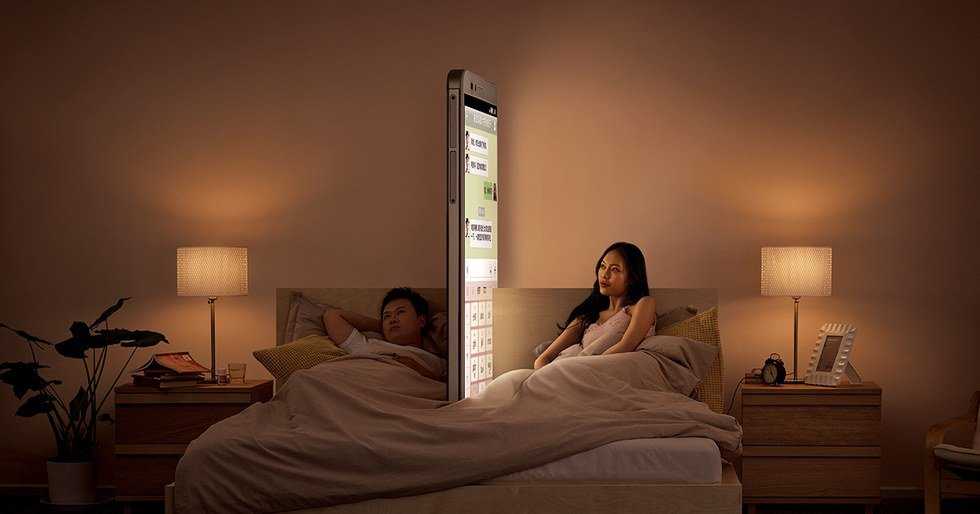
REMOVED is a photography project that highlights how our devices divide us.
Need help reducing your screen time? Ironically, there’s an app for that.