Although it has been more than a year since I have taken a hiatus from actively practicing the violin, the lessons I have taken away from my 12 year-long journey of learning the instrument have proven invaluable in my endeavors.

I started learning how to play the violin when I was five years old. I had a violin teacher with whom I would spend an hour a week with, learning a repertoire of scales, shifting exercises, double stops (playing two notes or more at the same time), and other skill building pieces of music. In direct proportion to my skill level, I prepared for Certificate of Merit skill evaluations every year, moved my way up the ranks in the CSUN Youth Orchestra, and participated in SYMF competitions.
Learning to play the violin meant learning self-discipline. I was expected to practice at least an hour every day, and record my time in a notebook. The journey was far from easy. As a child and growing teen, the pressure and strict regiment would often grate against my prepubescent desires to be free of such constraints. I had to force myself to practice a scale slowly, when all I would want to do was rush and get it over with. I never was able to slip past my teacher’s purview with an inadequate scale.
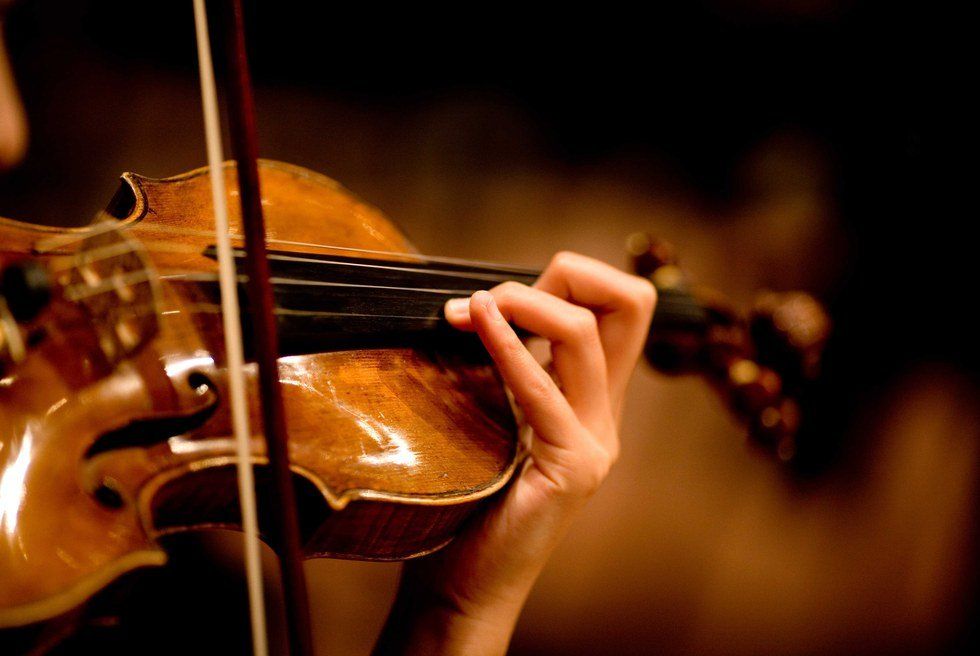
Learning how to play the violin required perseverance. Scales and skill-based exercises are often times mundane and frustrating. The mistakes that my teacher would point out in my pitch seemed minute and nitpicky. My left fingers had to get used to being stretched in odd ways in order to reach the right pitch of a certain note. The position of my left hand was constantly being adjusted to grip the bow in the correct way. Either my thumb was not curved enough or my pinky was too flat. The changes I had to make to hold the violin itself in the proper way was an uncomfortable experience I had to grit my teeth to endure.
I came to understand soon enough, that I would never stop learning how to play the violin. There was no end zone or limit to how much better I could play. My performance would always be able to be improved, and my posture, fixed. As I would never reach perfection, I had to make do with the small victories – the compliments I would receive from my teacher when I played a difficult passage right or the rush of confidence that would flow through me when I nailed a difficult phrase full of flats and sharps in time with the metronome. While playing the violin became easier as I improved in skill, there was always another challenging passage to overcome that would require me to learn how to move my bow and fingers differently or more quickly.
I came to feel an appreciation for the artistry involved in the music. There were small choices I could make as a musician that would affect, unbeknownst to the listener, how they received the sound emotionally. I could make changes in a fingering and make the tone of a note sound differently without altering its pitch. If I used more hair on my bow for a certain passage, the sound produced was louder and broader, which would create a more dramatic effect. Playing the violin became less of a technical endeavor and more of an artistic one. My admiration for professional musicians grew as I came to understand the amount of thought and time necessary to produce the kind of classical music we take for granted.
While I no longer actively play the violin, the lessons and skills I have accumulated in 12 years of practice remain engrained within the muscle memories of my fingers. From the violin, I’ve learned to appreciate the artistry involved in creating music and the value in consistently striving for improvement in the tasks I undertake.