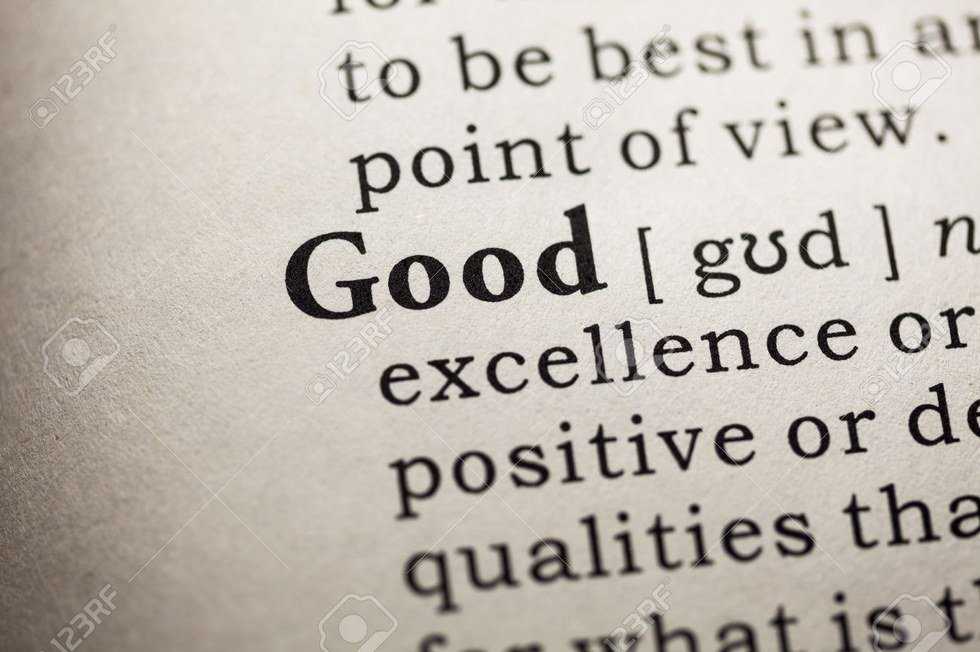
Take today to count how many times you hear or see the word "good". Maybe you'll see it scrawled in your teacher's handwriting on top of that paper you worked so hard on. Maybe your friend will take you to Moe's and he'll say, "I mean, it's good. Not Chipotle good, but it's good." Or maybe, probably, you'll say it yourself every time someone asks you "how are you?" or "how's your day going?" despite how your day is actually going. I don't blame you. I do the same thing. Especially during those awkward walk-by conversations where someone says "how ya doin?" (because the extra couple seconds it would take to say "are" and to annunciate syllables would really set them back) but there isn't enough time to accurately assess your emotions and explain them, so you say, "good." Admit it, you could be having the worst day of your life so far and your answer, nine times out of ten, would still be "good."
Good is the laziest word in the American language. It's used so frequently that it has become meaningless. "Good" is the equivalent of telling someone nothing. You would actually know more about someone if a conversation that ends with "good" never happened. Think about all the times "good" is used.
"Good for you!" translation: "Stop bragging. I don't care."
"I'm good!" translation: "I don't have time for this."
"This meal is good!" translation: "It'll sustain me, but it's nothing special."
"Good job!" translation: "You completed a task and I am acknowledging it, but we were all there. We all saw it."
"That was a good time!" translation: "I didn't necessarily want to do anything else during that period of time."
"Good boy!" translation: "You are a dog. You didn't pee on the rug today. You don't understand English, but maybe if I say it in a high pitched voice you'll wag your tail. There it is! Good boy!"

So let's stop wasting our breath!
Say what you mean, and mean what you say. First of all, a good alternative to all of these expressions is to say nothing at all. But if you need to say something, either start listening or use these less-lazy expressions. Here are words that you can say to keep it real:
"Good for you" alternative, *Tilt head slightly and squint your eyes as if to ask, "Why are you telling me this?"
If you want to say that something isn't great or it's just "middle of the road", use the words "neutral", "eh" or "ok". Still lazy, but not meaningless.
If you want to tell your dog that he is "good", rub his belly or give him a treat. He'll appreciate that more than English.