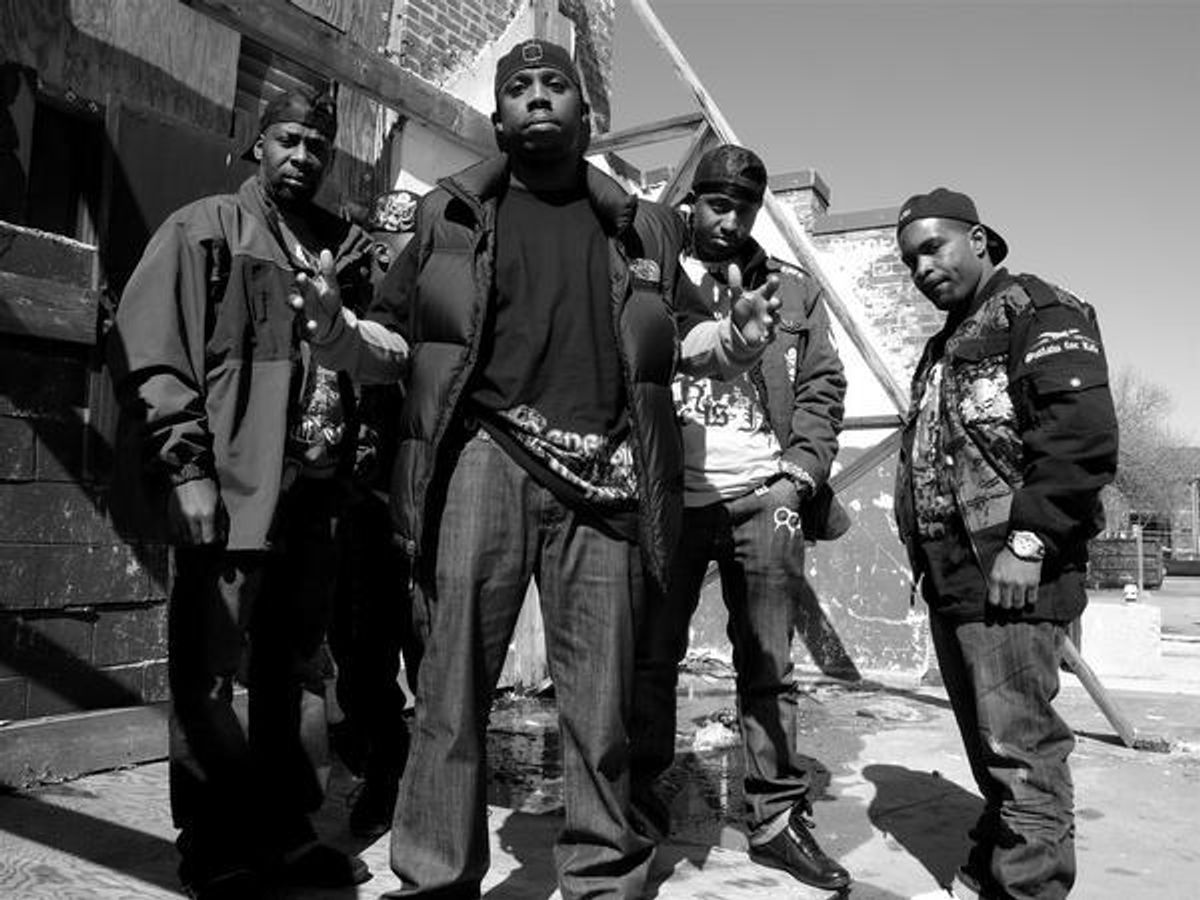
As gentrification continues to wash away the memories of what was once considered “Chocolate City,” Washington D.C.’s genre of music is still hanging on by the skin of its teeth. The brainchild of the late Chuck Brown, go-go music has always been the common denominator for people within the “DMV.” As with the evolution of hip-hop over decades, the go-go sound has changed drastically over time, considerably in the Bounce Beat era.
While the traditional go-go beat is a constant sound lead by drums and a conga player, the bounce-beat is dependent on a rototom or timbale player. The groove was pioneered by the late Reggie ‘Polo’ Burwell and the TCB band by accident at a 2003 show in Riverdale, MD. What was initially an experiment turned into the sound of an entire generation.
The change was similar to the New Jack Swing Era in R&B, or the current Trap-Rap era in hip-hop.
I was 9 years old when I moved from New York to Landover, MD in 1999, a fish in new waters. It didn’t take me long to adapt, and before you know it I fit right into the mold. Unfortunately, I didn’t share my friends enamor of go-go until TCB’s "It’s Clapping Time" bombarded D.C. radio in 2003. I dabbled with bands like Raw Image, UCB and Backyard Band, but the bounce beat sound changed my life.
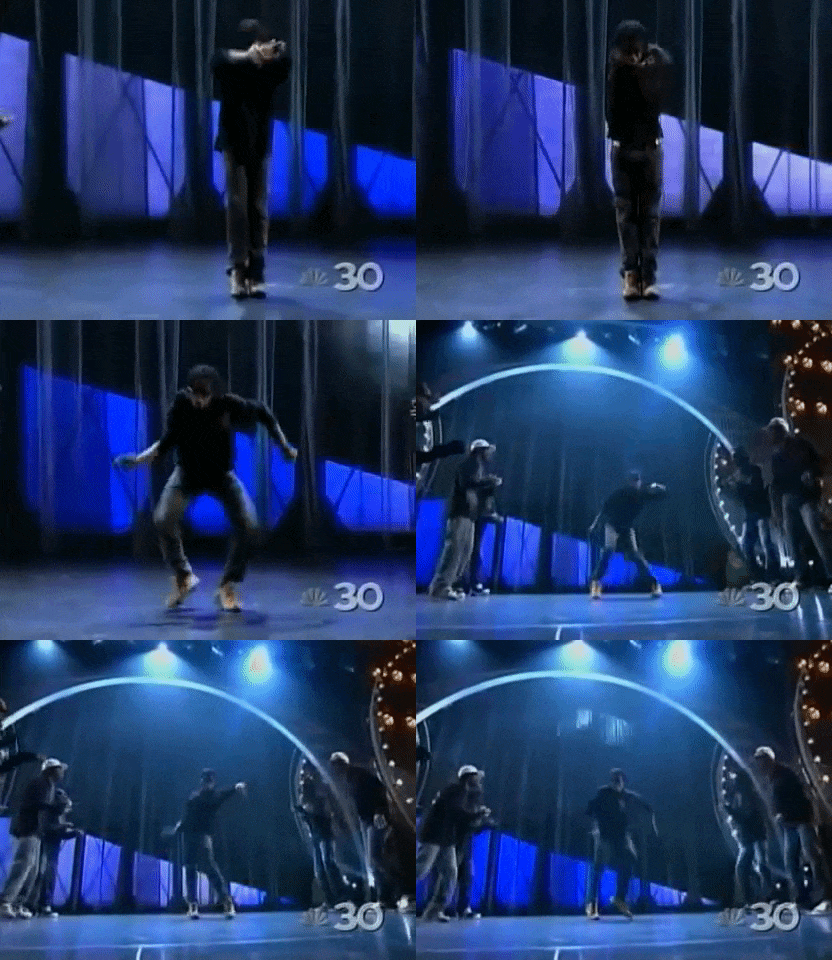
My first house party was in the 8th grade, where instead of a DJ spinning the latest rap & R&D hits, a TCB CD was left on repeat for hours. Young adolescents gyrated on each other for hours to the melodic grooves. While teens from other areas were learning dances like the “A-Town Stomp” and “Harlem Shake,” I was learning how to "Beat My Feet." The dance combines elements of break dancing, and pop-locking with freestyle innovation. The Beat Ya Feet Kings were a dance group that held immortality in the go-go world equivalent to the Rock Steady Crew in hip-hop.
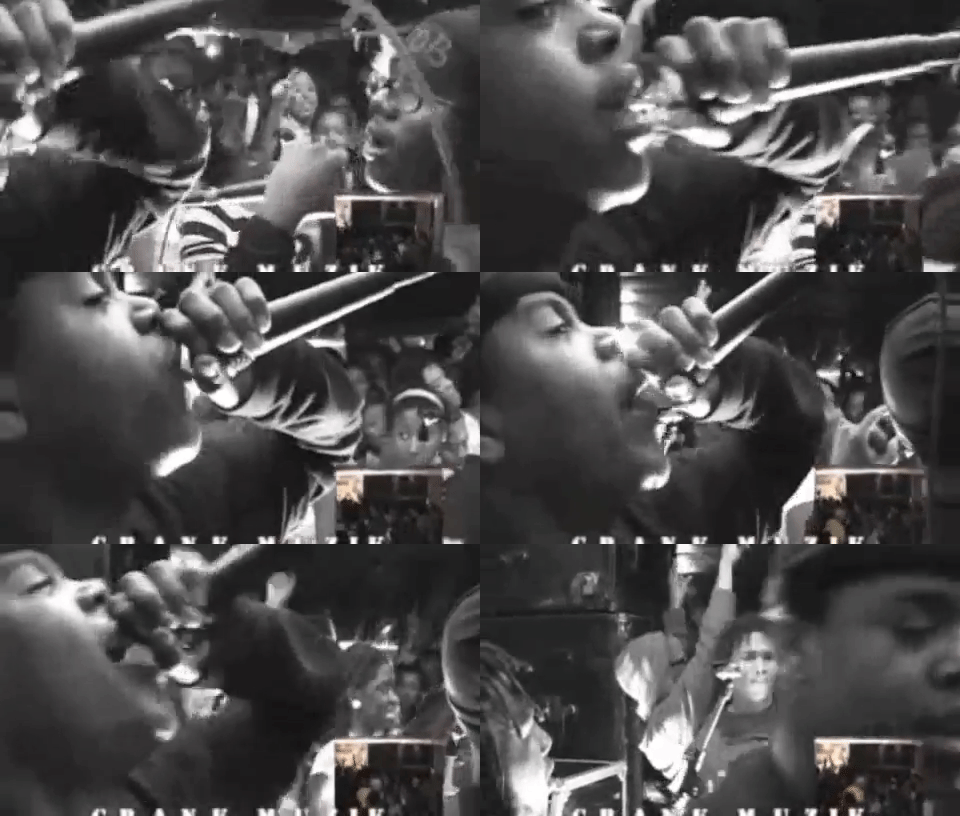
Going to your first go-go was a right of passage, similar to a sweet 16 or your high school prom. Teenagers would frequent “All-Ages” shows, which was literally what the name entailed – pre-teens and adults partying in the same venue. Whereas many inner cities across the nation are infested with gangs like the Bloods and Crips, the D.C. area is more neighborhood based. Going to clubs with your friends to represent where you're from was just as important as actually having fun. The frontmen of go-go are called lead mics or talkers, they're emcees who control the crowd through call-and-response just like a rapper. Through this call-and-response, the lead mic shouts out neighborhoods or groups through what is called “stamping,” catchy nicknames for neighborhoods or groups to let the crowd know who is in attendance.
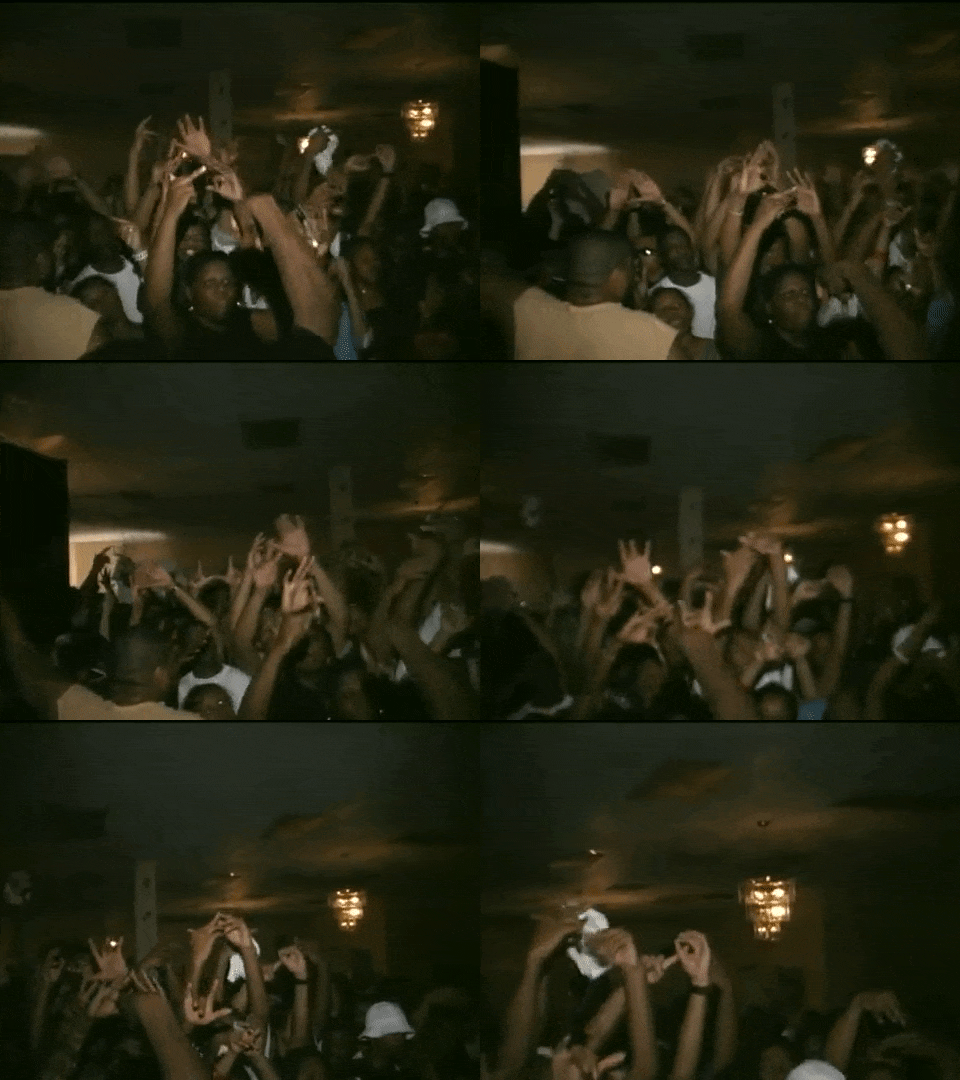
The demand for notoriety from individuals, neighborhoods and groups as you can imagine often causes tension, resulting in fights which sometimes lead to stabbings or shootings. Despite the risk, the high tension along with the music created an indescribable euphoria each time I went. Different clubs meant different bands, which also meant different crowds coming to see their band of choice. Hundreds if not thousands of individuals from different walks of life can often be a recipe for disaster, but more often than not, the music was a temporary adhesive for everyone’s problems.
Through the early to mid-2000’s, a plethora of bounce beat bands competed for shows and fans in an increasingly crowded market. While Lil Wayne, T.I., Young Jeezy, Kanye West and 50 Cent were on top of the rap game, bands like MOB, TOB, ABM, XIB, TCB and Allstarz were blasting from our iPods. Missing the Club Neon in Clinton, MD or the Thai Seafood in Waldorf, MD on a Friday or Saturday would leave you excluded from the cool tables at lunchrooms in schools all over the area.
Long before the days of smartphones having GPS, you would print Expedia directions or metro schedules to get to shows. In the summertime, the shows would increase from every weekend to nearly every day, which only added fuel to the fire for me.
The passion I held for this era of go-go was unprecedented. I would travel by myself if my friends didn’t have money to shows in the bowels of impoverished neighborhoods to see my favorite bands. As aforementioned, the desire to be known and recognized drove me and the people around me to more shows. While some got this fame through violence, other’s got it for there style of dress, their willingness to spend money, or musical skill. Before Wale helped pave the way for “DMV” rappers, lead mic's of go-go were the celebrities, and many of them thrived on the attention.
While others were going to Circuit City or Best Buy to purchase rap albums, I would take two buses to P.A. Palace in Forestville, MD for the newest go-go. Even though there are actual go-go albums, most CDs are categorized by date, making it easy to pick up the CD for the date you like. Go-go dates were like currency, and having the latest CDs was as coveted as having a great collection of baseball cards. These were the days of Myspace, and having a go-go page was a quick way to gain friends and fame. I would download the newest go-go off of sites like GoGoCentral.Com and sell the CDs in my school for extra cash. Go-go was my life, and it went further than a hobby.
For college students of the time, go-go was often the icebreaker for making friends and finding common ground. I made my first friends at Morgan State University by blasting the latest Reaction Band CD over my dorm speakers. I would bring my suitcase to my Friday afternoon courses, so that I could catch the train home in time immediately after to get ready for the evening go-gos. Clubs like the Lepearl Nightclub, the CFE (Center-For-Entertainment), and Club 24 were my introduction to adult partying. The more money I made at my job, the more I spent at go-gos, and did it more frequently.
And then it all stopped when the violence became too much and clubs began to get shut down. The fights turned to shootings, and the clubs got further away from the metropolitan area. Artists like Fat Trel, Shy Glizzy and Wale took the local rap scene to the next level, and attention on the go-go scene diminished. People that wanted to be apart of bands were now heading to record studios to lay down raps. Only top-tier bands like Backyard Band and TCB were able to maintain weekly shows, leaving lower level bands out of luck.
It’s already difficult to find remnants of the go-go times in an area where it was once the heartbeat, and it will only get worse. No matter how much the area changes, memories are eternal.
R.I.P Polo. Long Live The Bounce Beat.