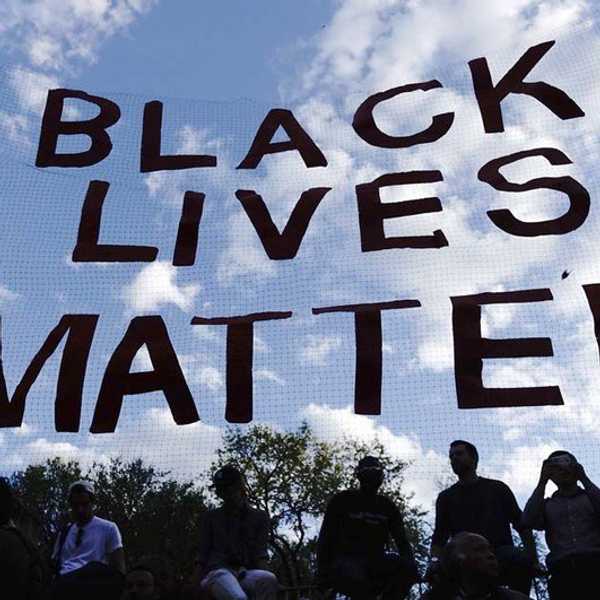
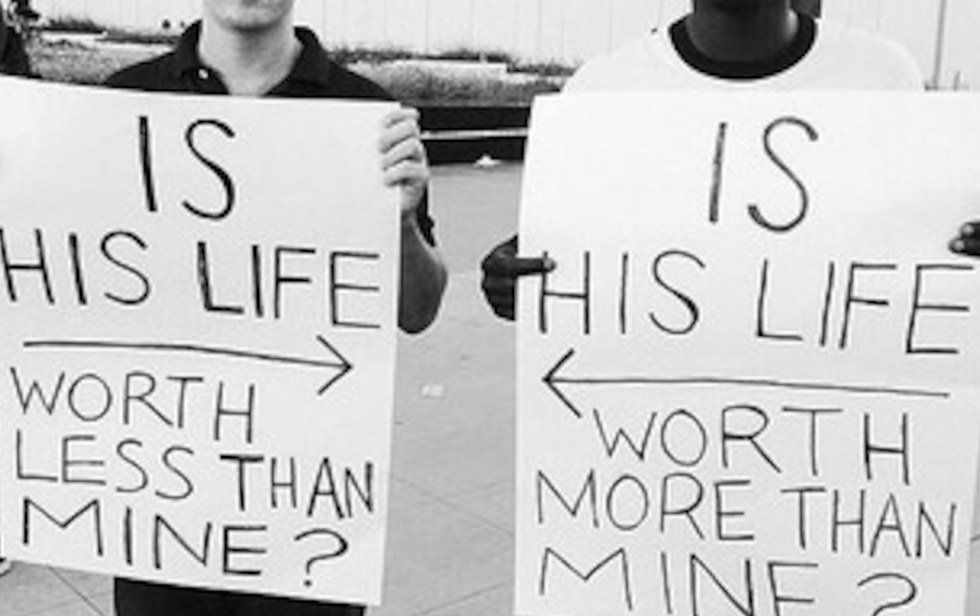
One of the biggest battles today in society is the battle between the Black Lives Matter movement and the police force. The news has heavily covered instances where police officers have shot black men, young and old. There has also been coverage on the killings of officers by black men. As a result, coverage of these events has been seen throughout various forms of social media. Police officers and supporters of the Black Lives Matter movement have been ridiculed all over social media for this
The news we watch is supposed to give us information about what is going on around us. However, it seems these news stations aren't necessarily remaining objective. What we see on the news seems, in a way, biased. We only see events in the eyes of our news stations. They provide us with information about what happened, but only showing us what they would like us to see. We watch the news and are horrified by all the violence shown, whether it is black on black violence or Black Lives Matter v.s. the police. For example, when a black man or teen has been involved in a crime or shooting, we see photos of them in the media. Usually, those photos are of them at their worst times. The photos we see are similar to or are mug shots. When a black man or teen is killed by a police officer, we see photos of them in graduation caps and gowns, with families and in other positive situations. The way the media is giving us this information is causing our minds to think only one way when these photos and stories are revealed to us.
It's very apparent that people of society are allowing the media to affect their judgments of the Black Lives Matter movement and the police force. How are they doing so? They are generalizing both sides. I often see this on social media comments and statuses about people who have seen a video of a black lives matter protest gone wrong. Especially, there was a video from Fox news in which African-Americans were yelling at the reporters. Afterward, I saw many shares from my friends on Facebook, with comments like, "This is why I no longer support the Black Lives Matter movement." This opinion was formed based on a video the media let out and the publicity that social media gained for it. Although it seems like an extreme way to act, we can never really know what happened before the filming of the yelling. We don't know if these people were provoked or simply lashing out. Because of one video, multiple people began generalizing the Black Lives Matter movement and calling it useless, unorganized, and extreme. The support for this movement decreased after more videos like this were released.
The same generalizations are happening to the police force. There are so many videos out there on social media that show police officers aggressively arresting black men and teens. These videos are released by bystanders of the situation, people who just happened to be walking around at the time. These videos are released with their personal feelings about how police aren't correctly doing their job. Subsequently, some supporters of the Black Lives Matter movement are saying "F*ck the Police," and refusing to believe their job is to serve and protect. Some supporters and fighters for this movement are starting to believe that all police officers are going to harass or harm people of color. Social media plays an important role in this complex battle between the two. Because we are allowed to film situations and share them online with our biases attached, we begin to generalize.
The biggest problem with this battle between the Black Lives Matter movement and the police force is the fact so much of it is based on the generalizations being made toward one another. Supporters of the movement are blaming the entire police force and risking the lives of innocent officers. At the same time, police officers are generalizing the black men they see, whether they are suspicious or not. Police generalize these black men because of the way the news depicts them. So instead of holding individuals accountable for their actions, we are blaming anyone of that same nature based on what we see in society from the media.
Individual accountability could be the way to calm down the violence and tension between these two groups. If we as a society allow ourselves to stop blaming entire groups of people for an individual mistake, we could possibly make peace. We need to realize that the actions of one individual does not make up their entire culture, race, or community. We must take the steps necessary to consider the complexity of our own nature, in which we don't allow the news to slip their generalizations into our own judgment.