In April of 2011, the hit show Game of Thrones, based off of the Song of Ice and Fire series, made its official debut. Since then it has taken the world by storm. With the sixth season on the horizon, there's one question on everyone's mind: What's going to happen next? After all, for the first time since the show aired, there isn't much information about what comes next since the last season ended around the same place as the most recent book.
However, I think there's another, possibly more important question that we're all overlooking: Why are we so taken with this series in the first place? Is it the fact that nothing seems to be off limits? After all, Game of Thrones is notorious for continuously killing off main characters in increasingly brutal ways (i.e. Ned Stark, Rob Stark, Catelyn Stark - anyone else starting to notice a pattern here?). Well that and copious amounts of nudity and sex scenes. Or is it the various different fantastical features throughout the story? I mean, all you need is one word: dragons. Three magnificent dragons, creatures that most characters previously thought were completely extinct. Honestly, you can't really ask for more then that. And yet we still get more with the White Walkers, the scariest zombies ever created, who are frightening, but no less fantastical. Or is it simply the desire to know what will happen in this whirlwind of a story? Yes, the story itself can be unpredictable but that doesn't make it any less compelling. Why else would there be so many seemingly crazy fan theories out there? Granted, there are some widely accepted theories like R+L=J, but then there are theories that make you question your existence like the one that hypothesizes that Varys is a merman.
Frankly, I think it's a combination of all these things that has caused the series to become so popular. However, I think there is still something more to it than that.
If we look back at other famous fantasy stories one common theme is clear in every single one: the fight between good and evil. Take Lord of the Rings for an example, probably the most influential fantasy series of all time. On one side there are the hobbits and company carrying the ideals of what is morally good and right; and on the other there is Sauron and his cronies representing the dark, shadowy evil we're taught to fear. Throughout the entire series, these distinctions remain without any real crossover between the two sides. Even Frodo, the one character who was probably tempted by the dark side the most, was being influenced by something that was out of his control: the ring. Therefore, the "evil" tendencies that led him to wanting to keep the power of the ring to himself were not really characteristics that Frodo possessed on his own. Basically, good was good and bad was bad and it was not possible to be one when you were the other.
Even the Harry Potter series, a more recent fantasy phenomenon, follows this pattern, although not to the same extent as Lord of the Rings. It is true that Harry does make some decisions that end up hurting people, most notably using the "Sectemsempra" spell against Malfloy in the sixth book, but there is a line that Harry never crosses: intentionally using the killing curse to harm another individual. Even when faced with Voldemort, a man who is unquestionably evil, Harry uses a disarming spell to deflect the killing curse coming in his direction instead of casting a killing curse of his own. Though the distinctions are less pronounced, there are still clear cut definitions of what actions are considered good and evil and there is not much crossover between the two (Snape being a rare exception).
However, unlike these previous stories, Game of Thrones seems to have no clear contrast between what is considered good and what is considered evil. Pretty much all of the characters have extremely complex personalities with a mix of both good and bad traits. In fact some characters are so complex that it is difficult to even tell which side they are leaning towards. Of course there are a few exceptions like Joffery, who has absolutely no redeeming qualities whatsoever, and Ned Stark, who you would be hard pressed to find anything truly damning about. But for the most part this formula holds.

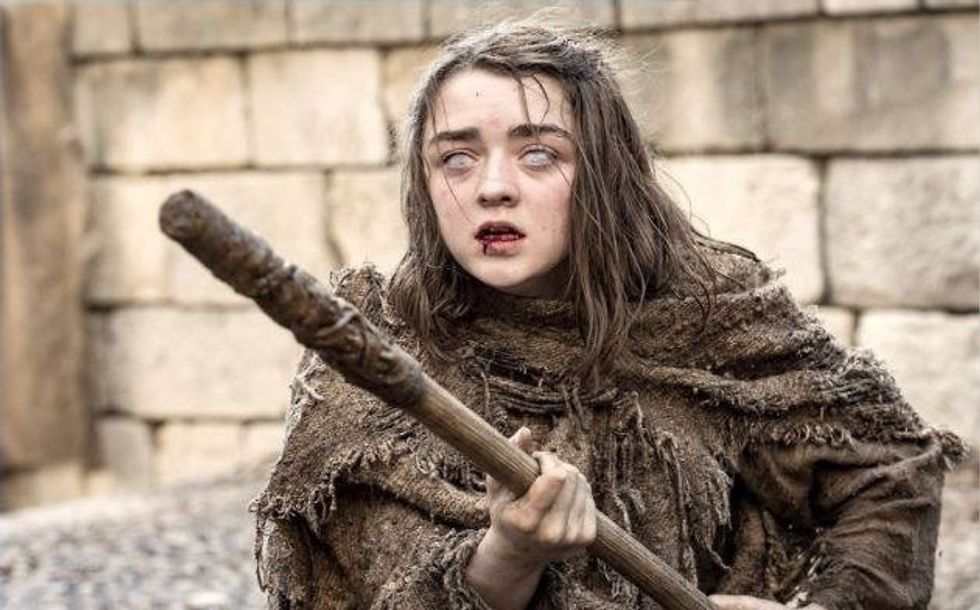
Take Arya Stark for example. She is a Stark, possibly the most beloved house, and a universally liked character for the most part. Moreover, she is extremely strong willed and determined, steadfast in what she holds most dear despite what society has dictated to her in the past. All around, these are really admirable qualities that make her an honorable character. Yet it is hard to overlook the fact that she is currently training to be an assassin so she can exact her own revenge on those who have made her List. Even before her training began she killed people without much remorse, although some of those kills were in self-defense. No matter which way you view it, intentionally taking another person's life is not a habit that people who are considered "good" partake in.
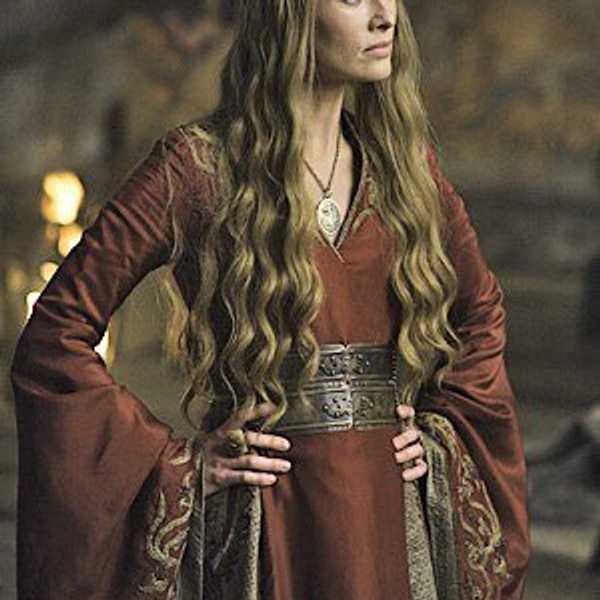
On the other hand there is Cersei Lannister, who most love to hate. Not only is she a major part of the Lannister house, typically on the "evil" side of things, but she is exceptionally conniving and will do almost anything to advance her political position. Furthermore, most of her plans to advance her own and her family's position involve causing immense pain and suffering to others. That being said, almost all of her actions can be traced back to her trying to do what is best for her children. Despite the fact that one of her children is one of the most despicable human beings, a fact she is well aware of, Cersei did whatever she could in her power to protect and provide for them. Say what you will about her character, no one can deny that Cersei is a damn good mother who loved her children unconditionally.

In the end, Game of Thrones sets itself apart from the rest of the fantasy genre, which might be part of the reason the series is so compelling to so many people. Don't get me wrong, there's still something engaging about the classic fight of good against evil, but that type of story does not necessarily lend itself well to being relatable in today's society. We live in a world full of grey areas and questionable people, like the world of Game of Thrones. Though we are missing the medieval-like society and certain fantasy elements, this series is ultimately applicable to our own lives, giving it an extra edge.