
Virtual reality (VR) is about to get big. I am not only professing an opinion and making a prediction; I am also contemplating the fact that, for better or for worse, our everyday lives are about to change.
Since the release of the world-shattering iPhone, a fair share of wonky gadgets have passed through the world. I'm thinking of the iWatch, Google Glass, and more countless awkwardly-sized tablets that will likely be looked back upon with laughs in 10 years. I am here to tell you VR will not be one of those. VR has long been sought out as a path to the future, often with little or no success. It is an industry that has waited to see the light of day for decades now, but hasn't because it was never immersive, impressive, or, quite frankly, any good. That is, until now.
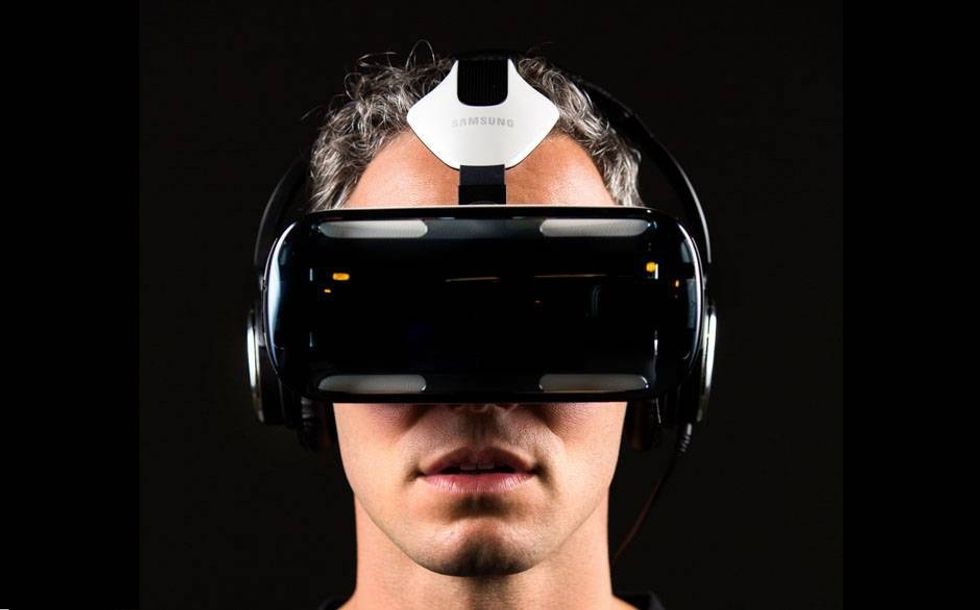
The past few years have seen an explosion of legitimate VR items in the market, including the Oculus Rift and the Samsung Gear VR, of which most are just entering the mainstream. I was very skeptical about how well that goofy headset could work until several months ago when given the opportunity to put one on. What I saw was anything but goofy. It was the future. It still has a certain digital aesthetic to it, but what the virtual world has to offer is plenty real enough for 2016.
Putting on a headset for the first time, I was immediately confronted with danger looking through the window of a spaceship. Noise buzzed through my headset as I was thrust into a scarily realistic dogfight. Over the next 30 minutes, I battled with spaceships, experienced an educational video with marine life under arctic glaciers, and started watching a Leonardo DiCaprio film that takes place on the moon. It was amazing.
My final experience was an educational program about our solar system. As I gazed at the sun consuming the whole sky before turning back down the line of space toward the distant shapes of Jupiter and Saturn, I couldn't help but feel that the term "staring into the future" had never before applied so well. VR technology is about to change everything for us, and even impress the rising generation that has grown up viewing the iPhone as unremarkable and an everyday part of life.
The reason why VR will be different is simple: it is a whole new form of media and every day the potential uses are growing for it. VR could change everything, including how we watch television, play video games, educate in schools, train for sports, medicine, even military duty. Perhaps the most immediate factor is in how it will bring a complete overhaul to the way we communicate and socialize that will be just as impressive as the rise of social media itself. Exciting new forms of communication like "holoportation" are already appearing, a technology that according to Microsoft Research will "allow high-quality 3D models of people to be reconstructed, compressed, and transmitted anywhere in the world in real time."
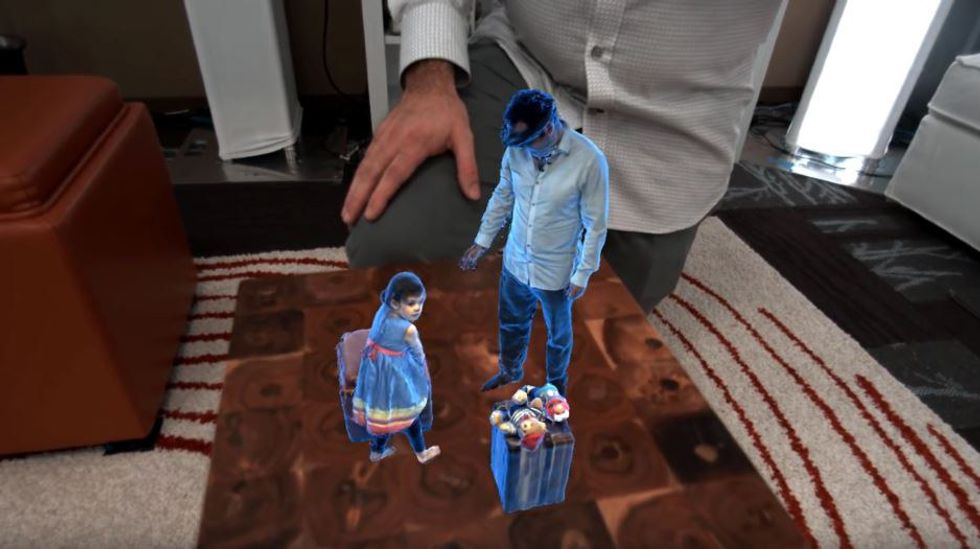
Along with giving us technology to connect closer to people far away, in a format better than even FaceTiming, it will allow you to re-watch these recorded memories and interactions as well. If the proper cameras were set up in stadiums, it's not inconceivable to think we will be able to view live football games shrunk down in 3D appearing for us on our kitchen table as we eat. The technology for all of this is still clunky, but no doubt there will come a time, perhaps sooner than 10 years from now, when we will all be putting on headsets and watching both the virtual and real world rapidly change before our eyes.