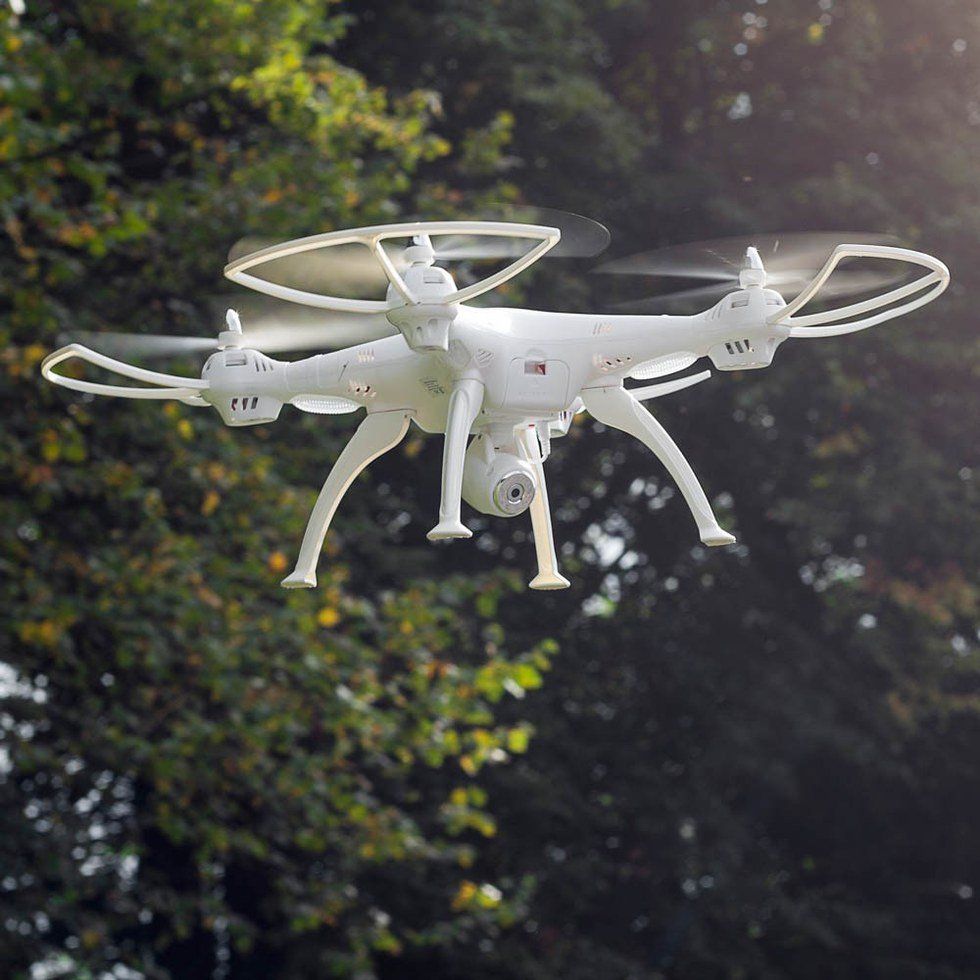
The other day, I found myself walking through an aisle at Walmart, looking for a particular brand of peach flavored yogurt. It was an unfortunate place to be, surrounded by the flurry and activity of overly-large people with overly-excited convictions of being able to buy three bags of potato chips for the price of two. Did I mention that this was during rush hour? I was fighting my way through the hoards of people when I noticed a ticketed sale sign above a shelf filled with drones. You know, the unmanned aerial vehicles that are often accompanied with a GoPro or at the very least, a remote control with a small camera attached? I completely abandoned my search for the peach yoghurt, entirely fascinated with Walmart, a hybrid mix of grocery store turned super chain, selling a drone.
Now, I am completely aware of the fact that 2017 is swiftly approaching. Flying drones, virtual reality headsets submerging you into a new world and the ability to 3D print anything from your own butt-cheek to a stack of pancakes is completely possible- not just possible, but has probably been done numerous times in the past week alone. For a kid who grew up in a small, Amish village in rural Pennsylvania, I was completely fascinated with this drone spotting, and my fixation with this quickly began to take over my life.
My dad always told me growing up, “geeks rule the world!” and yes, I am here to confirm this hypothesis. They really do. Ever since I first watched Andrei Tarkovsky’s Solaris and Stanley Kubrik’s 2001: A Space Odyssey, I have been patiently awaiting the world of science and space to conveniently bloom and prosper right under my nose. Quite frankly, navigating my own little miniature spacecraft (a “spacecraft” is only a little stretch) sounds pretty darn amazing to me, and it’s the closest thing I’m going to get to the real science fiction I have come to love and know these past years.
Drones come in all shapes and sizes and can be used for good or for evil. Last year, a case of a man shooting down a drone that was flying low over his home, sparked a rise of national interest and controversy. Did this man have any right to whip his shotgun out and blast this drone down? The development of concrete laws regarding ownership of areas above land as well as how low drones can fly above personal and commercial properties alike are slowly but surely becoming increasingly more known to those looking to fly drones. Though legislation regarding small, unmanned aerial systems (sUAS) was only sanctioned late last year, the Federal Aviation Administration continues to be making progress with guidelines and law restrictions to help keep people and drones safe.
Drones, in regard to privacy, stir up quite the discussion over what laws should be put into place, and as of today, privacy is unfortunately still an ambiguous grey area. For now, it seems that the best we can do is keep in place the standard privacy laws that dictate what we can and cannot record, both with images and video. Essentially, these laws provide us with dictation of what is deemed “reasonable” to require of one’s expectation towards privacy.
Just because you purchase a drone doesn’t mean that you can just have at it, and fly the little device wherever and however you please. Rules include being of age (a minimum of 13 years required), being a US citizen or legal permanent resident, and paying a slight registration fee upon enrolling you and your drone. Weight constrictions, speed limits, and altitude levels are also a big factor when first flying your drone and can be found conveniently on the FAA official website. So, if you aren’t deterred from getting on the drone bandwagon with these rules, I’d hit the books and start researching your very own small drone, or as I like to call it, miniature spaceship. The future of science is now…and maybe, just maybe, one day, you’ll be able to say, “Scotty, beam us up.”