
For coffee experts and home brewers alike, the French press is one of the most favored brewing methods in brewing coffee. This was the first non-drip coffee-brewing device I purchased back when I was starting to get into coffee, and it really opened up my eyes to everything out there. I have been using the same Bodum brand French press for somewhere around four or five years now, and I use it at least once a day, if not more.
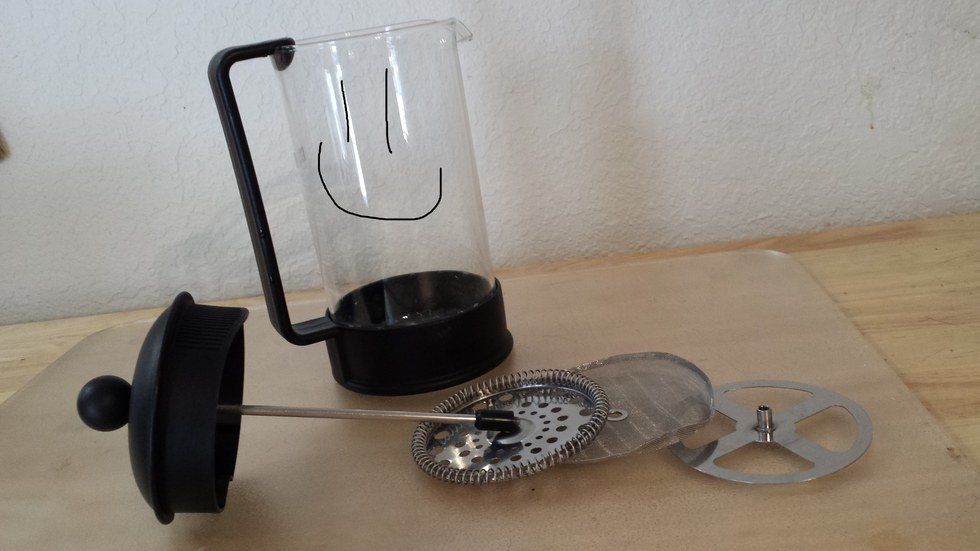
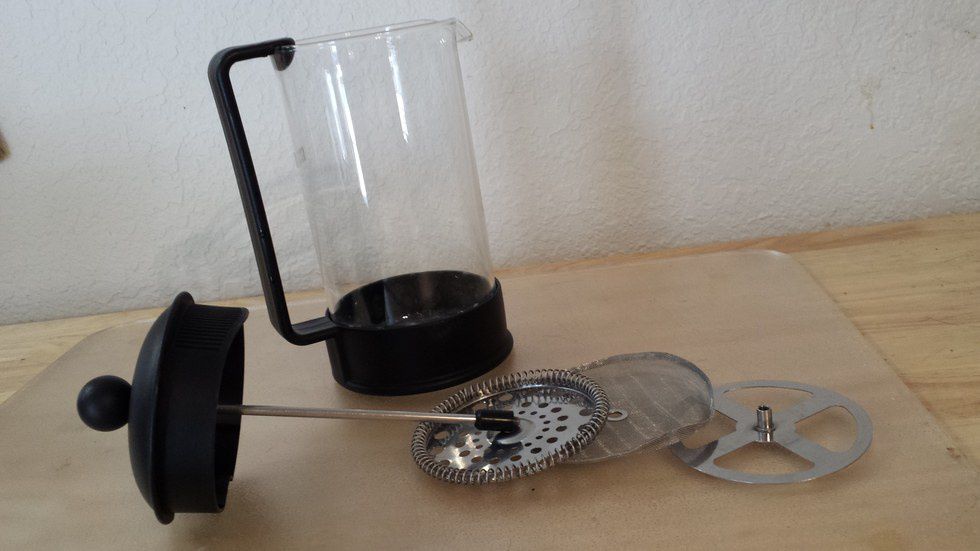
To start, pretty much every French press has the same basic features, including a filter and plunger system, and a cylindrical container that the coffee is brewed in. As we can see in this image, the filter portion is made up of a few parts. There is the rod screwy bit that attaches to the flat screwy bit, where a steel mesh filter is sandwiched between two plates. The steel mesh filter is what really makes French press coffee as flavorful as it is. Because the steel filter allows more of the natural oils and sediments to pass through it, as opposed to a paper filter which filters just about everything, it means that the cup of coffee will be more "full," and have more flavor to it. The flavor is also attributed to the full-immersion brewing of a French press, meaning that the coffee grounds and hot water mingle for a certain amount of time before being separated.
So now that we know little about the French press, let's actually make coffee with it.
The required ingredients include two cups of water (not in the picture), a French press, an aesthetically pleasing mug, four tablespoons of coarse ground coffee, and some love.
Note: Because I am too lazy to go out and buy an accurate scale, I have used tablespoons and cups as measurements, as opposed to grams.
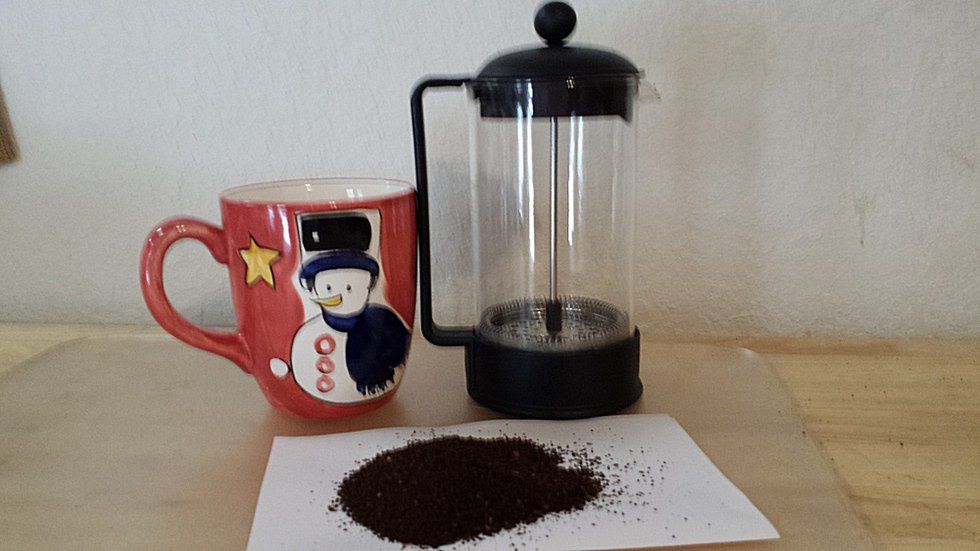
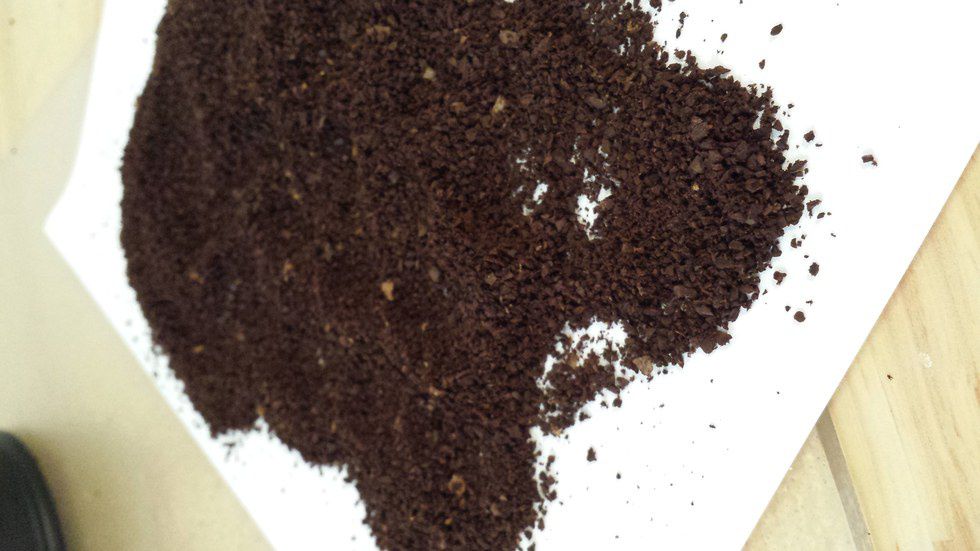
What the ground coffee should look like:
The first step is to boil some water to use to preheat the press and the mug. Preheating your brewer and cups allows for the coffee to stay hot longer, and to decrease the chance that the coffee's flavor will be altered by coming in contact with the cold and unforgiving surface of a non preheated mug.
Now that the press and mug are nice and toasty, start to bring the two cups of water to 200 degrees Fahrenheit. Any hotter and you risk burning the coffee grounds, and any lower will prevent a full extraction. During this time, grind the coffee on your grinder's coarsest setting. Note that using preground coffee can lead to some issues, as most coffee is ground for a normal drip brewer and will be much too fine to use in a French press, and can lead to clogging the filter and some hella bitter coffee.
By now, the water should be nearing 200 degrees, so dump the preheating water out of the press, pour in the ground coffee, and then add the water. It is optional to do what is known as "blooming" the coffee. Blooming is where you would add a small amount of the hot water to the coffee grounds, which would allow for gasses to escape, which can make the flavor a little better. This is optional, as recently the Specialty Coffee Association of America, the leading body in coffee standards, ruled blooming coffee as optional. Though most professionals still stick to blooming, and swear by it.
Anyway, back to the actual tutorial. Once all the hot water has been poured into the press, put on the plunger and lid, and depress the filter to right at the top of where the coffee grounds are sitting; this prevents heat loss.
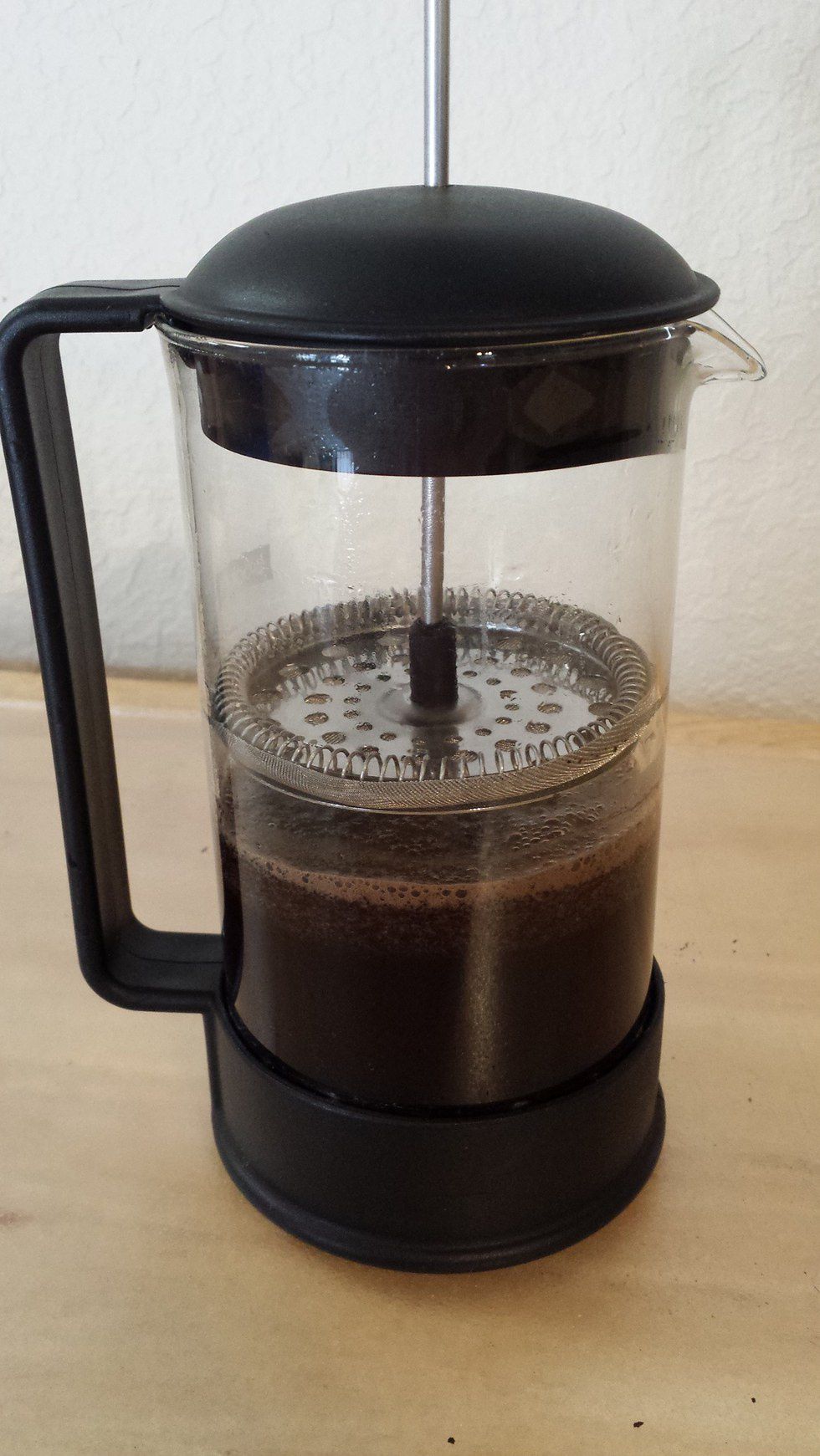
Now, let it sit for four minutes. Four minutes is the globally agreed brew time for French-press-made coffee. It's best not to question it, and just go with it. Once the time has passed, go ahead and plunge that filter down.
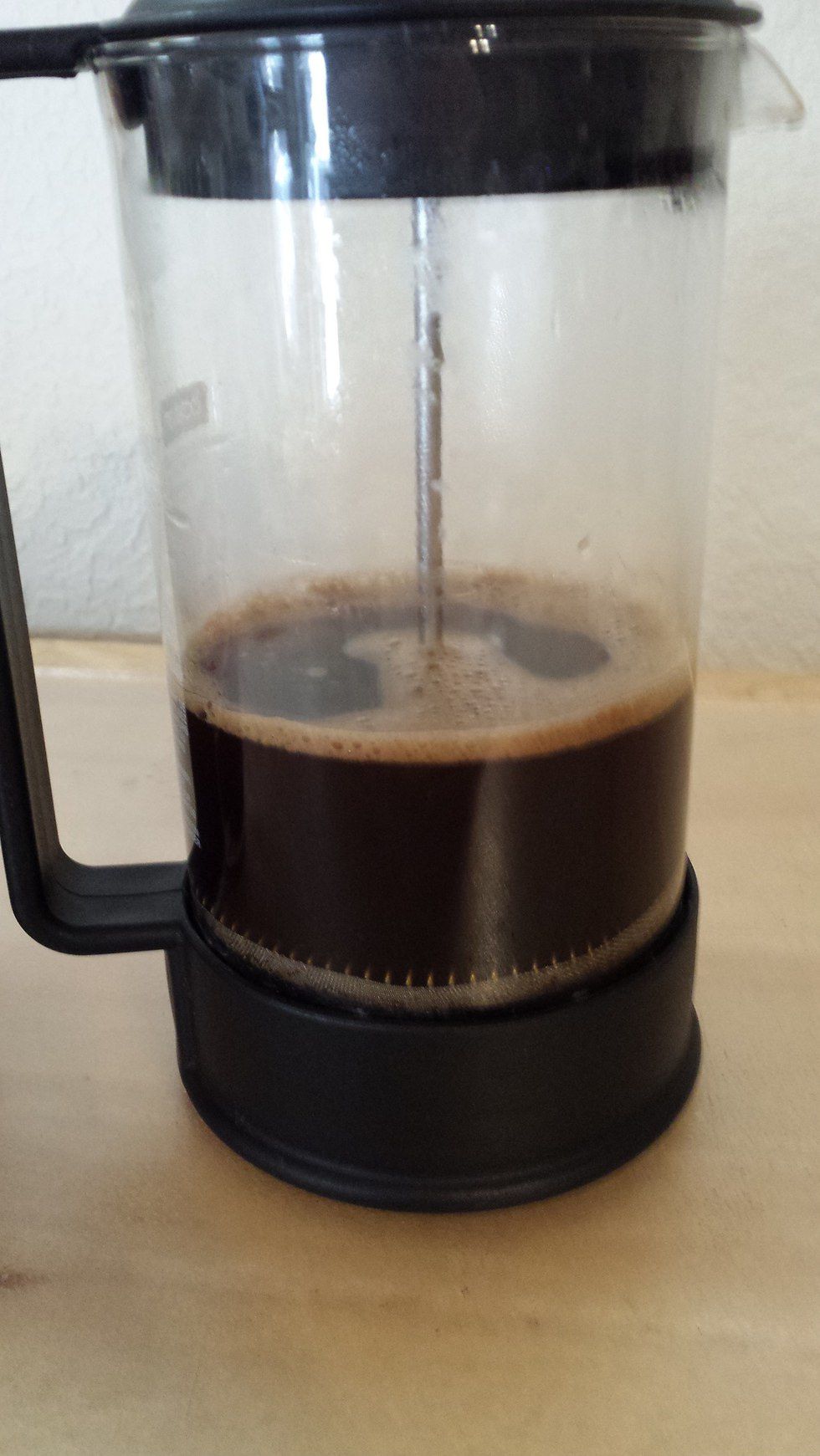
The last step is to really just pour the coffee into the beautiful snowman mug and drink. Adding cream and sugar is optional, but I highly suggest actually tasting the coffee black to appreciate all the nuances that can be noticed with this form of brewing.