


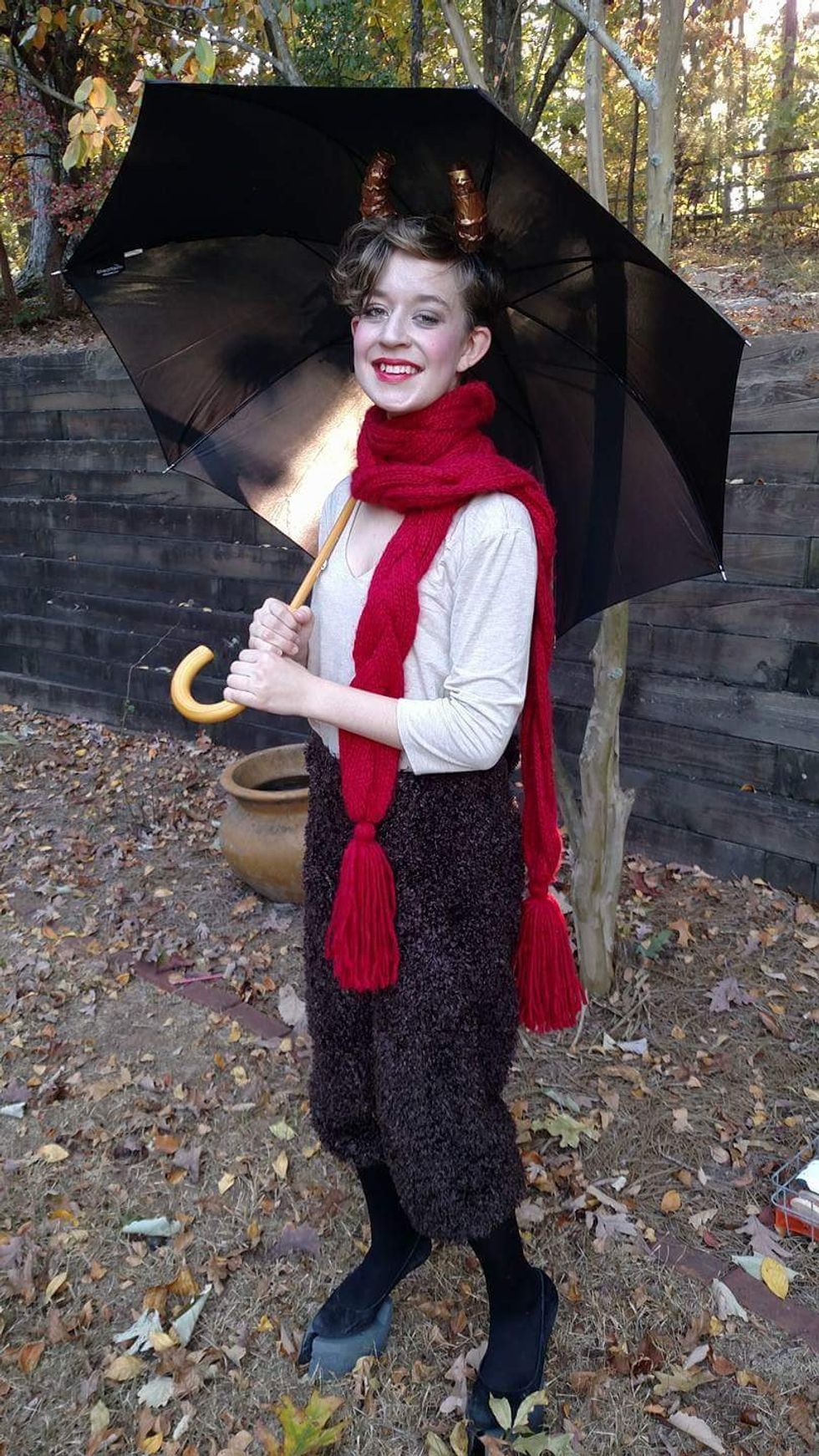
I'm in love with a children's book. It could be said that it's easy to love children's books because they're simple and rather straightforward as children are not as capable of having a complex thought. They are meant to entertain but often hold a moral behind them, to teach a child the difference between right and wrong or some other lesson we like children to know. Then there are the books that also teach grown ups a thing or two. One of these is C.S Lewis' The Lion, The Witch, and The Wardrobe, the first of The Chronicles of Narnia series. (Yes, I know there are at least three different ways in which to read all seven books but in the set I own, this one is first. Calm down, it's okay).
Lewis himself said, "A children's story which is only enjoyed by children is a bad children's story." And therein lies his point. The reason I love this series, and this book in particular, is that the whole narrative mimics Christian life. I first really got into that whole idea a few years ago, when we did this study on the book and started pointing out and making clear each character's role in the story and as a representative for us. For instance, one that was pretty obvious to me was the lion Aslan as Christ. He died so Edmund could live, rose from the dead, and then kicked the White Witch's butt (The White Witch is the story's devil).
But the study clarified many examples that really stuck with me. Firstly, there's Lucy Pevensie, a little girl who stumbles upon a wardrobe that leads to Narnia while playing hide and seek with her siblings. She explores for a bit, meets a faun named Mr. Tumnus, and then returns to her family, telling her brothers and sister about the world she's found. She does not doubt that Narnia really exists. She also trusts Mr. Tumnus blindly, which we, the readers, wouldn't have done as he eventually reveals he was going to give her to the White Witch to be killed. She is "the faith like a child," blindly trusting what people tell her but also never giving up hope. When Lucy and her sister, Susan, witness Aslan's death, she doesn't seem to think he's really gone as Susan does.
Secondly, there's the case of Edmund Pevensie, the picture of a sinner. He makes fun of Lucy for playing make believe in a wardrobe. Upon learning who Aslan is, he seems unimpressed. He betrays his family to the White Witch, on the premise that he'll be a king and his family will be his servants. He becomes a captive of the Witch. Upon being rescued by the good guys, the Witch marches into the Narnians' camp and demands Edmund's life. Aslan steps in and gives his own life in Edmund's place and there it is. The parallel for our nature is revealed. Edmund is what we are, sinful and unable to help ourselves but he was saved from death by Aslan just as we are saved from death by Christ.
Susan is the believer that falls away; she also favors human logic over her sister's blind faith, something I do all the time, in all honesty. Tumnus is a bit Susan's opposite, first falling away and then returning to the faith. In later books, we meet other characters that reject the idea of Aslan, only to become like Saul on the road to Damascus and find themselves face to face with the creator and savior of their world. All in all, these children's books introduce the idea of Christian life. They don't explain everything, but they present these ideas in a new way.
Growing up, this story made me believe in a world beyond my own, a place where right always won, and I could be a queen if I wanted to. The Lion, The Witch, and The Wardrobe still means that to me, but now there's a bit more meat behind it. It's a pretty picture of my faith in day to day life. It's a lovely blend of real life and fantasy. So yes, I'm in love with a children's book. But it's hardly for light entertainment. For Narnia, and for Aslan!
















