“Ey! Strawberries one dollar! Fresh!”
“Very fresh! Very cheap!”
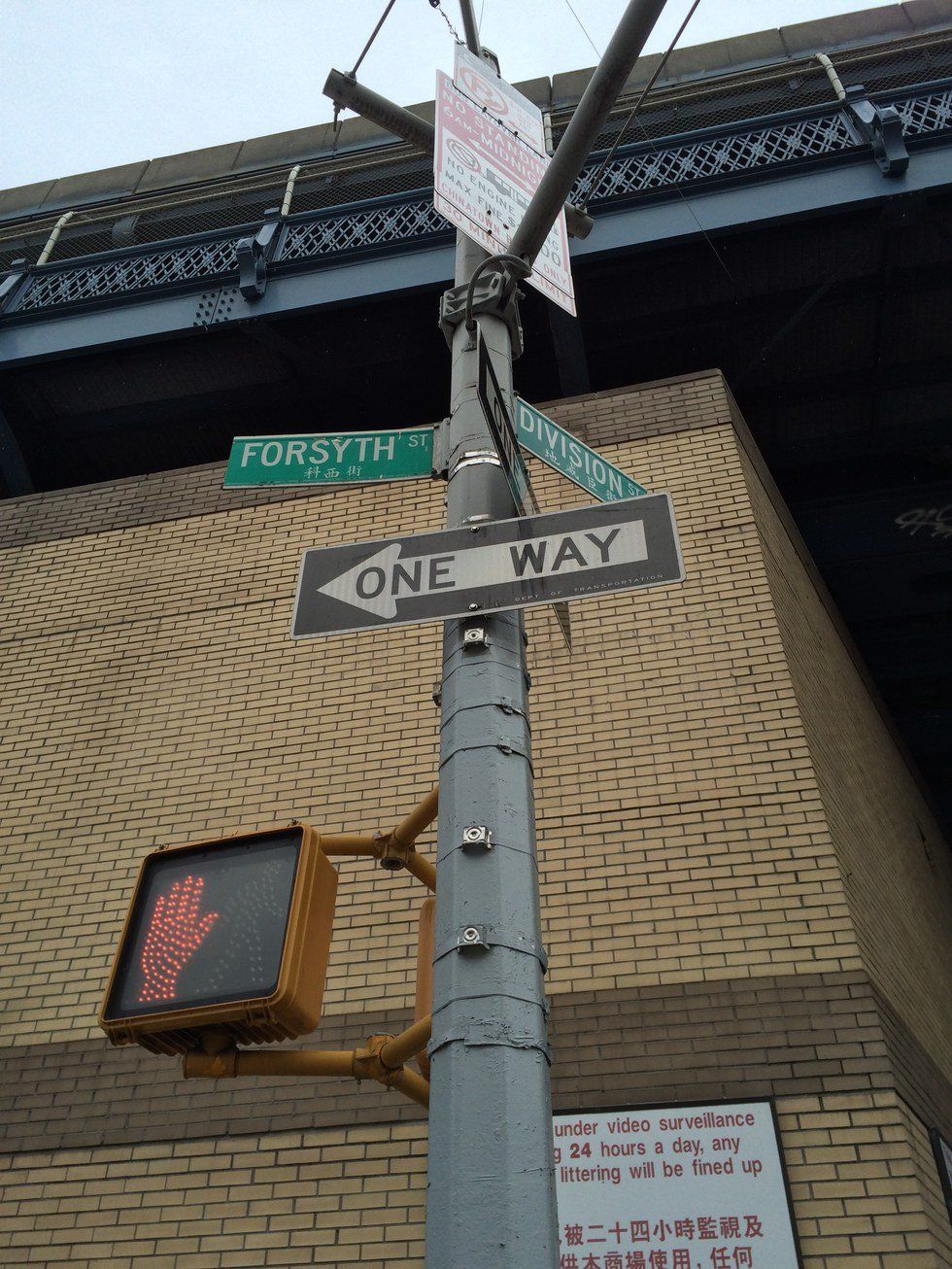
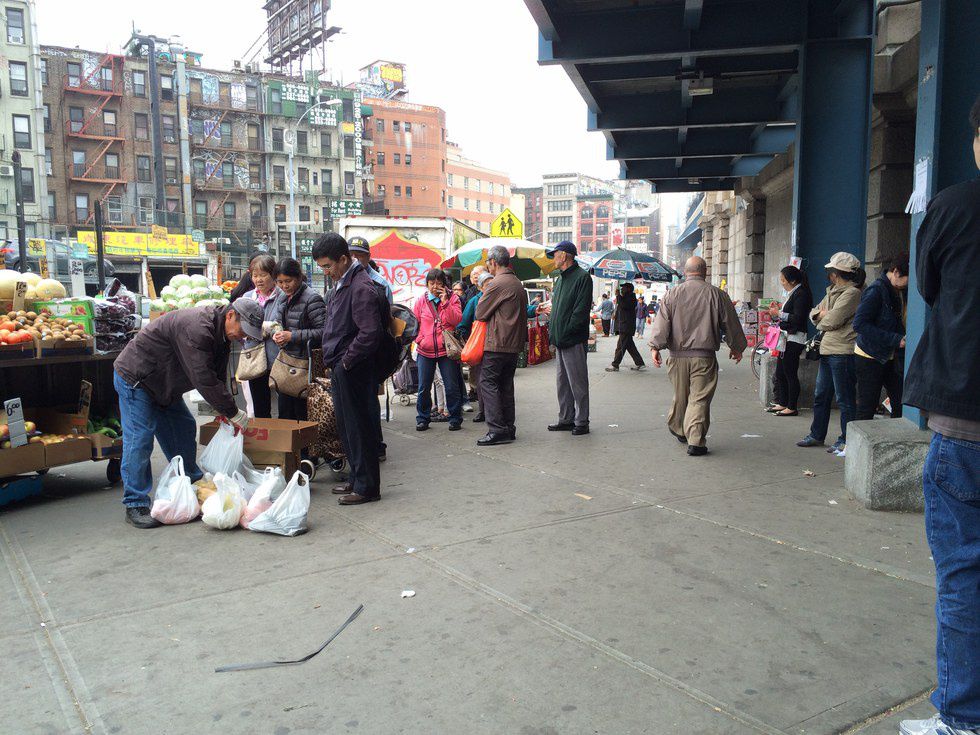
I was “grocery shopping” with my 62-year-old aunt, who lives in Chinatown now with her son, his wife and their two elementary-age children on Eldridge Street. Out of the 15 or 20 vendors who dot the wide sidewalk of Forsyth Street, competing for a couple of dollar bills at a time, I can only decipher these two particular vendors’ words.
Ten years ago, when I came with my dad to buy our weekly produce, I would not have known how to physically write the vendors’ words, because they were in Mandarin or Fuzhounese.
The English that perpetrates the flea market on Forsyth nowadays does not imply that the vendors are distinctly “American.” Their broken English is not a purposeful simplification for the benefit of the English-deficient Chinese; it’s simply the level of English these immigrant vendors have, and it’s become the new immigrant language here.
These immigrants have travelled from Ecuador, India, Italy, Pakistan and Mexico, and while they cater mostly to these fresh-off-the-boat Chinese immigrants, they've managed to bring and successfully integrate a little bit of their native country to the Forsyth Street crossroad. My eyes glaze over at the abundance of fruity and leafy colors — my, has the selection expanded since I’ve been here with my dad! I recognize the Chinatown basics: Fuji apples, Korean pears, dragonfruit, starfruit, durian, Shanghai bok choy, Napa cabbage -- every vendor has a little bit of this and a little bit of that. Some vendors specialize in only fruits or only greens, but particular foods certainly repeat — bringing us back to the compilation of voices competing for our attention.
How does my aunt even decide from which vendor she wants to buy her basics?
“Easy! The Indian lady always has the freshest and plumpest fruit for the lowest prices, but her vegetables are overpriced. The Italian ones grow the best vegetables — never wilted. I go to the Mexican guys when we want something special, like papaya or longan,” she tells me in our dialect.
Sure enough, she waited in the long line for the Indian lady for her Fuji apples, picked out her leafy greens from the Italian guys, and, because she had a guest (me), she added a five-pound bunch of longan from the Mexican man to her litany of fresh produce.
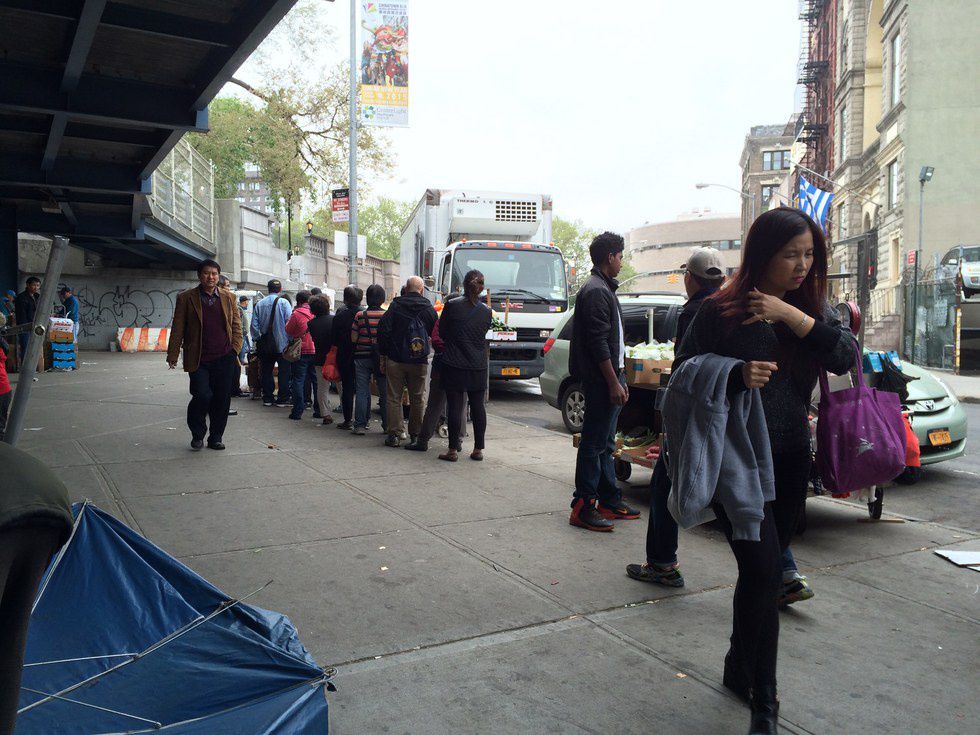
Terrible as it is to admit, I've always known my Fuzhou relatives to be particular about race. How peculiar, then, that my old-fashioned, immigrant-from-rural-China aunt trusted and respected these vendors who, to her, could have come from an entirely different planet. How did she honestly feel about these other ethnicities permeating the Chinese flea market business?
“This isn’t the first time I’ve seen foreigners in Chinatown," she responded in Fuzhounese and chuckled. “As long as they sell the fruits we need for a reasonable price, to me it doesn’t matter who they are." She winked at me and added, "It’s good to have a break from Chinese faces anyway.”
We lugged the red plastic bags back up the stairs to her apartment and were greeted by her husband — my uncle — asking, “Where did you get these pears?” “Did she raise the price?” “Ah, why didn’t you go to the white man [Italian] for this?”
Just from these interrogations, I could tell that the mention of race was used not to judge but merely to differentiate. Even my 69-year-old uncle who immigrated to America only a couple years ago accepts the fact that they get their Chinese produce — the food most near and dear to a country folk’s heart — from "foreigners" (people they had never seen in their lives before moving to the United States).
The first thing we do when we meet people who are different from us is judge them on appearance, setting them worlds apart. However, the people of Chinatown have been forced to recognize that these “foreigners” to the ghetto — despite their physical variations — value the same things the Chinese do: money, hard work and most importantly, fresh food.
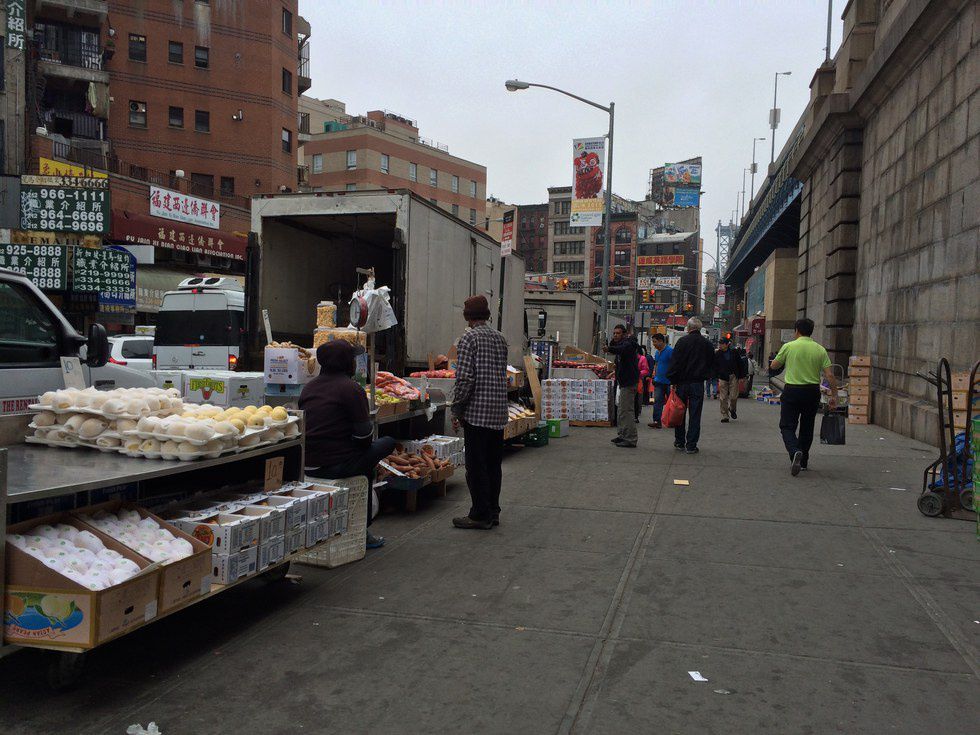
There is no fresher sight than seeing the exchange of broken sentences and American currency among people who look like they belong oceans apart.
Through the timeless, boundless fresh food market, these people become more American than they realize themselves to be, using American values of capitalism to survive in their new home. Ironically, their shared limitations in the English language, and in financial resources, drive them into unlimited opportunities for integration. For many of these immigrants, a step into the Forsyth Street flea market is their first step into the American lifestyle.